






Introduction
If you’re a mom, chances are you’ve worried at least once about cavities even if you brush your child’s teeth every day. Many moms feel confused and frustrated when cavities still show up despite their best efforts. You’re not doing anything wrong. Childhood cavities are very common, and thankfully, they’re also largely preventable.
The good news? Preventing cavities is far easier (and gentler) than treating them. Small daily habits make a huge difference, especially when started early.
This guide is part of our complete kids dental care system, designed to help you understand why cavities happen, how to stop them, and when professional help matters without fear, guilt, or overwhelm.
(You can explore the complete kids dental care guide for the full picture of oral health from babyhood through childhood.)
Why Kids Get Cavities Easily
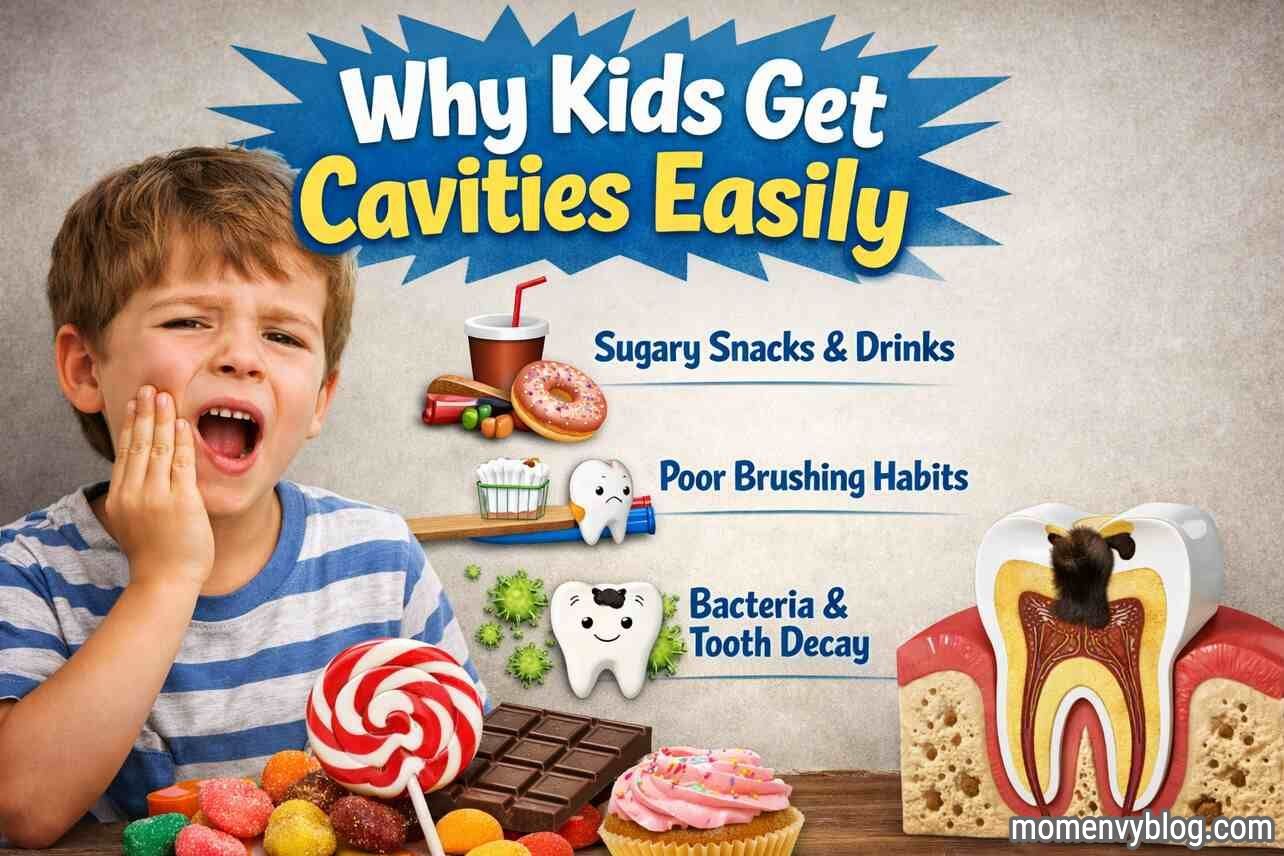
Kids aren’t just “small adults” when it comes to teeth. Their mouths are still developing, which makes them more vulnerable to cavities.
Here’s why cavities form so easily in children:
- Thin enamel
Baby teeth and young permanent teeth have thinner enamel, so acids can damage them faster. - Frequent snacking
Kids often graze throughout the day. Each snack gives bacteria more fuel to produce cavity-causing acids. - Night milk or bottles
Milk, formula, or juice sitting on teeth overnight feeds bacteria while saliva flow is low. - Inconsistent brushing
Young kids don’t have the coordination to brush well on their own even when they try.
None of this means you’re failing as a mom. It just means prevention needs to be intentional.
How Cavities Form (Simple Explanation for Moms)
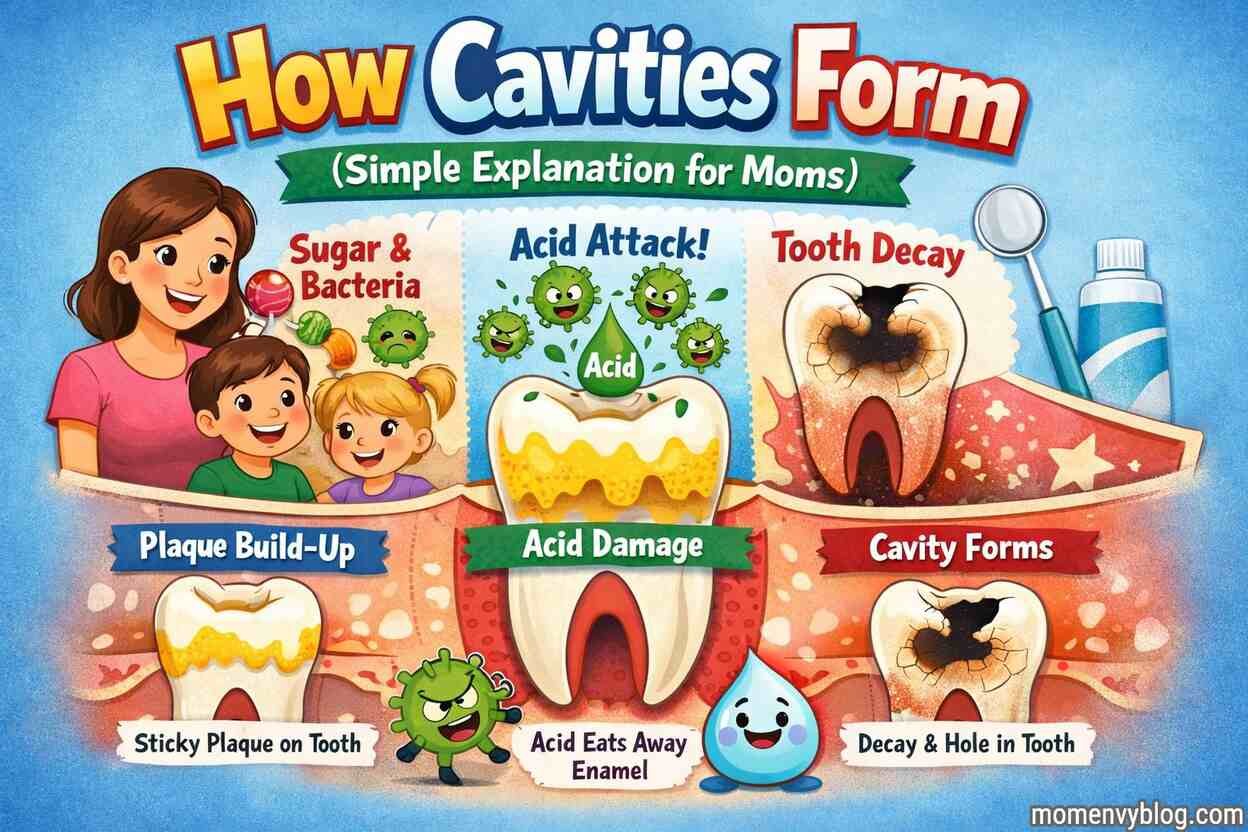
Cavities don’t happen overnight. They form slowly, step by step.
Here’s the simple version:
- Bacteria live naturally in the mouth
Everyone has them kids included. - Bacteria feed on sugar and carbs
This includes candy and crackers, bread, juice, and milk. - Acid is produced
When bacteria eat sugar, they release acid as waste. - Enamel weakens over time
Acid slowly wears down the tooth surface. - A cavity forms
Once enamel breaks down, decay can start.
The goal of prevention is to limit acid attacks and strengthen enamel every day.
Brushing Routine for Cavity Prevention
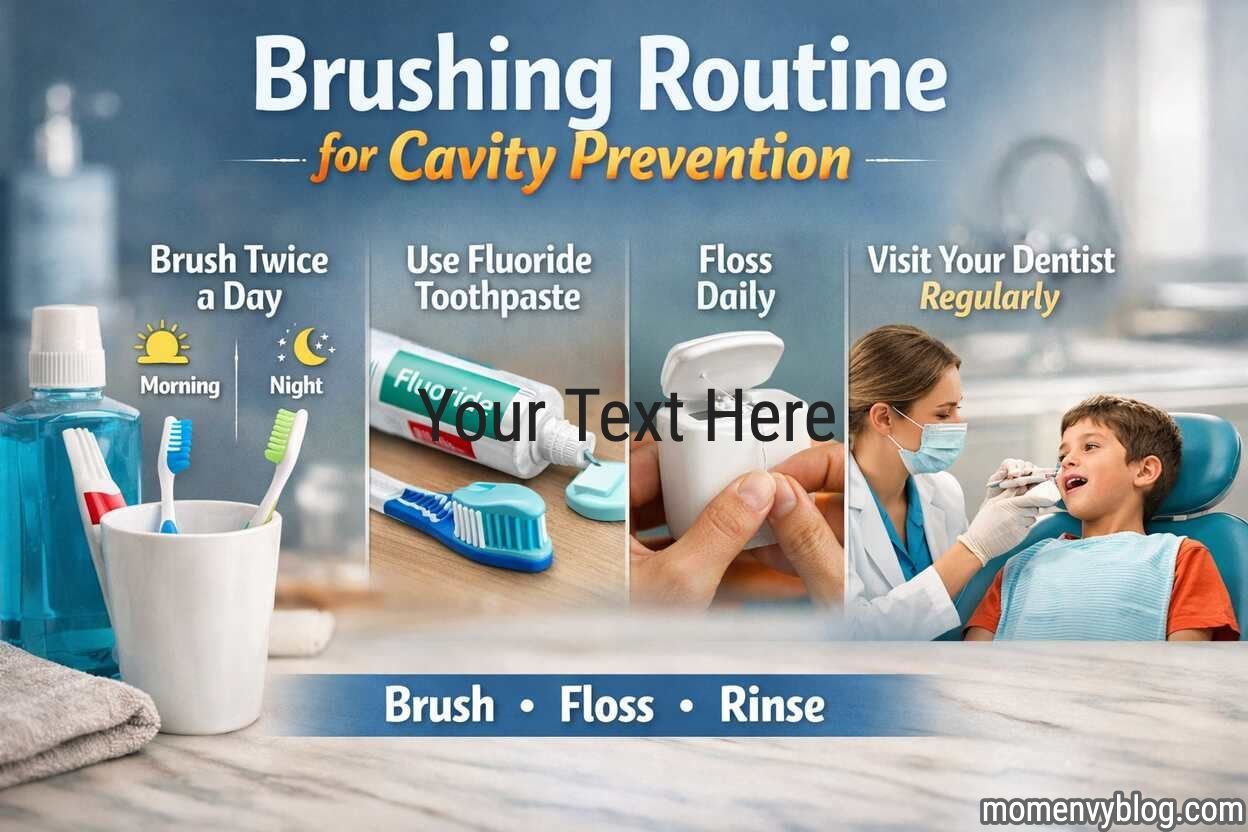
Brushing is the foundation of cavity prevention but how and what you use matters.
Toothpaste (By Age)
- Under 3 years:
Use a rice-sized smear of fluoride toothpaste. - Ages 3–6:
Use a pea-sized amount. - Age 6+:
Continue with pea-sized fluoride toothpaste, twice daily.
Safety tips for moms:
- Always supervise brushing.
- Teach kids to spit, not swallow.
- Store toothpaste out of reach for toddlers.
Many pediatric dentists recommend sticking with simple fluoride toothpastes made for kids no harsh whitening agents or strong flavors.
(We’ll cover specific options in our upcoming guide on best toothpaste for kids.)
Toothbrush Types
- Manual toothbrushes:
Perfectly effective when used correctly. Choose soft bristles and a small head. - Electric toothbrushes:
Helpful for kids who resist brushing or miss spots. Many dentists like them for ages 3+ with supervision.
The best toothbrush is the one your child will actually use consistently.
Flossing for Kids
Flossing becomes important once teeth start touching.
When to start:
As soon as two teeth touch side-by-side.
How to teach gently:
- Start by flossing for your child.
- Use floss picks if traditional floss feels tricky.
- Make it part of bedtime routine, not a punishment.
Common mistakes to avoid:
- Waiting too long to introduce flossing
- Letting kids floss unsupervised too early
- Skipping flossing because brushing “seems good enough”
Best Diet for Healthy Teeth
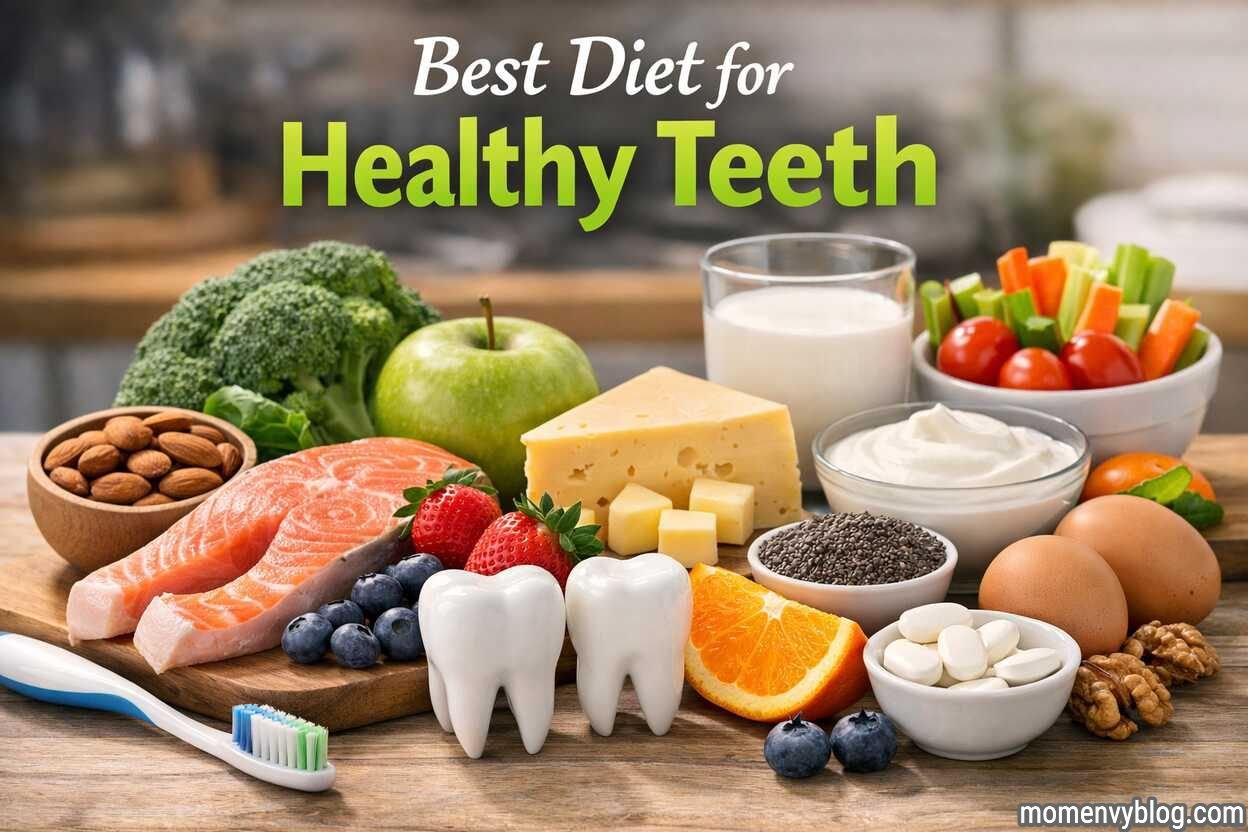
What your child eats affects their teeth just as much as brushing.
Foods That Strengthen Enamel
These help remineralize and protect teeth:
- Cheese and yogurt (calcium-rich)
- Eggs
- Leafy greens
- Crunchy fruits and vegetables (like apples and carrots)
- Water
These foods support saliva production and strengthen enamel naturally.
Snacks That Cause Cavities
Cavity-causing snacks aren’t just sweets.
They’re harmful because they:
- Stick to teeth
- Break down into sugar
- Stay in the mouth for long periods
Common culprits include:
- Crackers
- Fruit snacks
- Dried fruit
- Juice and sweetened drinks
(We’ll dive deeper in our future post on worst foods for kids’ teeth.)
School Lunchbox Ideas
Mom-friendly swaps that protect teeth:
- Cheese cubes instead of crackers
- Whole fruit instead of juice
- Yogurt with no added sugar
- Nuts or seeds (if age-appropriate)
- Water instead of flavored drinks
Fluoride for Kids Safe or Not?
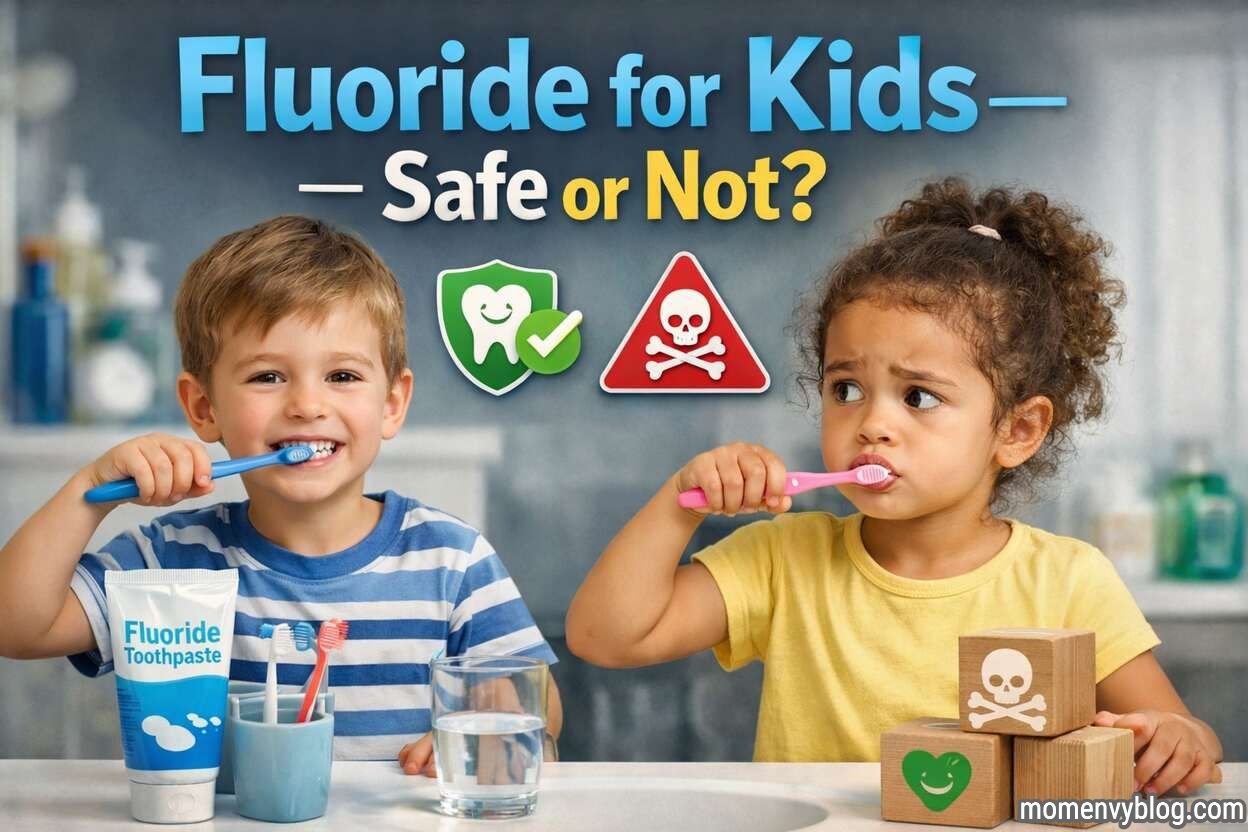
This is one of the most common questions moms ask and it’s a fair one.
Benefits:
- Strengthens enamel
- Helps repair early damage
- Significantly reduces cavity risk
Risks (only if overused):
- Swallowing too much toothpaste over time can cause mild fluorosis (cosmetic white spots)
Age-wise reassurance:
- Used in the correct amount, fluoride toothpaste is safe and effective
- Supervision is the key
Fluoride is a protective tool not something to fear.
Sealants Do Kids Need Them?
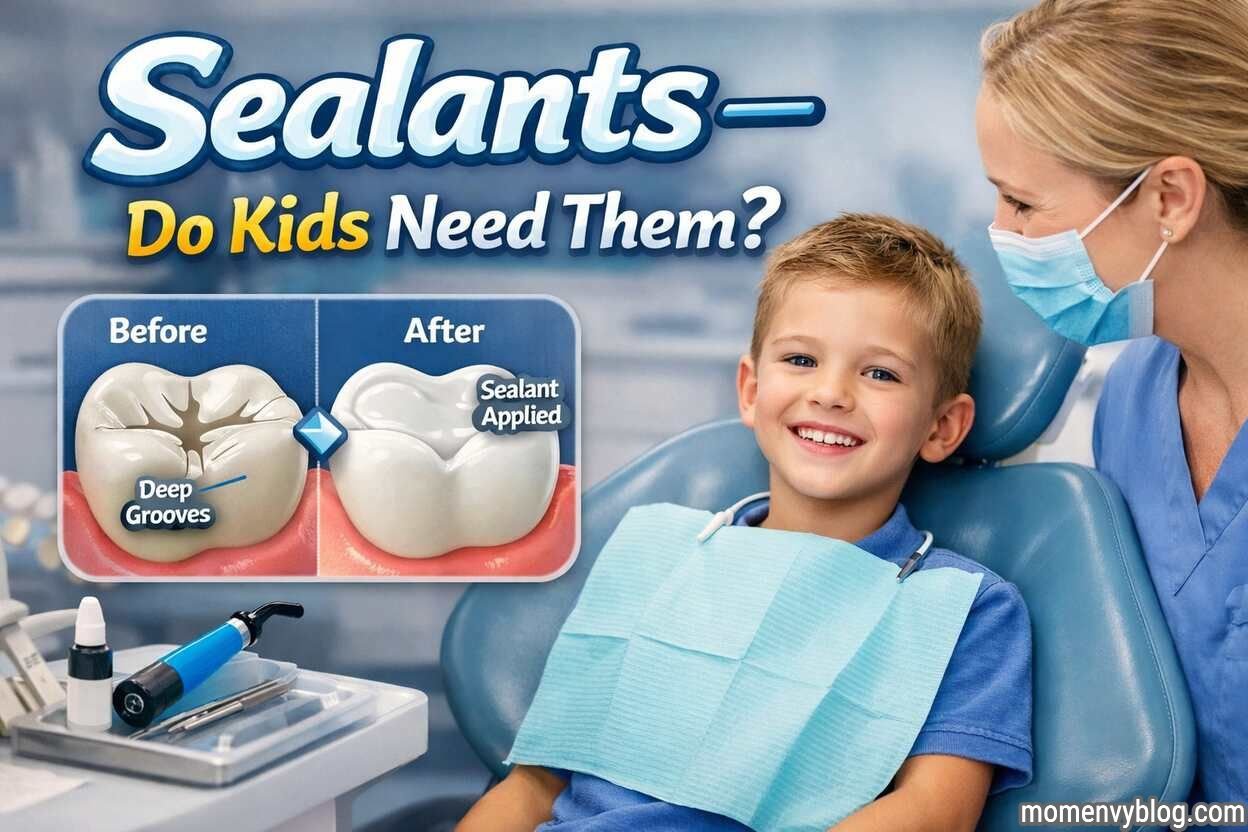
What are sealants?
Thin protective coatings applied to the chewing surfaces of molars.
When dentists recommend them:
- For kids with deep grooves
- For kids with higher cavity risk
- Often around ages 6–7 and again at 11–12
Cost overview:
Sealants are usually affordable and often covered by insurance. They can prevent fillings later.
Sealants don’t replace brushing they add extra protection.
Nighttime Eating & Milk Cavity Risk
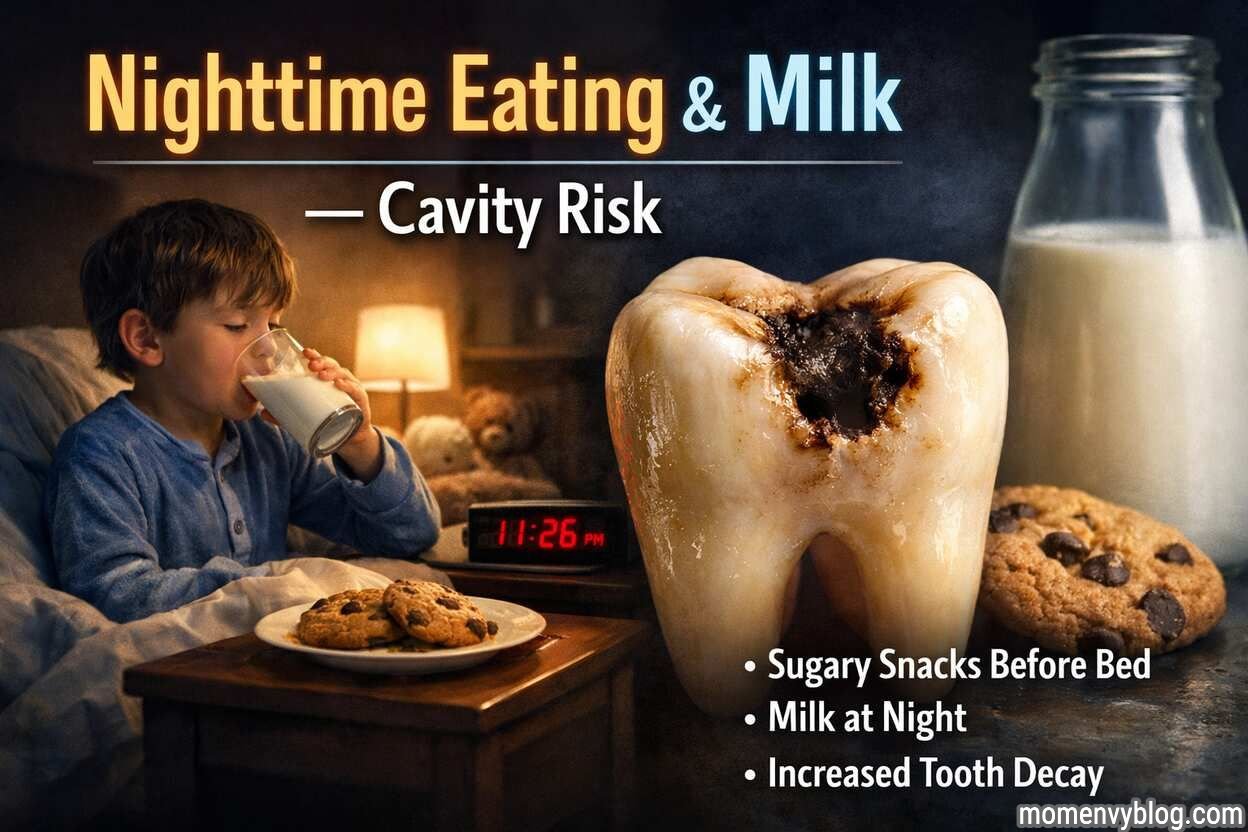
Night habits matter more than many moms realize.
Breastfeeding at night:
Breastmilk alone is less risky than sugary drinks, but prolonged night feeding after teeth erupt can increase cavity risk if teeth aren’t cleaned.
Bottle feeding:
Milk or juice in bottles overnight greatly increases cavity risk.
Gentle prevention tips:
- Wipe teeth after night feeds when possible
- Avoid letting kids fall asleep with bottles
- Transition to water at night when developmentally appropriate
No mom-shaming here just small steps forward.
(We’ll explore this further in night feeding and dental issues.)
Dentist Visits for Prevention
Regular dental visits are part of prevention, not just treatment.
- First visit: By age 1 or first tooth
- Checkups: Every 6 months
- Cleanings: Remove plaque brushing misses
- X-rays: Only when needed; dentists use minimal exposure
These visits help catch problems early before pain or fear starts.
Tooth Decay: Symptoms, Causes, Treatment, and Prevention
Conclusion
Cavity prevention isn’t about perfection. It’s about small, consistent habits that protect your child’s smile over time.
Brushing daily, choosing tooth-friendly snacks, managing night routines, and seeing the dentist regularly all add up. You don’t have to do everything at once even one change can make a difference.
This guide is part of a larger kids dental care resource designed to support you at every stage. You’re doing a great job caring for your child and their smile will thank you for it.
Quick FAQs (Because Moms Ask)
Can kids still get cavities even if we brush daily?
Yes diet, genetics, and enamel strength also play roles.
Is juice really that bad for teeth?
Frequent juice exposure is one of the top cavity risks.
Are baby teeth cavities a big deal?
Yes. They affect speech, eating, and adult teeth development.
Do kids really need fluoride toothpaste?
In most cases, yes in the correct amount.