








Post Preview
Consistency in finishing does not come from chance or operator guesswork. It comes from controlled curing conditions that stay stable from the first part of the day to the last. Powder coating ovens sit at the center of that control, quietly determining whether a finish performs as expected or becomes a costly redo.
Ovens Hold Exact Temps That Cure Powder the Right Way
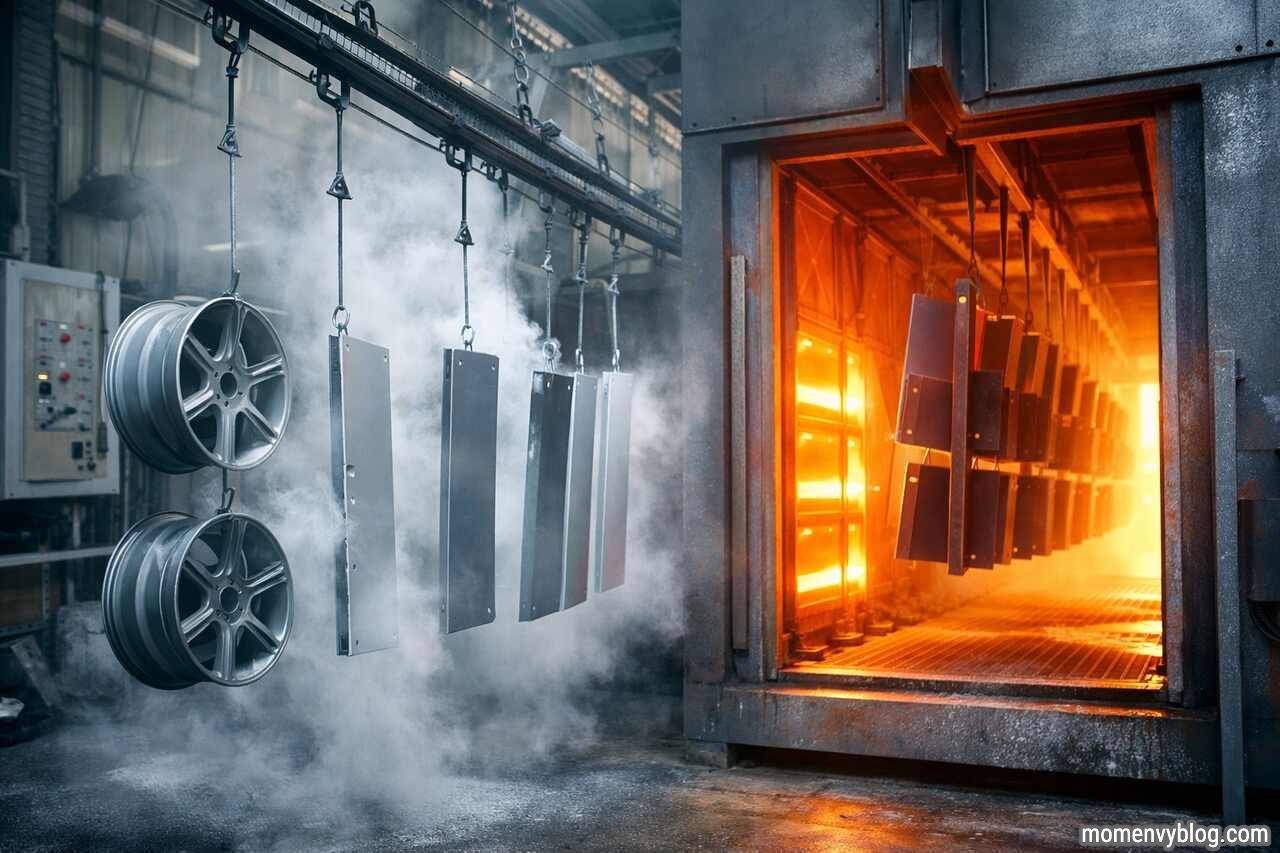
Powder coatings are engineered to cure within specific temperature ranges, not broad estimates. An industrial powder coating oven is designed to reach and maintain those exact setpoints without drifting as loads change. That precision ensures the powder flows, bonds, and crosslinks as intended by the coating manufacturer.
Temperature stability also matters during ramp-up. A well-designed oven brings parts up to cure temperature evenly instead of spiking heat too quickly. This controlled rise prevents surface defects and internal stresses that weaker powder coating systems often struggle to manage consistently.
Even Heat Stops Patchy or Soft Spots on Parts
Uneven heat is one of the most common causes of inconsistent finishes. Cold corners or hot zones inside poorly designed ovens lead to soft spots, dull patches, or incomplete cure areas. These defects may not show immediately but often fail later in service.
Uniform heat distribution inside powder coating ovens ensures every surface receives the same curing conditions. Balanced airflow and insulated chamber design eliminate temperature gaps that compromise appearance and performance. This is a major reason manufacturers prioritize oven quality when evaluating powder coating equipment for sale.
Steady Airflow Keeps Finish Uniform on Every Surface
Air movement inside the oven is just as important as temperature. Steady airflow carries heat evenly across complex part geometries, reaching recesses and edges that would otherwise lag behind. Without it, finishes can vary across the same component.
Carefully engineered airflow patterns prevent turbulence that can disturb powder before it fully cures. Reliable powder coating equipment packages account for both heat and air balance, creating finishes that look and perform the same regardless of part orientation.
Repeatable Cycles Cut out Surprises on Output
Repeatability separates controlled finishing operations from reactive ones. Powder coating ovens with programmable cure cycles remove variability from the process. Once a cycle is validated, it can be repeated with confidence across shifts and job runs.
That repeatability simplifies training and reduces reliance on tribal knowledge. Operators do not need to adjust settings constantly, and quality teams can trust that each batch follows the same cure profile. Consistent cycles are a defining advantage of modern powder coating equipment.
Accurate Controls Prevent Under- or Over-curing Defects
Under-curing leads to poor adhesion and early failure, while over-curing can discolor finishes or reduce flexibility. Accurate oven controls keep cure time and temperature within narrow tolerances, protecting the coating’s performance characteristics.
Digital control systems allow precise adjustments for different powders and substrates. This level of control is difficult to achieve without purpose-built powder coating systems designed around curing accuracy. It is also a key factor buyers evaluate when considering a powder coating oven for sale.
Proper Cure Boosts Part Durability Long Term
Durability is not just about appearance; it depends on how well the powder bonds to the substrate. Proper curing activates chemical crosslinking that gives powder coatings their resistance to abrasion, chemicals, and weather exposure. An industrial powder coating oven ensures the coating reaches full cure depth, not just surface hardness. This deeper bond extends part life and reduces warranty issues. Over time, consistent curing protects both the product and the manufacturer’s reputation.
Predictable Runs Make Scheduling Jobs Easier
Unpredictable curing times create bottlenecks throughout a finishing line. When ovens perform inconsistently, downstream processes wait or rush to compensate. Reliable oven performance stabilizes production flow. With predictable cure cycles, scheduling becomes simpler and more accurate. Production planners can estimate throughput confidently, knowing the oven will not introduce delays. This predictability is one reason integrated powder coating equipment packages improve overall operational efficiency.
Less Rework Means More Parts out the Door Fast
Rework drains time, labor, and material costs. Many rework issues trace back to curing problems that could have been avoided with better oven performance. Inconsistent heat or airflow often forces parts back through the line. High-quality powder coating ovens reduce these errors by delivering uniform cures on the first pass. Fewer rejected parts translate directly into higher output and lower cost per unit. This efficiency is a key driver behind investments in advanced powder coating systems.
Reliable Ovens Reduce Guesswork in Quality Checks
Quality inspections become simpler when curing conditions are consistent. Inspectors spend less time questioning whether a finish cured correctly and more time verifying final appearance. Reliable ovens remove uncertainty from quality control.
When ovens perform predictably, test results align with expectations. This confidence reduces over-inspection and speeds release times. Manufacturers evaluating powder coating equipment for sale often prioritize ovens that support dependable quality verification.
Achieving dependable cure results starts with ovens engineered for control and stability. Reliant Finishing Systems designs solutions that maintain uniform temperatures and controlled airflow across every cycle. This level of consistency allows finishing operations to run smoothly with fewer adjustments and fewer quality concerns.