





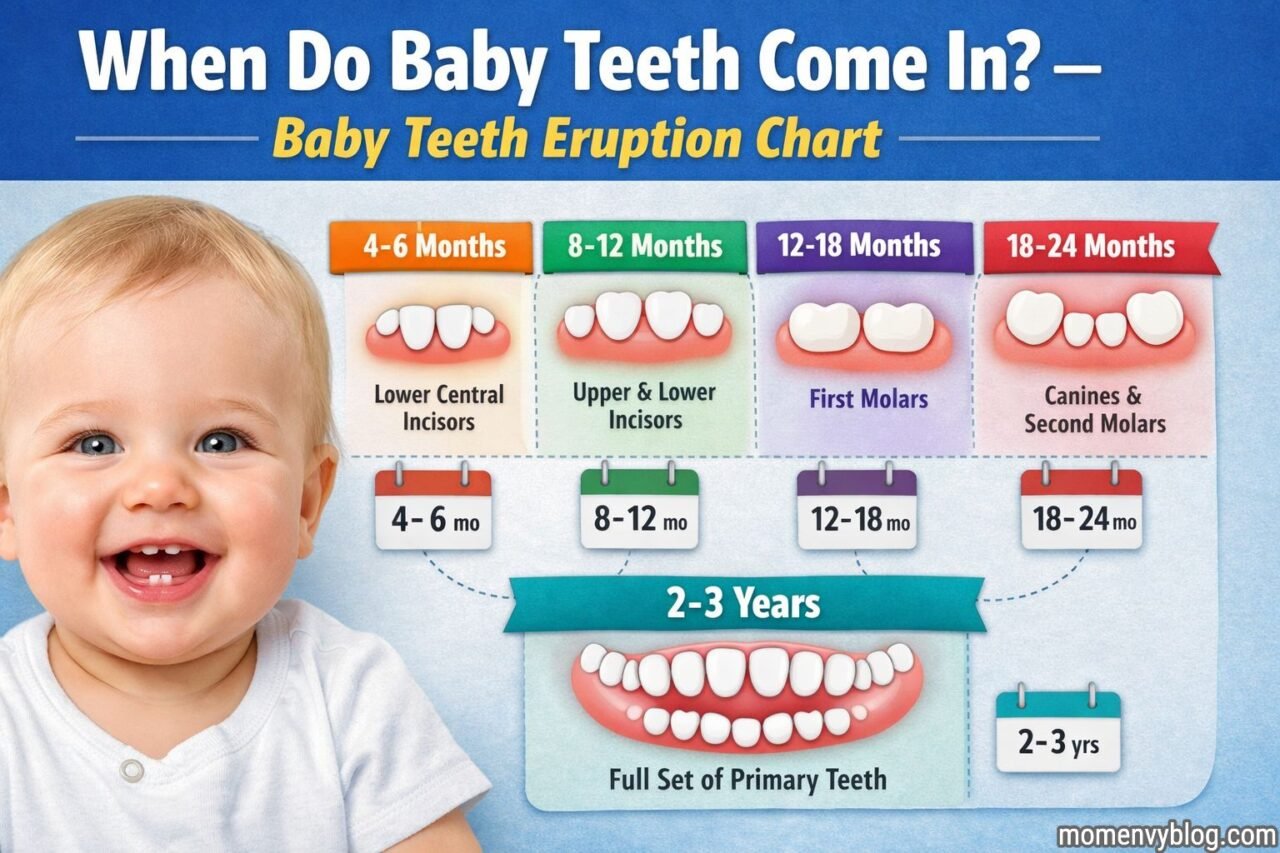
Most babies get their first tooth between 4–8 months, usually the lower front teeth. New teeth typically appear every few months until around age 3, when all 20 primary teeth have erupted.
A wide range is normal, some babies are early, others late.
The most important thing is the order of eruption, not the exact timing.
If your baby has no teeth by 12–15 months, your pediatric dentist may want to take a closer look, but delays are often harmless.
What Is Baby Teeth Eruption? (Simple Definition)
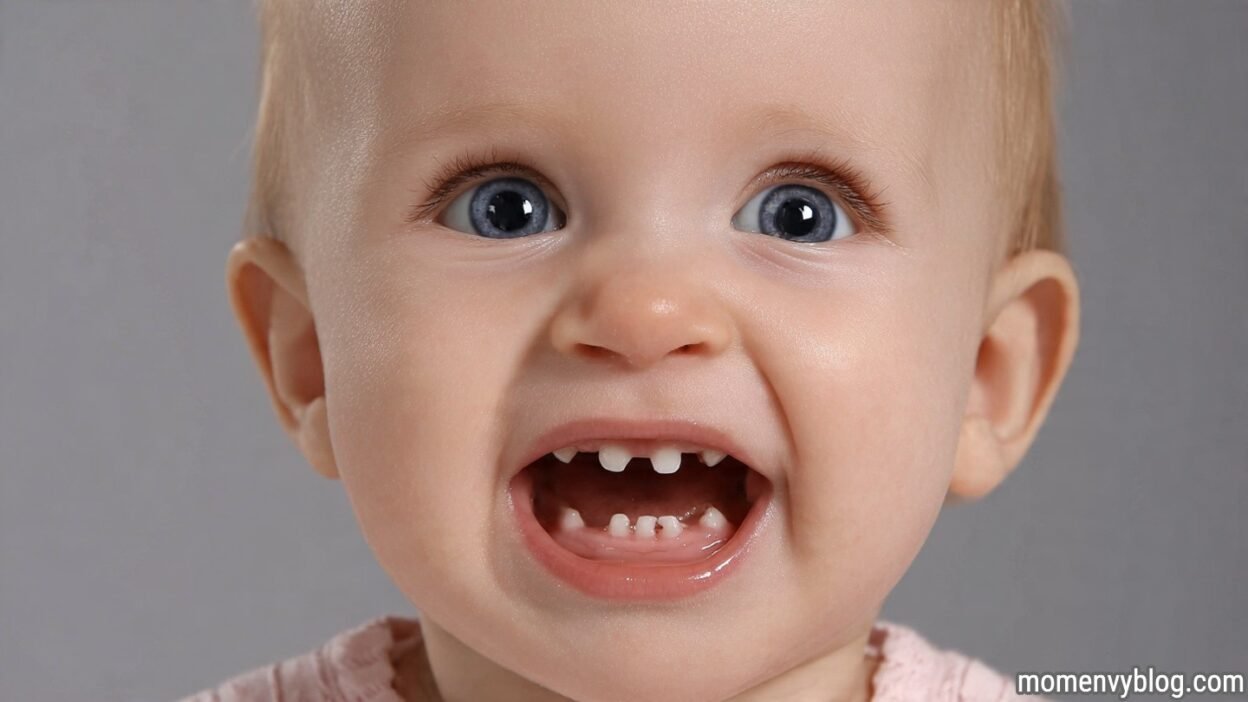
I’ve always been worried about my first baby’s tooth eruption.Baby teeth eruption is the natural process where your baby’s primary teeth move through the gums and become visible. Every tooth starts developing during pregnancy and slowly travels upward until it breaks through the gum surface.
Why Timing Varies So Much
Most moms are surprised by how different babies are:
- Some are born with a tooth (a “natal tooth”).
- Some don’t get teeth until after their first birthday.
- Some breeze through teething with almost no symptoms.
- Others seem to feel every tiny shift.
- And all of this is completely normal.
Eruption timing depends on:
- Genetics
- Birth weight
- Whether the baby was born prematurely
- Overall development speed
- Family patterns (late-teething parents often have late-teething babies)
Reassurance for Parents
The eruption charts below represent averages, not deadlines. If your baby isn’t matching the exact age ranges, you’re still likely within the normal window.
Complete Baby Teeth Eruption Chart (Core Section)
This baby teeth eruption chart shows the typical age ranges when the 20 primary teeth appear.
Baby Tooth Eruption Chart
| Tooth Name | Upper Jaw (Maxillary) | Lower Jaw (Mandibular) | Average Eruption Age |
| Central Incisors | 8–12 months | 6–10 months | 6–12 months |
| Lateral Incisors | 9–13 months | 10–16 months | 9–16 months |
| First Molars | 13–19 months | 14–18 months | 13–19 months |
| Canines (Cuspids) | 16–22 months | 17–23 months | 16–23 months |
| Second Molars | 25–33 months | 23–31 months | 23–33 months |
Ages Are Averages, Not Expectations
It’s common for babies to be a few months earlier or later. A delay does not mean something is wrong unless the child is outside the expected range by more than several months or shows red flags (covered below).
Month-by-Month Tooth Eruption Timeline
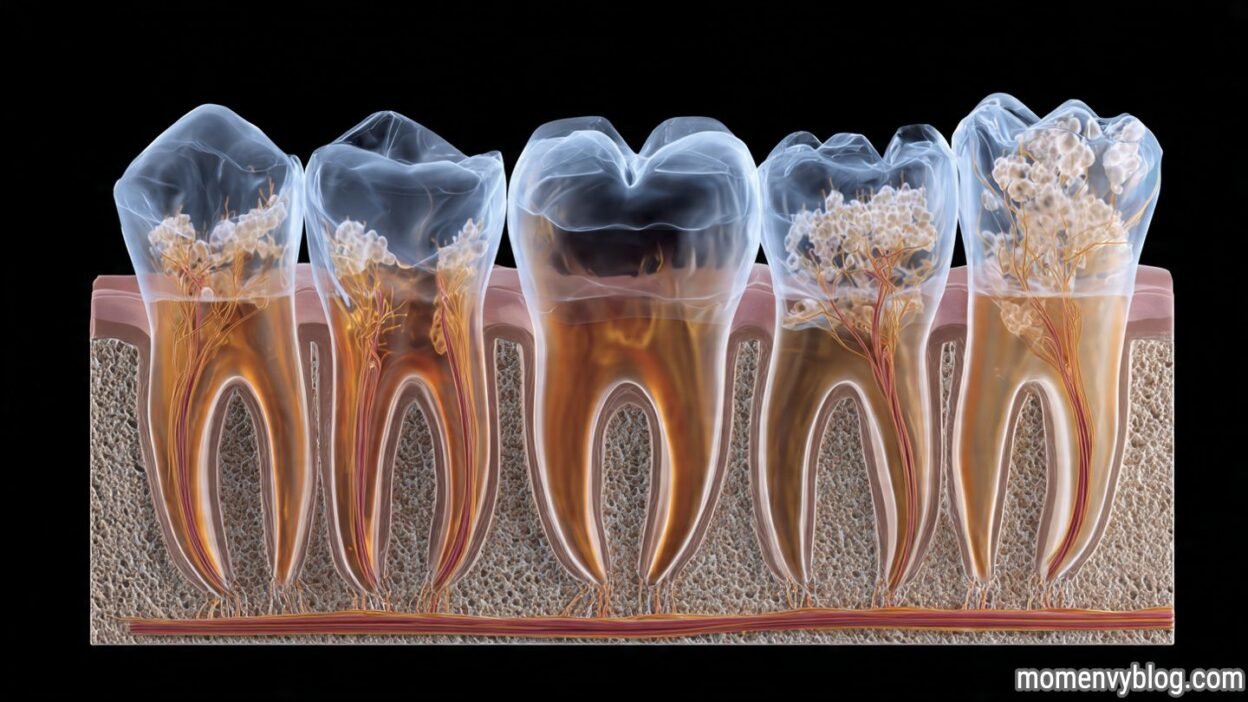
Every baby follows their own rhythm, but this timeline helps moms know what typically happens.
4–6 Months
Teeth likely to appear:
- Lower central incisors (the classic “first teeth”)
What many parents notice:
- Increased drooling
- Chewing on hands, toys, blankets
- Mild gum puffiness
- More night waking (because teething hormones are more active at night)
What moms can do:
- Offer a clean, chilled (not frozen) teething ring
- Wipe drool gently to prevent a rash
- Massage the gums with a clean finger
- Keep routines predictable for comfort
6–8 Months
Teeth likely to appear:
- Lower central incisors (if not already)
- Upper central incisors
What moms may see:
- A white line under the gum
- Tiny buds pushing through
- Increased chewing
- Occasional fussiness
Helpful support:
- Chilled washcloth
- Soft silicone teether
- Extra cuddles this phase passes quickly
8–12 Months
Teeth likely to appear:
- Upper and lower central incisors
- Upper lateral incisors
Symptoms:
- Mild disturbance in feeding
- Interest in biting food (even without many teeth)
- Some babies feel little to no discomfort
- Slight gum sensitivity
What moms can do:
- Keep mealtime calm
- Let baby explore safe textures
- Continue gum massages
12–18 Months
Teeth likely to appear:
- Lower lateral incisors
- First molars (big square teeth in the back)
Symptoms:
- First molars can cause more swelling larger teeth = more pressure
- Babies may chew harder objects
- Possible nighttime fussiness
Support ideas:
- Extra comfort at bedtime
- Cool, soft foods if gums look tender
- Reassurance this stage often feels longer than it is
18–24 Months
Teeth likely to appear:
- Canines (pointed teeth next to molars)
Symptoms:
- Redness near canines
- “Biting everything” behavior
- Occasional clinginess
Mom tips:
- Lots of supervised teething toys
- Maintain consistent sleep routines
- Normalize the behavior canines can be stubborn
24–36 Months
Teeth likely to appear:
- Second molars (the last baby teeth!)
Symptoms:
- Bigger molars = more pressure
- Some toddlers show almost no sign
- Chewing may increase
What moms can do:
- Offer chilled teething tools
- Keep gums clean with a soft brush
- Celebrate your toddler is almost done teething!
Order of Baby Teeth Appearance (What Comes First and Last)
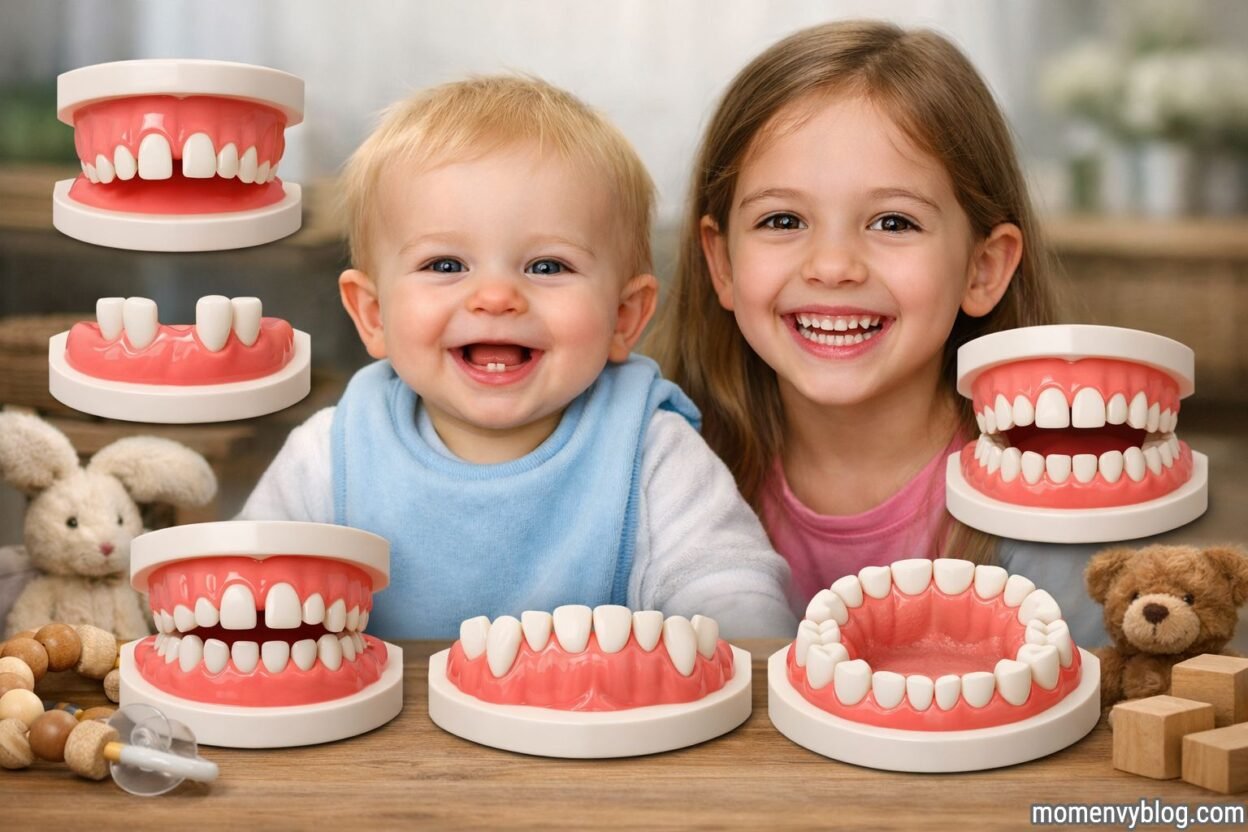
While eruption age varies, the order is surprisingly consistent.
Typical Order of Appearance
- Lower central incisors
- Upper central incisors
- Upper lateral incisors
- Lower lateral incisors
- First molars
- Canines
- Second molars
Why Order Matters More Than Exact Timing
If teeth erupt in the correct sequence, even if they’re months “late” dentists are usually not concerned. Order reflects underlying jaw and developmental patterns.
Early vs Late Tooth Eruption
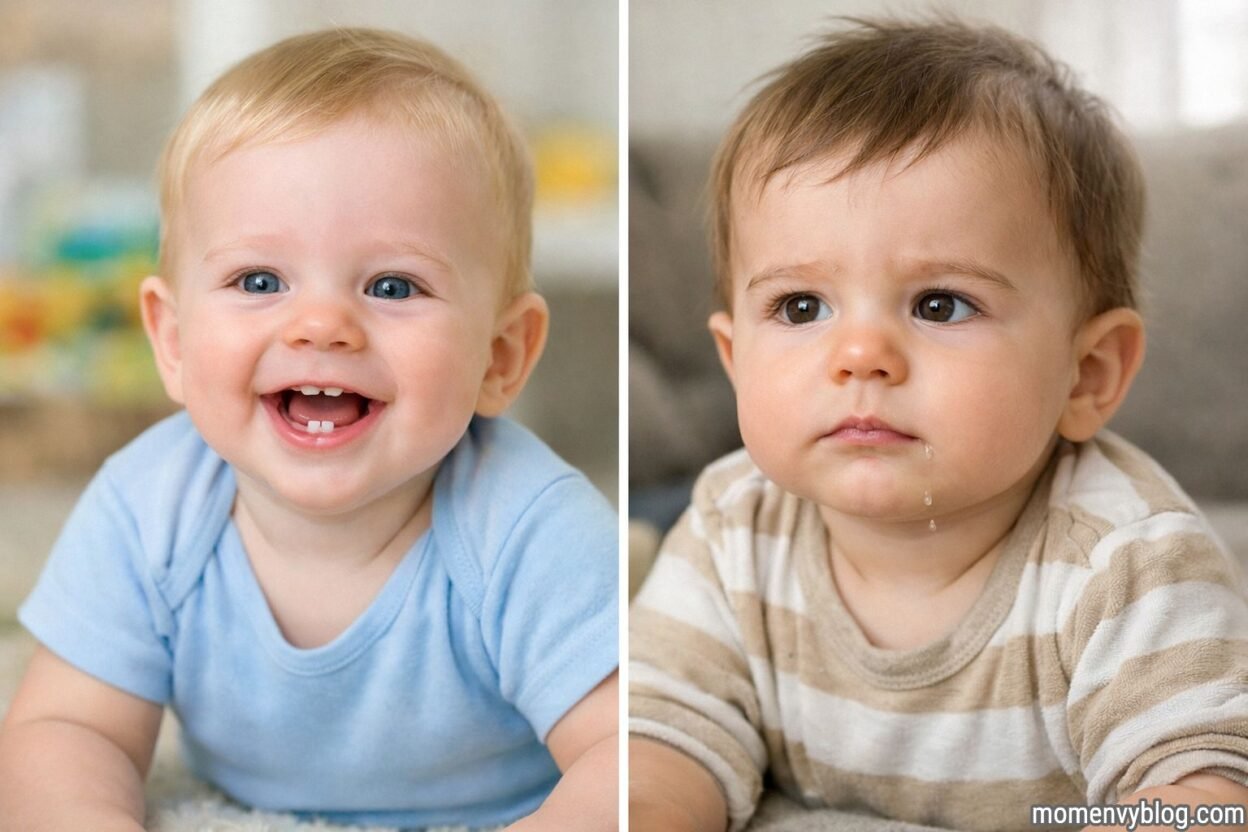
What Counts as Early?
- Teeth showing before 4 months
- Some babies are born with teeth (natal/neonatal teeth)
These are typically harmless but should be checked by a pediatric dentist.
What Counts as Delayed?
- No teeth by 12 months
- No more than 2–4 teeth by 18 months
- Missing major milestones by 22–24 months
Common Causes of Delayed Eruption
Most are benign and not harmful:
- Family genetics (most common)
- Prematurity
- Low birth weight
- Mild nutritional delays
- Growth patterns unique to your baby
Rare causes include endocrine or genetic conditions but these almost always come with other symptoms.
Signs Baby Teeth Are About to Come In
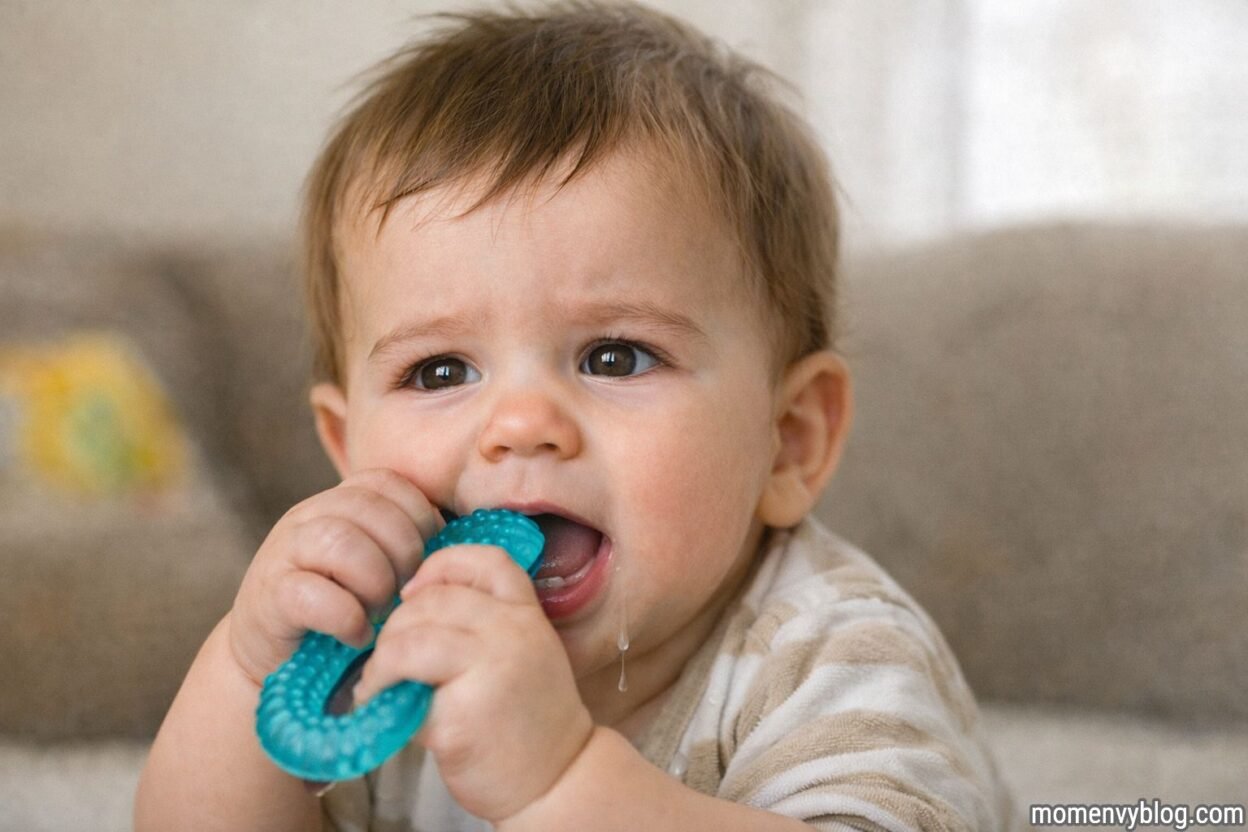
Most babies show predictable signs:
- Lots of drooling
- Chewing everything
- Gum swelling or a bluish cyst-like bubble (harmless eruption cyst)
- Rubbing cheeks or pulling ears
- Night waking
- Extra clinginess
- Small white bump under gum
These are normal and do not require treatment.
Delayed Baby Teeth Eruption: When to Worry

Most delays are harmless, but there are a few times a dental visit is recommended.
See a Pediatric Dentist If:
- Your baby has no teeth by 12–15 months
- Only 1–2 teeth by 18 months
- Eruption order is significantly unusual
- Gums look unusually firm or swollen without progress
- Baby has other developmental delays
- You’re simply unsure dentists can reassure you
A quick exam can determine whether the teeth are present but slow, which is the case for most children.
When Do Baby & Adult Teeth Come In? (Tooth Eruption Ages)
FAQs (Questions Parents Ask About Tooth Eruption)
Q: Is it normal if my baby has no teeth at 9 months?
A: Yes. Many healthy babies don’t get teeth until 10–12 months.
Q: Which baby teeth come in first?
A: lower front teeth (lower central incisors) typically appear first.
Q: Do boys and girls teethe at different times?
A: Girls slightly tend to teethe earlier, but the difference is minimal.
Q: Is fever normal during teething?
A: Teething can cause a mild increase in temperature but should not cause a true fever. If your baby has a fever, look for illness unrelated to teething.
Q: Can teething cause diarrhea?
A: Not directly. Increased saliva may loosen stools slightly, but true diarrhea is not caused by teething.
Q: What if teeth come in out of order?
A: A small variation is normal. Significant sequence differences are worth a dentist visit.
Q: My baby is chewing everything does that mean teeth are coming?
A: Most likely, yes. Increased chewing is one of the earliest signs.
Q: Can babies get teeth without showing symptoms?
A: Absolutely some babies teethe silently.
Q: Why do my baby’s gums look blue before a tooth comes in?
A: That’s likely an eruption cyst harmless and common.
Q: Do premature babies get teeth later?
A: Often, yes. Their dental timeline tends to follow their overall developmental timeline.
Q: Should I use numbing gels?
A: No. Over-the-counter numbing gels are not recommended for infants.
Q: How long does teething pain last?
A: Usually 2–3 days before a tooth breaks through, then it eases quickly.
Gentle Reassuring Conclusion for Parents
Every baby has their own beautiful timeline. Some pop teeth out early and race ahead. Others take their time and erupt slowly, and both patterns are perfectly normal.
You’re doing an amazing job noticing the changes, offering comfort, reading kids’ dental care guides on mom blogs, and supporting your little one through this natural milestone. Remember, most teething variations are harmless, and pediatric dentists are always happy to check and reassure you if something feels off.
Your baby’s smile is developing exactly the way it’s meant to.