





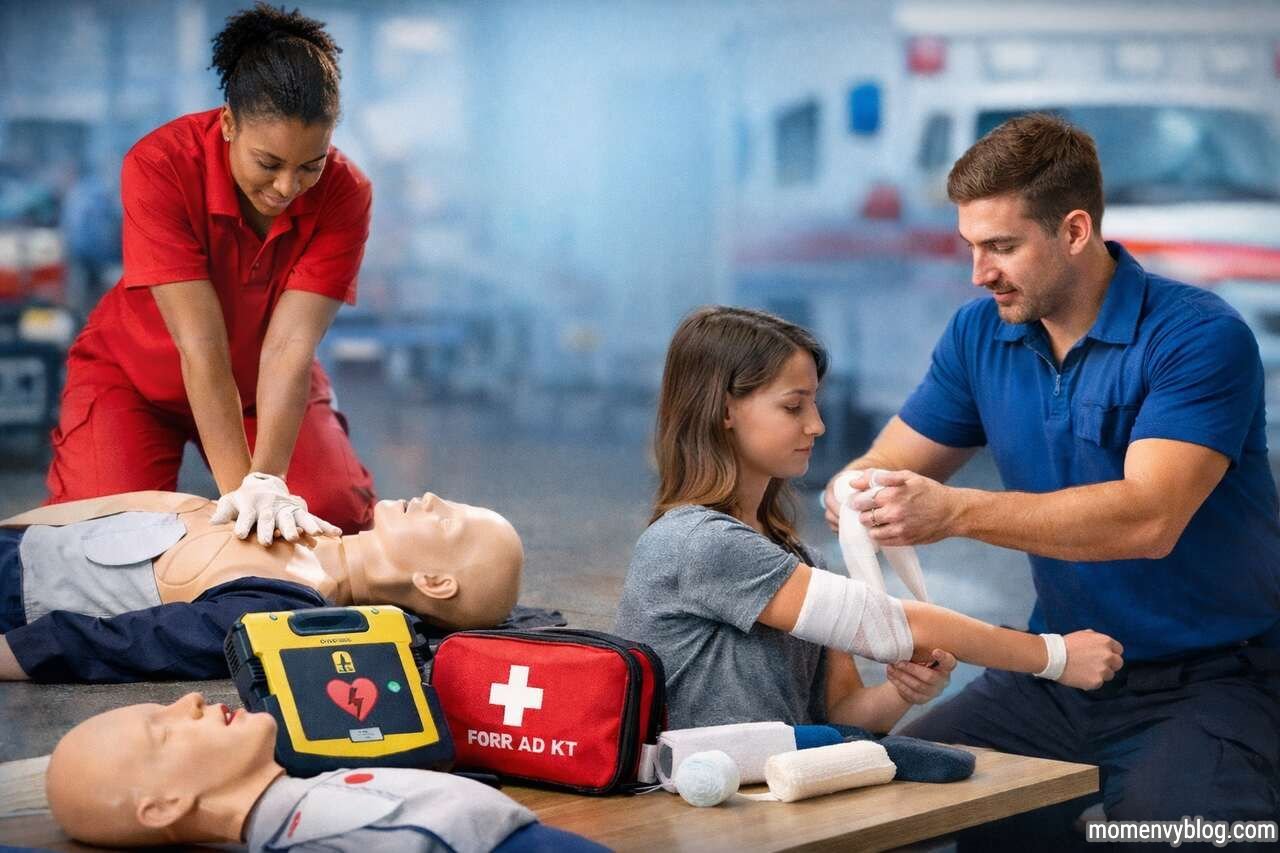
Cardiopulmonary resuscitation (CPR) and First Aid certification not only equip individuals with essential medical skills but also strengthen community health. Every year, countless lives are saved owing to timely interventions by bystanders trained in CPR. Recent data reveal that CPR provided immediately after a sudden cardiac arrest can double or triple a victim’s chance of survival. This underscores the critical nature of widespread CPR knowledge and training.
Undertaking CPR and First Aid training courses confers invaluable benefits, from personal empowerment to broader societal impact. These certification programs are designed to be accessible, practical, and geared towards individuals with no prior medical knowledge. Below, we delve into the many reasons why becoming certified in CPR and First Aid is a decision that can yield significant rewards.
Gaining Lifesaving Skills With CPR and First Aid Certification
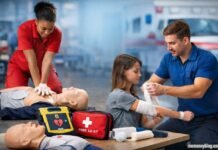
Earning a CPR and First Aid certification equips you with the competence to respond effectively in life-threatening situations. Such training involves learning to perform chest compressions, deliver rescue breaths, and utilise automated external defibrillators (AEDs) — all critical techniques in the event of a cardiac emergency.
Statistically, about 350,000 out-of-hospital cardiac arrests occur in the United States annually; yet only 46% of these victims receive the immediate assistance they need before professional help arrives. This highlights an opportunity for more individuals to step in as potential lifesavers. In addition, a First Aid certification programs teach how to manage a variety of emergencies, from cuts and burns to strokes and seizures.
Those interested in pursuing these skills should look for certified training providers that offer comprehensive courses. One such opportunity is the Louisville AHA CPR/First Aid certification, which follows American Heart Association guidelines to deliver accredited and highly recognised training.
Enhancing Employment Opportunities Through Certification
CPR and First Aid certifications are not only about saving lives, but they also serve as valuable additions to your resume. Employers often look favourably upon candidates who bring these qualifications to the table, recognising them as individuals who are prepared, responsible, and capable of handling pressure situations.
In fields such as childcare, education, and certain public service roles, having CPR and First Aid certification is either required or a strong asset. Moreover, the Occupational Safety and Health Administration (OSHA) recommends that all workplace first aid programs include CPR training, a directive that underscores the usefulness of these skills in the professional domain.
Job seekers and professionals should consider obtaining these certifications to stand out in the job market and comply with industry standards. Reviewing job descriptions in your field can provide insights into the demand and value placed on these life-saving qualifications.
Preparing for Emergencies: A Look at Certification Courses
CPR and First Aid courses are meticulously structured to ensure participants are ready to act in emergency scenarios. They are typically a mix of theoretical knowledge and hands-on practice designed to build proficiency. Understanding the chain of survival and the step-by-step actions required in different situations forms the backbone of these courses.
Many programs are available in flexible formats, including in-person sessions, online coursework, or a combination of both, to accommodate differing schedules and learning preferences. These offerings vary in length but can often be completed in just a few hours, making them remarkably efficient given their life-saving potential.
To begin, interested individuals should research available local or online courses that match their needs. Organisations such as the American Heart Association or the Red Cross provide extensive options that culminate in official certification upon successful completion.
Building Confidence and Community Responsibility With CPR Knowledge
Becoming CPR and First Aid certified does more than teach practical skills; it fosters a sense of confidence and readiness to help others. The knowledge that you can potentially save a life infuses a level of self-assurance that extends beyond medical emergencies into everyday challenges.
This training also instills a sense of civic duty, as those certified become integral parts of their community’s health and safety network. The social impact is profound: communities with more trained individuals can achieve quicker, more efficient emergency responses, potentially reducing mortality rates.
Encouraging friends, family, and colleagues to pursue CPR and First Aid training can create a supportive, prepared community. Such collective action can drive positive change and demonstrate responsibility towards one another’s well-being.
CPR and First Aid certification is more than just an educational credential; it is a transformative tool that empowers individuals to make a critical difference. By mastering life-saving techniques, enhancing career prospects, fostering emergency preparedness, and promoting community well-being, these certifications represent a wise and fulfilling investment in personal development and public service.

