




Introduction
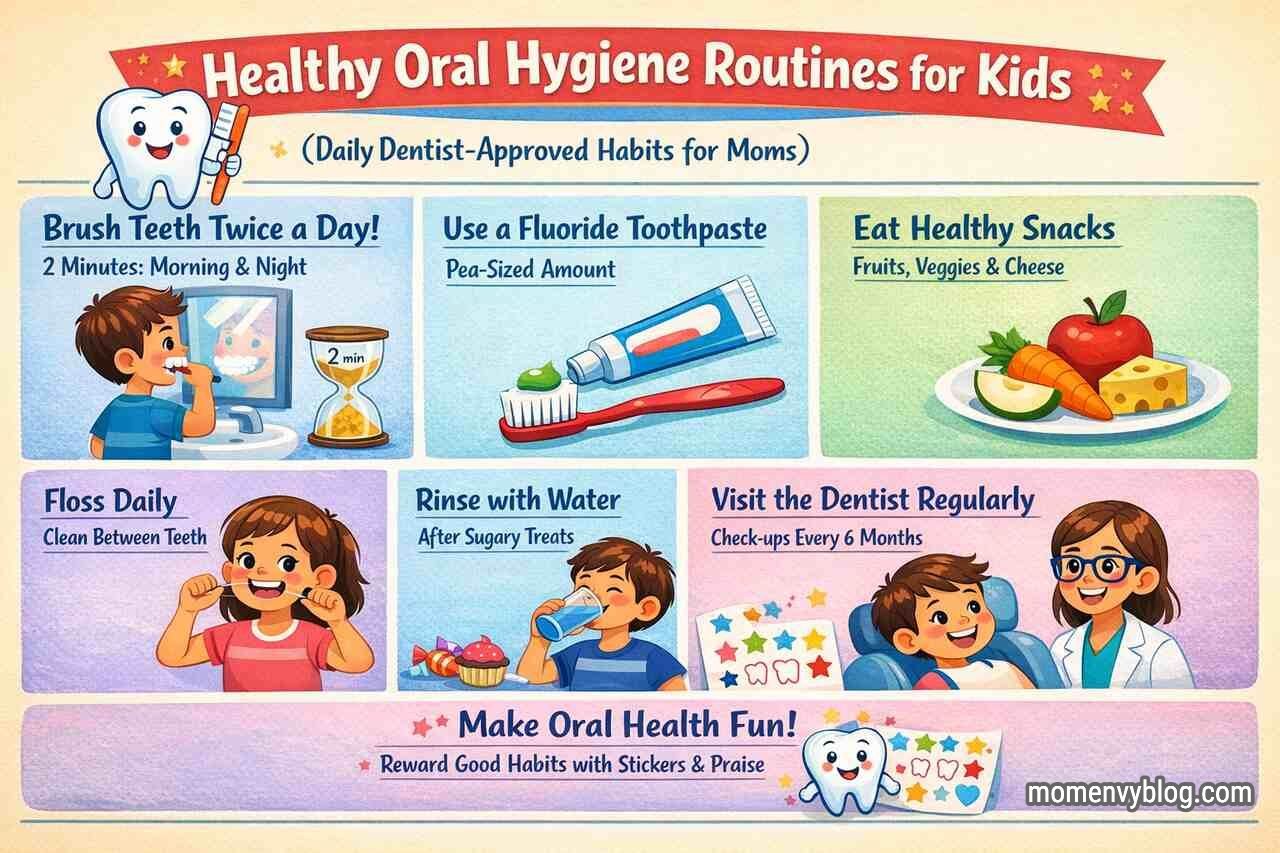
Most moms focus on dental visits when something feels wrong a cavity, tooth pain, or a reminder card from the dentist. But in reality, daily oral hygiene routines matter far more than occasional dental checkups when it comes to your child’s long-term oral health.
Here’s the reassuring part:
You don’t need complicated routines, fancy tools, or perfection. Simple, consistent daily habits are enough to protect your child’s teeth and gums.
This guide is designed to help you build realistic oral hygiene routines that grow with your child from babyhood through the school years. It’s part of a complete kids dental care system that supports moms step-by-step, without guilt or overwhelm. (You can also explore the complete kids dental care guide for a full picture of preventive dental care.)
When to Start Oral Hygiene for Kids
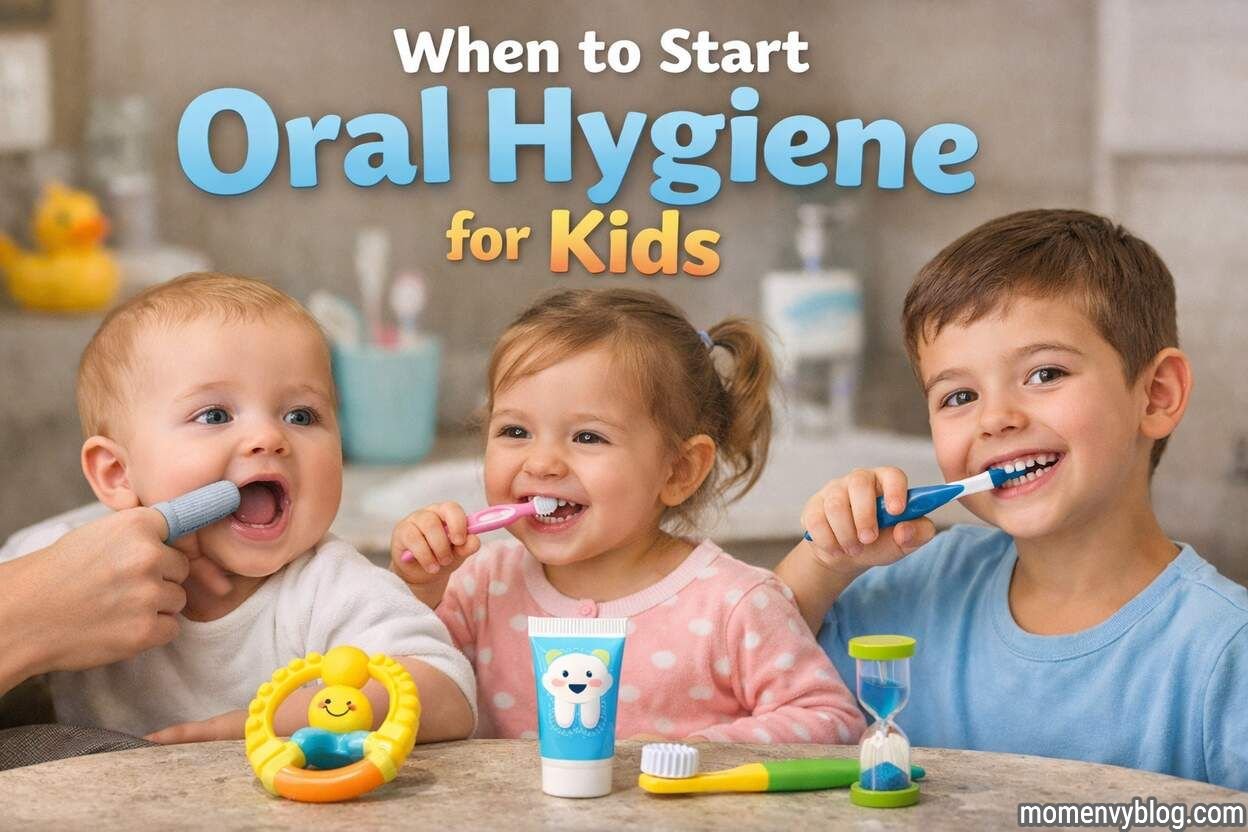
Many moms wonder if oral care really matters before teeth show up. The answer is yes gently and simply.
Before Teeth Appear
Even before the first tooth:
- Bacteria still live in the mouth
- Milk residue can sit on gums
- Early habits help babies accept oral care later
A clean mouth sets the stage for healthy teeth.
After the First Tooth
Once the first tooth erupts:
- Begin daily cleaning right away
- Use a soft baby toothbrush or finger brush
- Keep routines calm and brief
Early care helps prevent early childhood cavities.
Toddler Years
This is when routines really matter:
- Toddlers snack often
- Teeth touch and trap food
- Habits formed now tend to stick
Consistency matters more than technique at this stage.
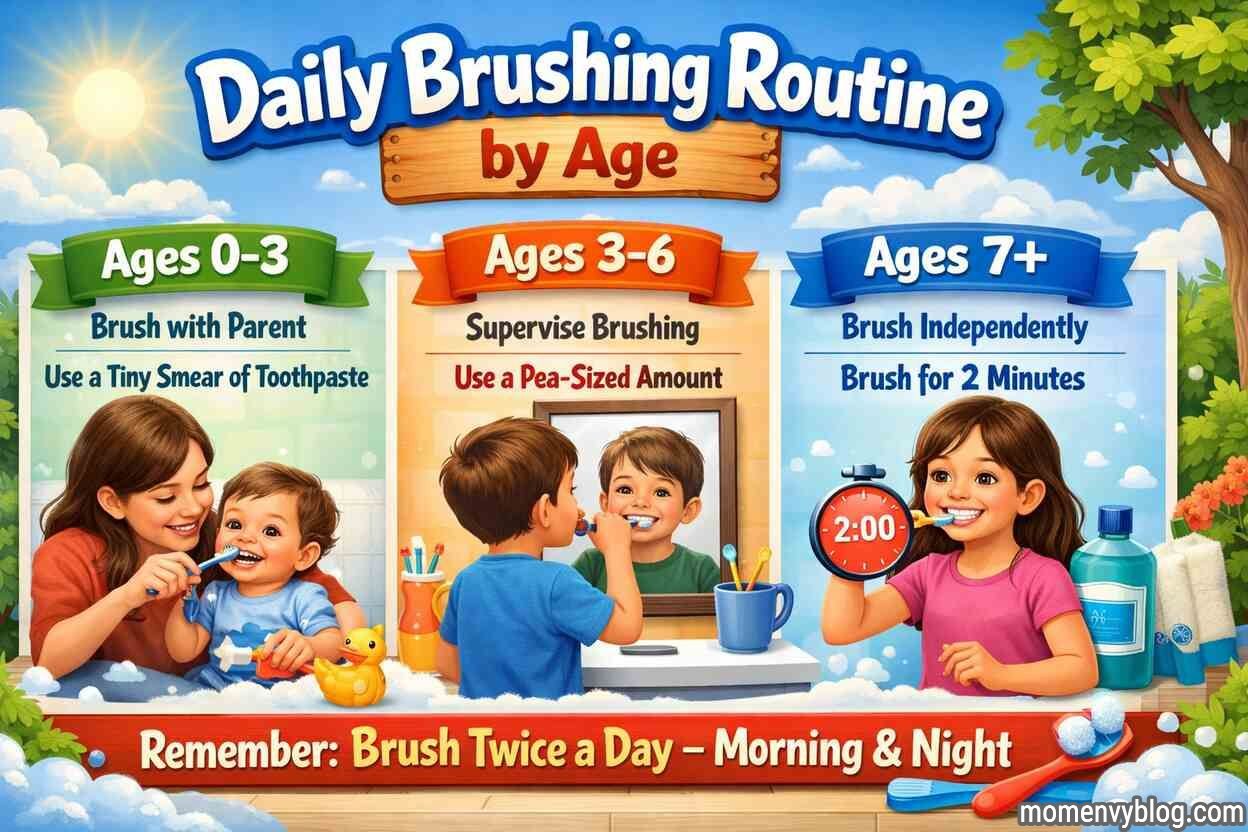
Daily Brushing Routine by Age
Babies (0–12 Months)
For babies, brushing is about gentle introduction, not scrubbing.
- Clean gums once or twice daily with a soft cloth
- Introduce a baby toothbrush when the first tooth appears
- Use water only or a smear of toothpaste if advised by your dentist
Keep it quick, calm, and positive.
Toddlers (1–3 Years)
Toddlers want independence but still need help.
- Brush twice daily
- Let your toddler “try” first, then you finish
- Use a rice-sized amount of toothpaste
- Make brushing part of morning and bedtime routines
This is about building habits, not perfect brushing.
Preschool & School-Age Kids
As kids grow, they want more control and that’s healthy.
- Encourage independence, but supervise until at least age 7–8
- Watch for missed back teeth and gumlines
- Keep brushing twice daily non-negotiable
If you’re unsure whether your child is brushing effectively, our upcoming guide on how to brush kids’ teeth properly will walk you through it step-by-step.
Choosing the Right Toothbrush for Kids
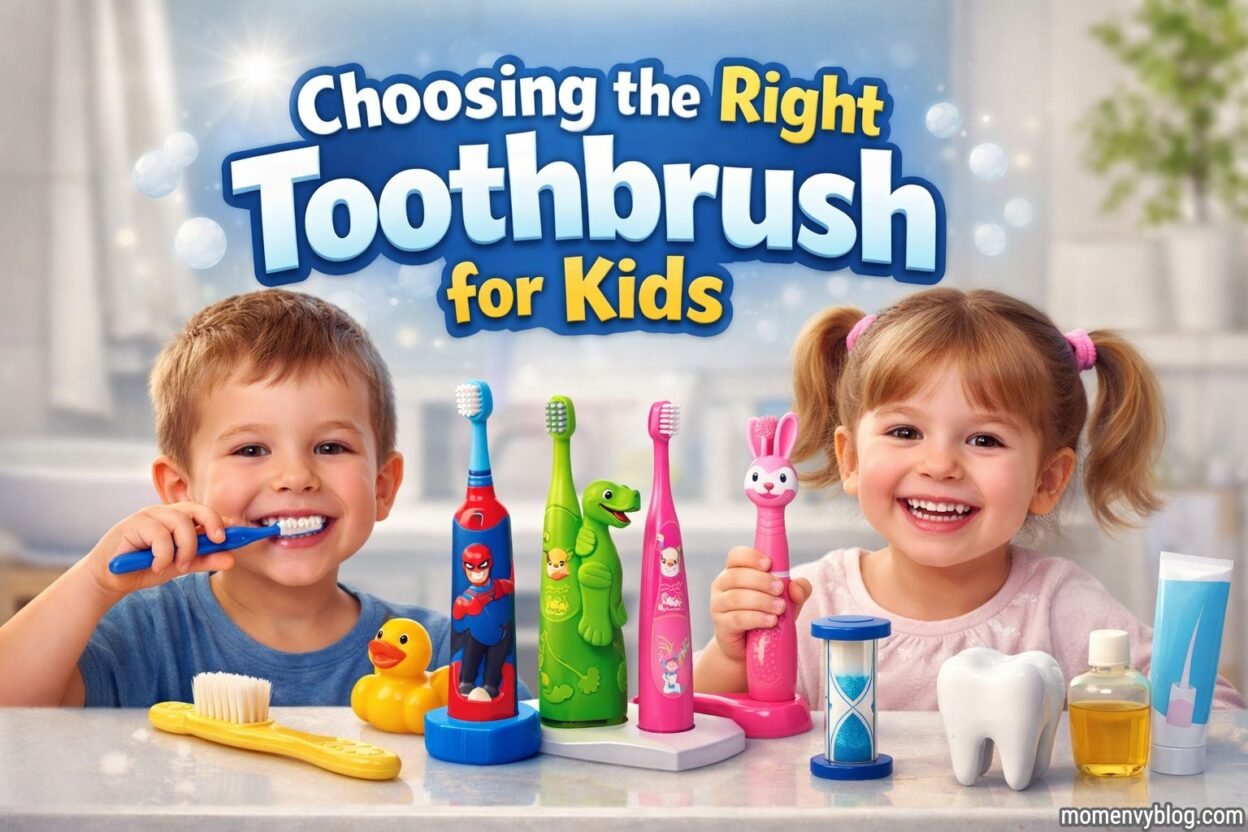
The toothbrush itself plays a bigger role than many moms realize.
- Soft bristles protect enamel and gums
- Small head size helps reach back teeth
- Comfortable grip encourages use
Manual vs Electric
- Manual toothbrushes work well when used properly
- Electric toothbrushes can help kids who rush or resist brushing
The best choice is the one your child will use consistently.
(We’ll cover options in detail in our future guide on best toothbrush for kids.)
Toothpaste for Kids How Much & When
Toothpaste confusion is very common especially around fluoride.
Fluoride vs Non-Fluoride
- Fluoride strengthens enamel and prevents cavities
- Non-fluoride options are sometimes used for babies under guidance
Most pediatric dentists recommend fluoride toothpaste in safe amounts.
Age-Based Amounts
- Under 3: rice-sized smear
- Ages 3–6: pea-sized amount
- 6+: continue pea-sized
Safety Tips for Moms
- Supervise brushing
- Teach spitting, not swallowing
- Store toothpaste out of reach
Flossing Routine for Kids
Flossing becomes important once teeth touch.
- When to start: As soon as teeth touch side-by-side
- How often: Once daily, usually at night
- How to make it easier: Floss picks can help
You’ll likely need to floss for your child at first and that’s normal.
Mouthwash Do Kids Need It?
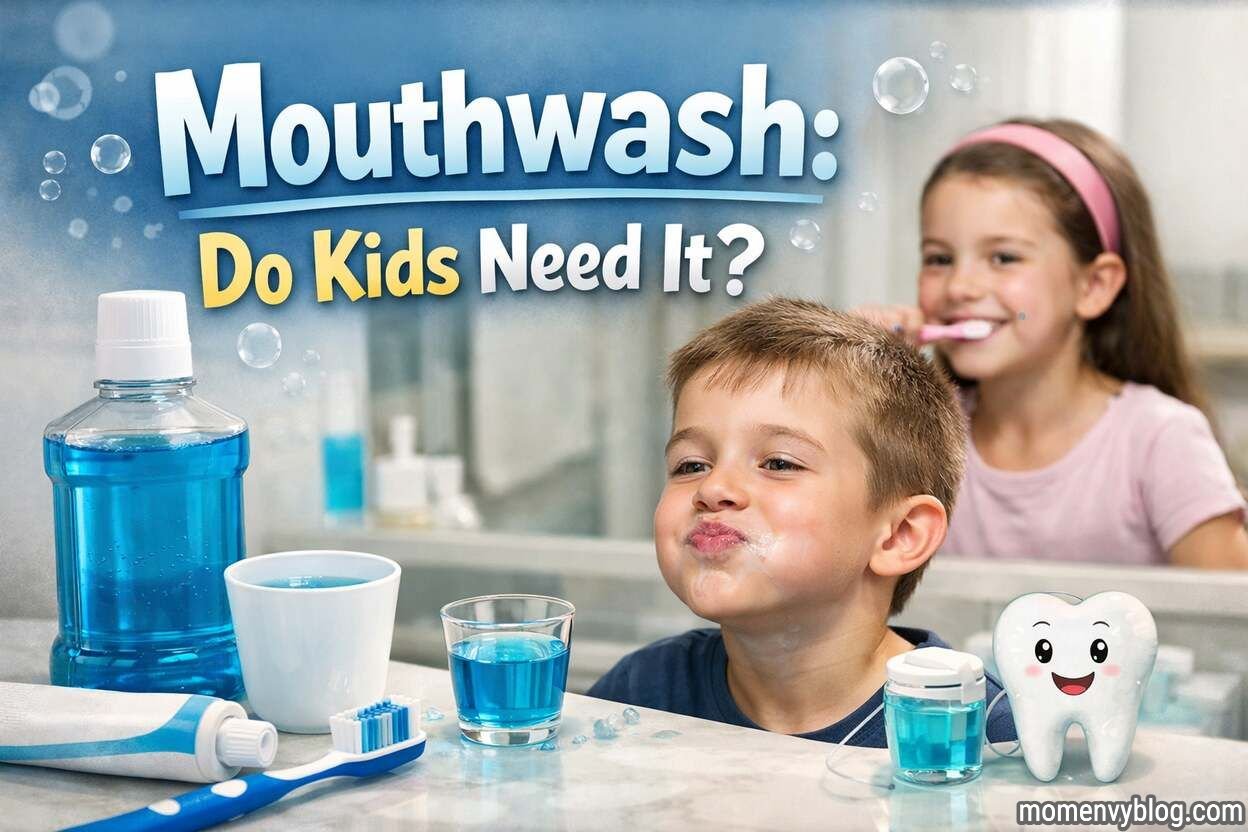
Most young kids do not need mouthwash.
- Not recommended for kids under 6 due to swallowing risk
- Sometimes suggested for older kids with high cavity risk
- Never a replacement for brushing and flossing
If a dentist recommends mouthwash, they’ll guide you on safe use.
Morning vs Night Oral Hygiene
If you could only choose one time to brush (thankfully you don’t have to), nighttime brushing matters more.
Why?
- Saliva flow slows during sleep
- Bacteria have more time to cause damage
- Food and milk residue sit on teeth overnight
Simple Nighttime Routine Tips
- Brush after the last snack or drink
- Avoid milk or juice after brushing
- Keep routines calm and predictable
Making Oral Hygiene Fun for Kids
Brushing doesn’t have to be a battle.
Ideas that help:
- Play a favorite song for two minutes
- Use a timer or brushing app
- Sticker charts or simple rewards (no pressure)
- Let kids choose their toothbrush color
Fun builds cooperation not perfection.
Common Oral Hygiene Mistakes Moms Make
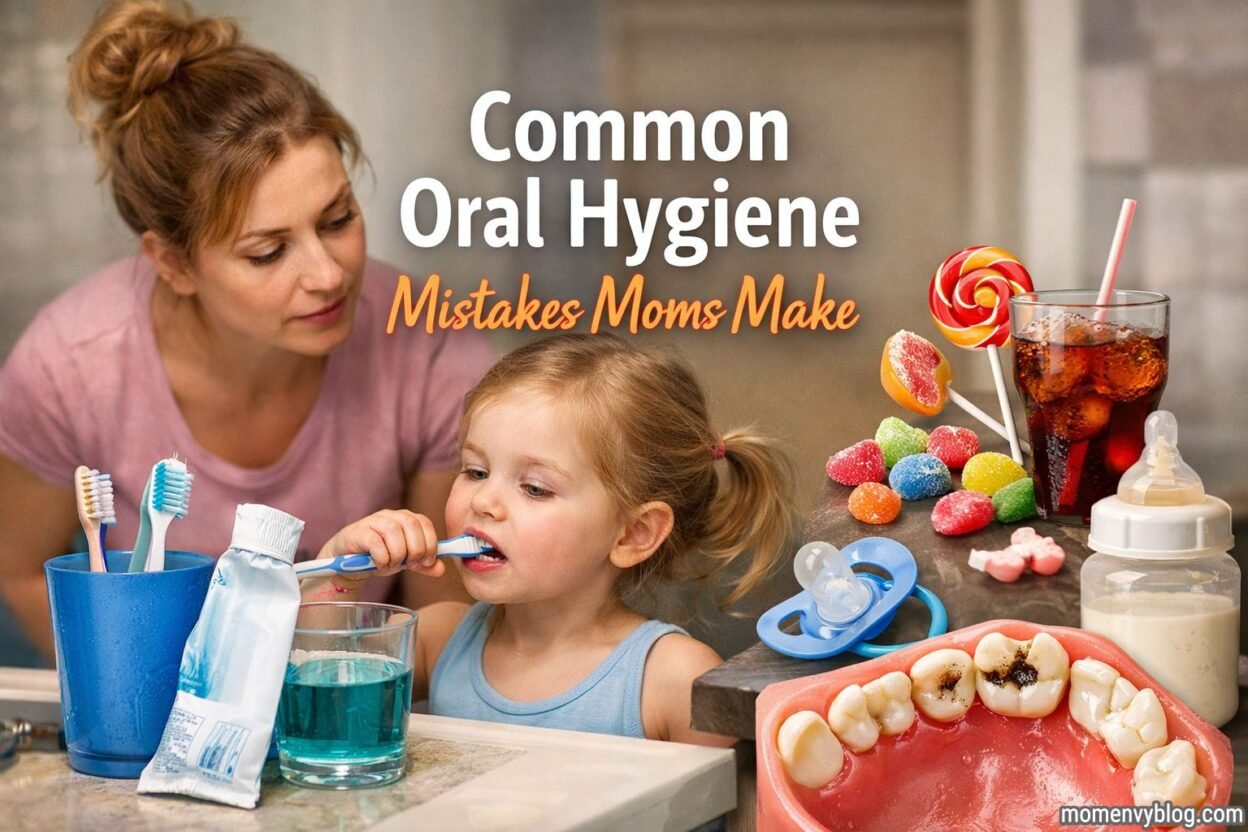
Even very attentive moms make these and that’s okay.
- Skipping nighttime brushing when kids are tired
- Using too much toothpaste
- Letting kids brush completely unsupervised too early
- Assuming dental visits replace daily care
Awareness helps you adjust without guilt.
Oral Hygiene Quiz for Kids
Conclusion
Healthy oral hygiene isn’t about doing everything right. It’s about showing up daily in small ways.
Your child’s routines will change as they grow and that’s exactly how it should be. What matters most is consistency, supervision, and a calm, supportive approach.
This guide is part of a larger kids dental care resource designed to grow with your family. When daily habits are in place, dental visits become easier, cavities become less likely, and kids gain confidence caring for their own smiles.
You’re doing more than you think one brush at a time. 💛