









Designing a nursery in a tiny apartment can feel overwhelming. Still, it is absolutely possible to create a cozy, functional, and stylish baby-ready space even if you are working with just one corner of a room. Instead of focusing on what you do not have, think in terms of smart layouts, multi-use furniture, and vertical storage that help every square inch work harder. With thoughtful planning, your small-space nursery can feel calm, organized, and welcoming for both you and your little one.
Start with a clear nursery zone
In a tiny apartment, your nursery may share space with your bedroom or living room, so defining a clear zone is essential. Choose a corner or wall and visually “frame” it as the baby area using furniture placement, a rug, or removable wallpaper. This subtle separation helps your brain switch into “baby mode” when you are in that area, even if it is just a few feet from your bed or sofa. Keeping all baby items in this zone also makes daily routines more efficient and less cluttered.
Choose space-saving sleep solutions
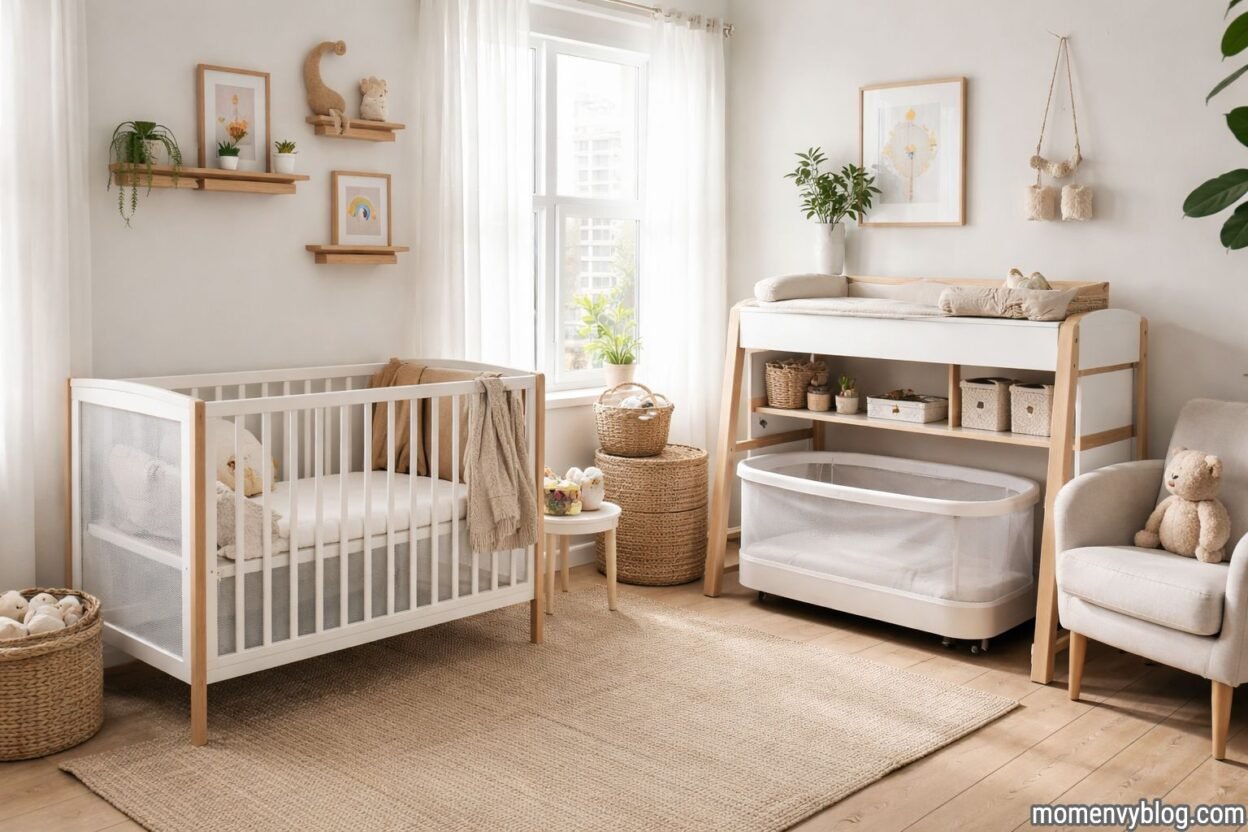
The crib is the anchor of your mini nursery, and in a small apartment, compact options are your best friend. Consider a mini crib, portable crib, or a bassinet that can tuck neatly against a wall or next to your bed without overwhelming the room. When possible, look for cribs with built-in storage drawers beneath so you can stash extra sheets, swaddles, or pajamas without taking up additional space. Neutral colors and slim silhouettes keep the space feeling open, especially in studio apartments or shared rooms.
Turn closets and corners into micro nurseries
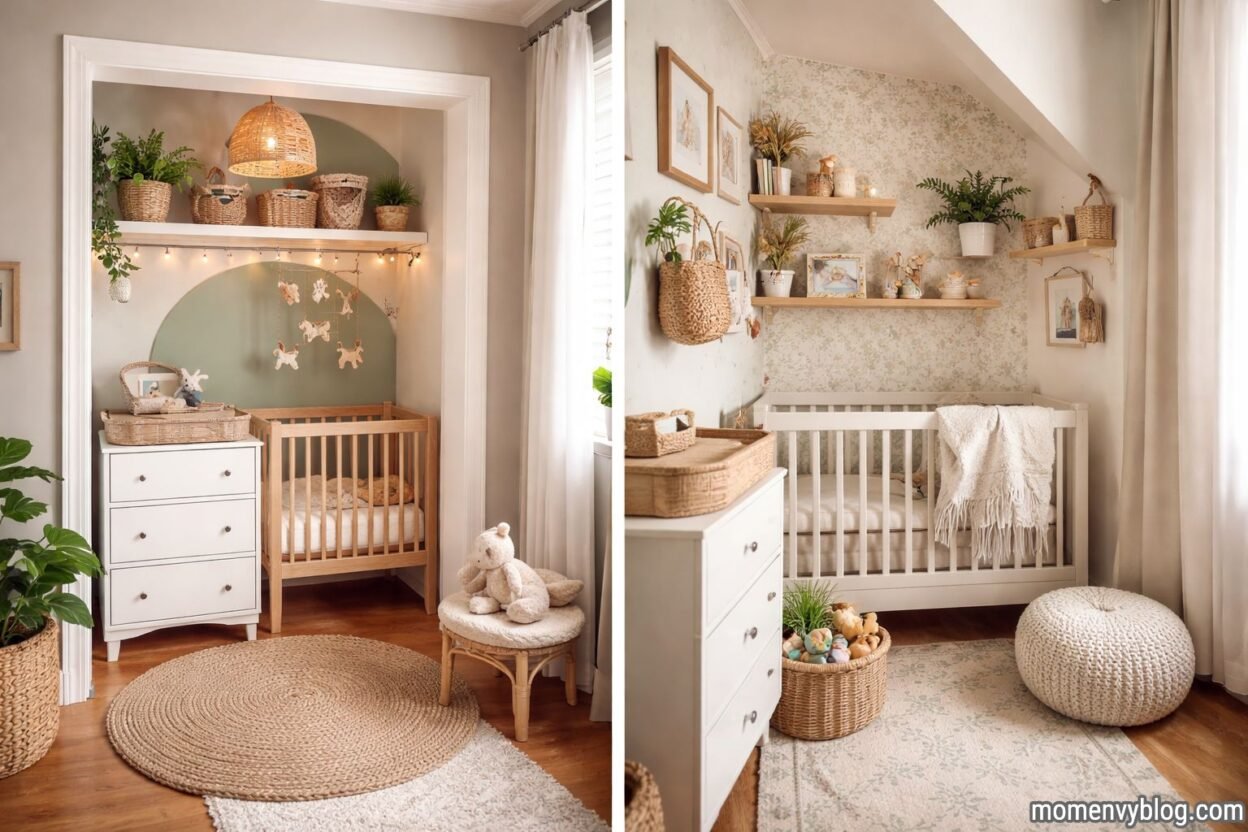
One of the most effective tiny-apartment nursery ideas is to transform a closet or unused corner into a dedicated baby nook. If you have a reach-in closet, remove the doors or swap them for curtains, then slide in a mini crib and a few shelves above for diapers and clothing. Use the existing closet rod to hang baby outfits and store storage bins. In a corner setup, position the crib against two walls to create a snug, defined area, then add a narrow shelf or wall caddy for essentials like wipes, creams, and burp cloths.
Embrace vertical storage and wall organizers
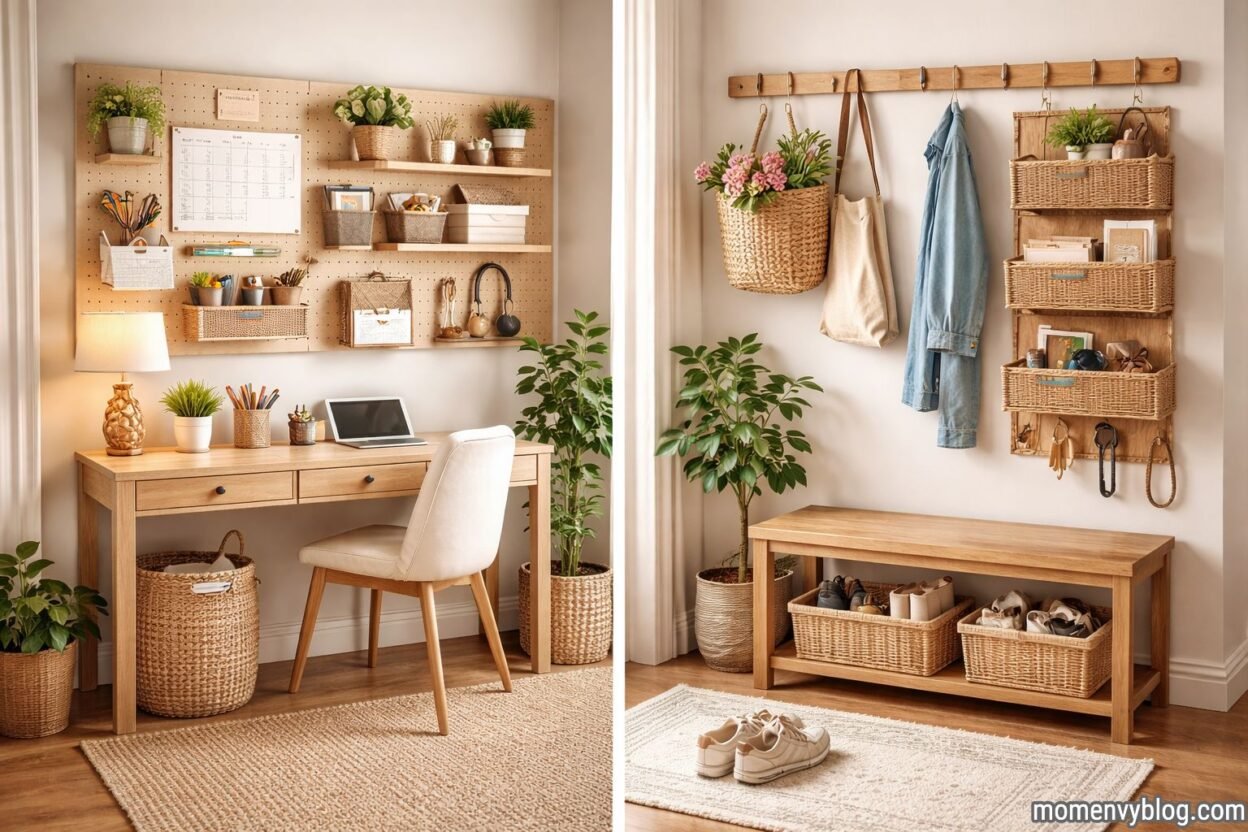
When floor space is limited, think vertical. Wall shelves, peg rails, hooks, and hanging organizers keep daily essentials accessible without crowding the room. Use floating shelves for books, baby monitors, and decor, while wall-mounted baskets can hold diapers, lotions, and small toys. Over-the-door organizers on closets or bedroom doors are perfect for storing hats, socks, and extra wipes. By lifting items off the floor and dresser tops, you maintain a tidy look that makes even a small area feel more spacious.
Pick multi-functional furniture and gear
Every piece of furniture in a tiny apartment nursery should earn its place by doing double duty. Instead of a standalone changing table, use a changing pad on top of a dresser, secured with a non-slip mat, so the dresser serves as both storage and a changing station. A compact, armless rocker or glider saves space and can later transition into a regular chair in your living room or bedroom. Storage ottomans, nesting tables, and side tables with shelves give you extra function without adding bulk or visual clutter.
Keep a minimalist approach to baby gear
Small-space nursery success often comes down to editing. It is tempting to stock up on every cute gadget, but in a tiny apartment, less truly is more. Focus on core categories: safe sleep space, diapering essentials, basic clothing, simple feeding supplies, and a few soothing items. Rotate toys and books rather than keeping everything out at once. This minimalist approach makes cleaning quicker, reduces visual noise, and ensures the nursery corner remains peaceful instead of chaotic.
Use light, color, and textiles wisely
Visual tricks can make a small nursery corner feel larger and calmer. Light, neutral wall colors and furniture help reflect light and open up the space, while soft accent hues add personality without overwhelming. A small area rug can define the nursery zone and add warmth underfoot during late-night feeds. Blackout curtains or a room-darkening shade around the crib area support better naps without needing to darken the entire apartment. A simple mobile, a few framed prints, or a wall decal add charm without taking up precious floor space.
Organize by routine, not just by item
In a tiny nursery, organization works best when it aligns with real-life routines. Set up mini “stations” within your corner: a diapering area with diapers, wipes, creams, and extra onesies all within arm’s reach; a feeding corner with burp cloths, pacifiers, and a water bottle for you; and a small sleep bin with swaddles and sleep sacks. Grouping items by use means you don’t have to dig through multiple bins in the middle of the night, which is especially important when you have limited storage and surfaces.
Make room for your comfort, too
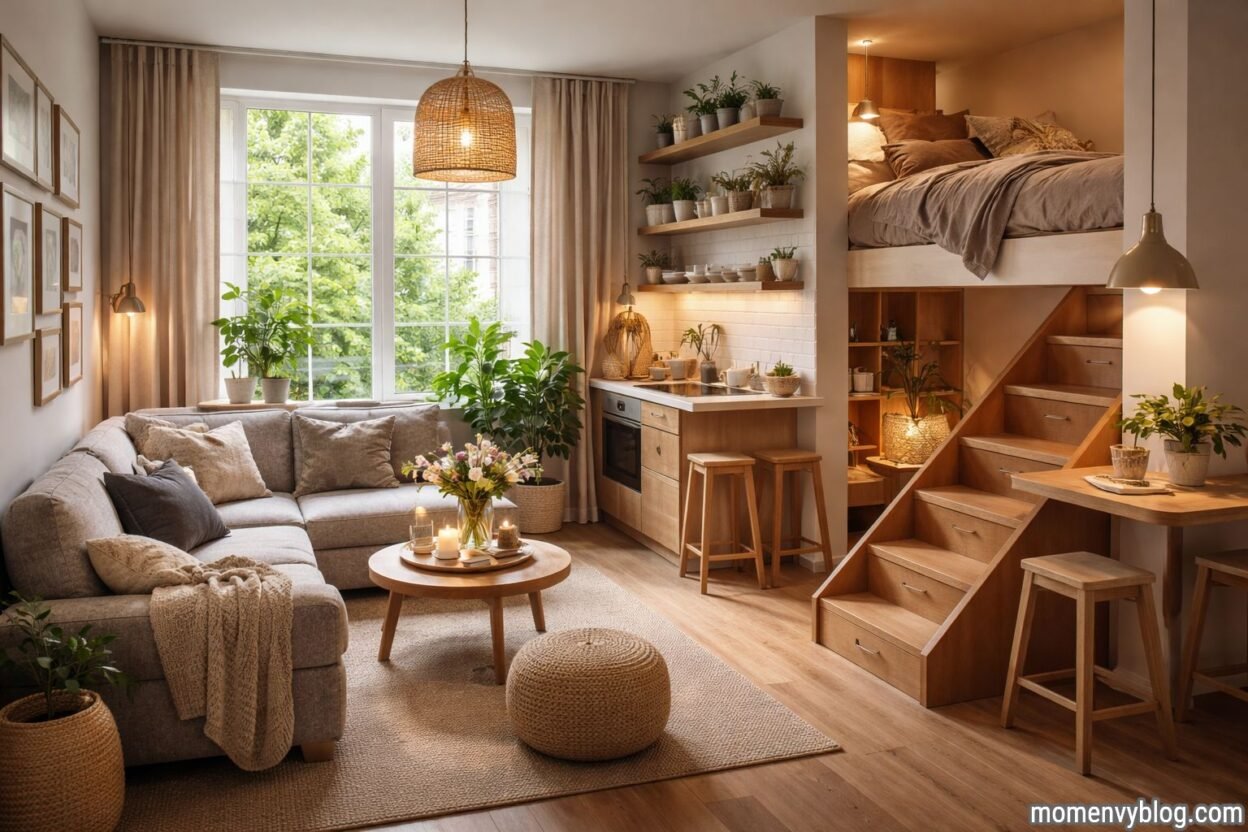
Even in a tiny apartment, your comfort matters because you will spend countless hours in this small nursery corner. If space allows, include a compact chair or cushioned bench where you can sit comfortably while feeding or soothing your baby. Add a small side table or wall shelf for a lamp, your phone, and a drink, so everything you need is within reach. Thoughtful touches like a soft throw blanket or a carefully chosen pillow can make this shared corner feel nurturing for both parent and baby. At the same time, you enjoy curated baby gear like babyletto nursery essentials in a way that still fits your space-conscious lifestyle.
With careful planning, a tiny apartment need not limit your nursery dreams. By choosing smart furniture, using vertical storage, keeping gear minimal, and organizing around daily routines, you can transform even the smallest corner into a beautiful, functional baby-ready space that truly works for your family.