








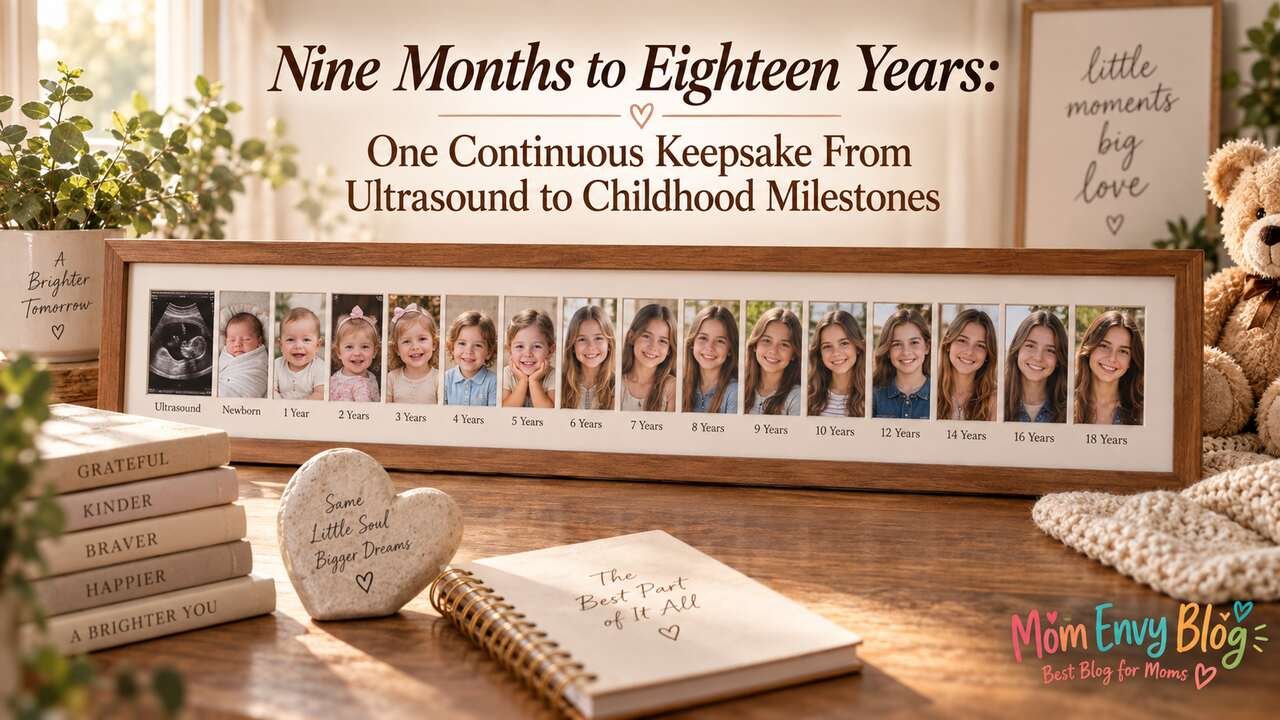
Most parents don’t set out to end up with a shoebox of ultrasound photos, a half-filled baby book, a folder of school portraits, and a phone full of 4,000 unsorted pictures. It happens gradually: a different product for a different stage, until the story of your child’s life is scattered across formats that don’t talk to each other. There’s a simpler approach, and it starts earlier than most people think: choosing one continuous keepsake system before the baby even arrives, and carrying it all the way through childhood.
Why the Story Usually Gets Fragmented
The keepsake industry is built around stages, not stories. There’s a pregnancy journal for the nine months, a baby book for year one, a “first day of school” frame for kindergarten, and often nothing at all built for the years in between. Each product is designed in isolation, with its own size, cover style, and structure.
The result is that parents either buy four or five different items and end up with a disconnected shelf of half-finished keepsakes, or they give up on physical keepsakes altogether and let everything live as an unsorted photo library. Neither outcome captures what parents actually want: a single, continuous record of who this person has been becoming, from the very first grainy ultrasound image to the version of them heading off at eighteen.
What “Continuous” Actually Means
A continuous keepsake isn’t just a bigger book. It’s a structure designed from the start to hold every stage without switching formats:
Prenatal pages. Space for the ultrasound photo, the due date, the moment you found out, the first time you felt a kick. These pages matter more than people expect. Ultrasound thermal prints fade within a few years if they’re not copied or scanned, so a permanent page in a real keepsake book is often the only way those first images survive.
Infancy. The traditional baby book territory: first smile, first steps, first word, growth measurements, hospital bracelet.
Early childhood. First day of preschool, favorite toys, funny things they said, the year they were obsessed with dinosaurs or dragons. This stretch (roughly ages 2 to 7) is often the weakest point in most keepsake products, because it doesn’t fit the “baby milestone” template and isn’t yet “school years” either.
School years. Yearly portraits, report cards or achievements worth remembering, friendships, the sports or hobbies they picked up and dropped.
Adolescence. The stretch parents are least likely to have a keepsake product for at all, even though it’s often the most narratively rich: first real independence, the interests that started to define them, the version of themselves they were becoming right before adulthood.
A book (or digital system) built to hold all five stretches under one structure means you’re not deciding, at every transition, whether to buy something new or let the record lapse.
The Practical Case, Not Just the Sentimental One
There’s an emotional argument for this (nobody wants their child’s story broken into disconnected fragments), but there’s also a practical one.
It removes the “which product now?” decision at every stage. Parents who buy stage-specific keepsakes have to make a new purchasing decision every year or two, and it’s exactly the kind of low-priority decision that gets skipped when life gets busy. A single continuous system removes that friction entirely; you already own the next section.
It protects material that actually degrades. Ultrasound prints, in particular, are thermal paper, and thermal paper fades. A permanent book page (or a scanned, archived digital copy) is the only reliable way to keep that image beyond the first few years.
It creates one object instead of a pile of them. Handing an eighteen-year-old a single book that starts with their ultrasound and ends with their senior year is a fundamentally different experience than handing them a stack of five disconnected items from a closet.
How to Actually Start One
If you’re currently pregnant or have a young child, the easiest entry point is starting with the prenatal section now, even if you haven’t decided on the exact format for later years. Scan or photograph your ultrasound images immediately rather than waiting, since that’s the material most at risk of fading or being lost.
If your child is already older and you’re starting late, it’s not too late to build backward: gather what you have (ultrasound scans if they survived, old photos, report cards, keepsakes from a shelf) and consolidate them into one structure going forward, even if the early pages are reconstructed rather than filled in real time.
The nine months before birth and the eighteen years after aren’t really separate chapters. They’re one story, and the keepsake that holds it works best when it’s built that way from the start rather than assembled after the fact from whatever survived.