









Toddlers can turn an ordinary bathroom into a plumbing trouble spot in seconds. A small toy dropped into the toilet may disappear with one flush, but it can lodge farther down the pipe and cause a messy backup later. Simple storage changes, clear family rules, and close supervision can prevent most of these problems. Parents should also know what an early blockage looks like so they can respond before dirty water reaches the floor.
Surprising Items Kids Love to Flush
Toddlers are fascinated by watching objects disappear. Toy cars, building blocks, crayons, hair accessories, and bath toys are common candidates for an experimental flush. Less obvious troublemakers include cotton swabs, snack wrappers, stickers, and thick clumps of toilet paper.
Keep small objects off the toilet tank and bathroom counter, even if they seem out of reach. A wall-mounted organizer can hold hair supplies and personal care items safely above a child’s grabbing range. These family plumbing safeguards work best when every caregiver follows the same routine. Before draining bathwater, quickly check the tub for tiny toys that could enter the drain.
Early Warning Signs of Blocked Pipes
A toilet that drains slowly after a toddler’s bathroom visit deserves attention. Other warning signs include bubbling sounds, changing water levels, and water rising in a nearby tub when you flush. If several fixtures drain poorly at once, the blockage may be deeper in the home’s plumbing system. Regular household plumbing maintenance can also help you recognize drainage problems before they become more disruptive.
Stop using affected fixtures until you understand the problem. Repeated flushing can force water onto the floor and spread contamination. If slow drains or backups affect multiple fixtures in a home with a septic system, the problem may involve the tank, drainfield, or another part of the wastewater system. Qualified septic service providers can inspect the system and recommend pumping, maintenance, or repairs when the symptoms point to a septic issue.
Teaching Bathroom Rules to Little Ones
Keep bathroom instructions short enough for a toddler to remember. Try one clear phrase such as, “Only toilet paper goes in the potty.” Repeat it during regular bathroom visits and praise your child when they follow the rule. Long explanations about pipes are unlikely to stick at this age.
Supervision still matters, especially around water. Guidance on toddler water safety recommends close, constant attention because young children can get into trouble quickly. Close the toilet lid after each use and empty tubs as soon as bath time ends. You can also give curious children a safe alternative, such as dropping washable toys into a dry container and counting them together.
When Backups Require Expert Help
Call a professional when a plunger doesn’t clear the toilet, water comes back through another drain, or sewage odors linger indoors. A child may have flushed an object that requires specialized equipment to locate and remove. Trying to push it deeper with a makeshift tool can damage the toilet or move the obstruction into a harder-to-reach pipe.
While you wait for help, keep children and pets away from the affected room. Turn off the toilet’s water supply valve if the bowl continues filling, then avoid sinks and appliances connected to the same slow drain line. If wastewater reaches flooring or cabinets, limit contact and ask the service professional what materials can be cleaned safely.
Childproofing Latches That Actually Work
Choose a toilet lid lock that attaches firmly, requires two separate motions to release, and automatically returns to its locked position. Adhesive models are convenient, but they need a clean, dry surface and time to bond before use. Test the latch with several firm pulls after installation and check it weekly for loosening.
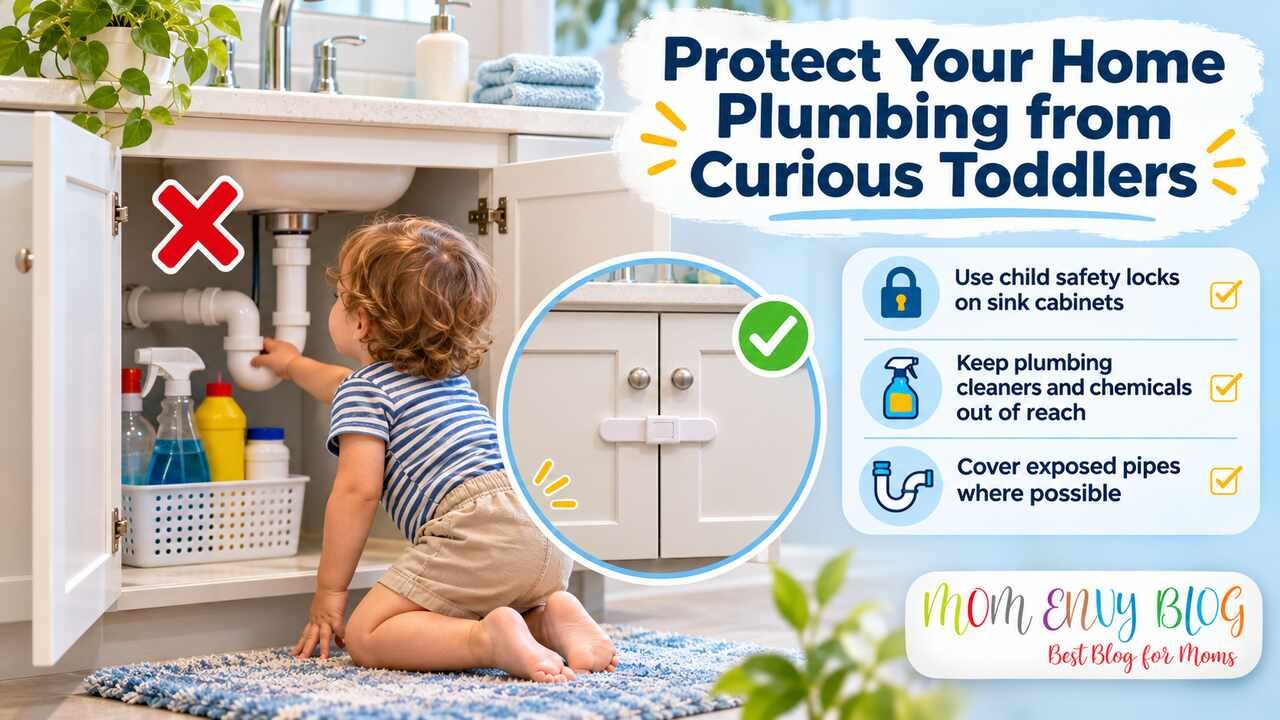
Cabinet latches also help keep wipes, cosmetics, and cleaning products away from curious hands. Select hardware-mounted styles for cabinets that hold hazardous products, particularly if adhesive catches release under repeated tugging. Adults should be able to open each latch quickly without leaving it disengaged afterward. Once the locks are fitted, do one final toddler-height scan for overlooked temptations beside the toilet and under the sink.

