








Key Takeaways
- Routine cleaning, repairs, and inspections can prevent many common pest issues.
- Spring and summer often increase insect activity, while fall and winter make indoor shelter more appealing to rodents and other pests.
- Food, water, shelter, and access points are the main conditions to address.
- Integrated pest management focuses on prevention, monitoring, and targeted action.
- Hidden, recurring, or extensive infestations may require professional assistance.
Pest prevention works best when it becomes part of regular home care rather than a response to a sudden problem. Small actions, such as repairing leaks, closing gaps, cleaning up food residue, and checking storage areas, can reduce the conditions that many pests need to settle. Homeowners who want help creating a prevention plan or addressing persistent activity can find out more about professional pest control options.
Seasonal conditions matter because temperature, rainfall, vegetation, and available shelter all influence pest activity. A quick monthly check can help you find new moisture issues, damaged screens, droppings, nests, or entry points before they become more difficult to manage.
Why Pest Prevention Should Follow the Seasons
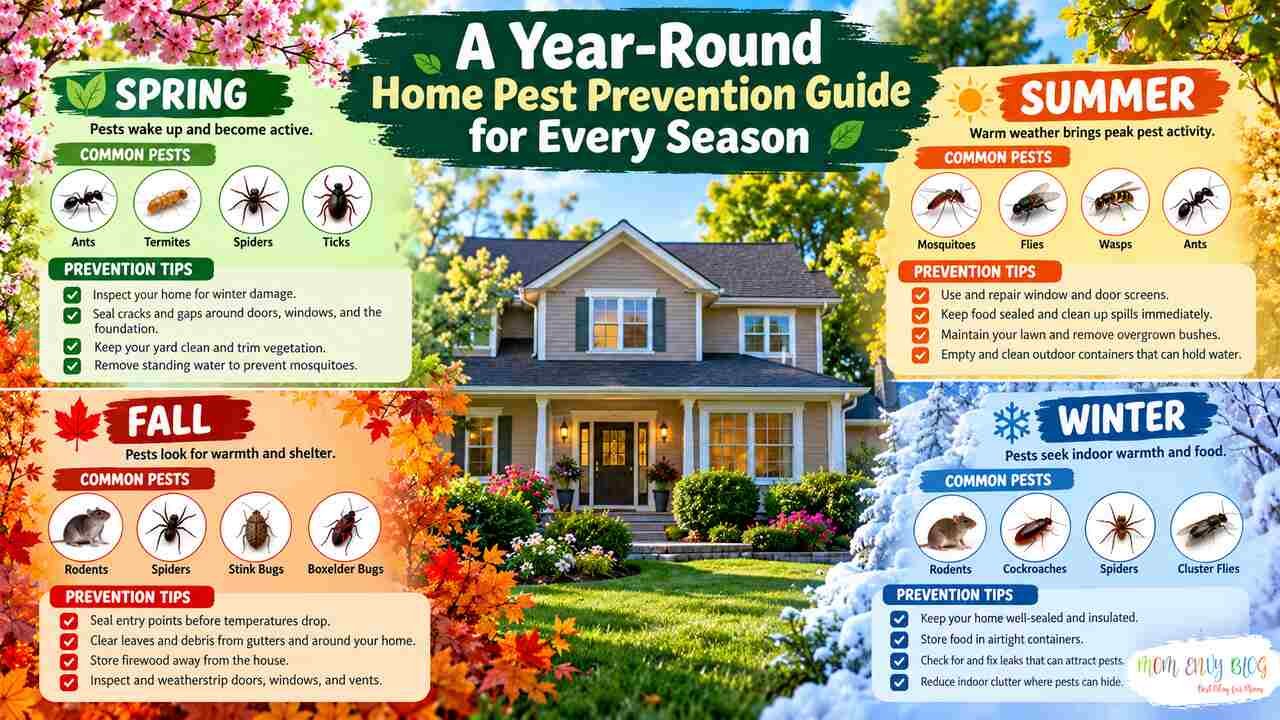
Different pests become more noticeable as outdoor conditions change. Warm weather can bring more ants, flies, mosquitoes, and other insects near kitchens, patios, and standing water. As temperatures cool, rodents and insects may seek warmth in garages, attics, wall voids, basements, and storage spaces. A seasonal plan helps homeowners focus on the most likely risks without complicating maintenance.
Spring: Check for Moisture and New Activity
Spring is a useful time to inspect areas that may have collected moisture or debris over winter. Check under sinks, around appliances, in basements, crawl spaces, garages, and near doors and windows. Look for drips, damaged seals, insect activity, or chewed or otherwise disturbed packaging.
Spring Checklist
- Repair dripping faucets and leaking pipes.
- Clear leaves from gutters, drains, and foundation areas.
- Check door sweeps, window screens, and weather stripping.
- Inspect stored boxes and pantry items for damage.
- Watch for nests, mud tubes, wood damage, or unusual insect activity.
Summer: Limit Water, Food, and Outdoor Breeding Sites
Summer routines should focus on reducing easy access to food and water. Wipe counters, sweep crumbs, rinse recyclables, and store pantry goods in sealed containers. Empty standing water from buckets, plant saucers, toys, clogged drains, and other containers. Keep garbage lids closed, clean grills after use, and avoid leaving pet food outdoors overnight.
Outdoor maintenance also makes a difference. Trim plants away from exterior walls so pests have fewer hiding places near the home. Keep mulch from staying constantly wet against the foundation, remove overripe fruit, and store firewood away from the house when possible.
Fall: Block Entry Points Before Pests Move Indoors
Fall is the time to inspect the foundation, roofline, vents, utility openings, garage door seals, and attic access points. Even small openings can matter. The CDC notes that mice can fit through a hole about the width of a pencil, and its guidance for sealing gaps and holes also emphasizes securing food and reducing outdoor food sources near the home.
Fall Preparation Steps
- Replace worn weather stripping around exterior doors.
- Repair damaged screens and vent covers.
- Seal gaps around pipes, wires, and utility lines.
- Store firewood on a raised rack away from the foundation.
- Remove leaf piles, brush, and excess plant debris near walls.
Winter: Watch Warm, Hidden Areas
Winter pest activity can be easy to miss because it often happens out of sight. Check garages, attics, kitchens, basements, closets, and storage areas for scratching sounds, droppings, gnaw marks, nesting material, stale odors, or damaged food packages. Addressing signs promptly can limit damage and make cleanup simpler.
How to Complete a Simple Home Pest Inspection
- Start outdoors. Walk the foundation and look for standing water, gaps, damaged vents, and dense vegetation.
- Check entry points. Inspect doors, windows, roof edges, utility lines, and garage seals.
- Review food storage. Look for open packages, spills, pet food, and overflowing trash.
- Inspect damp areas. Check beneath sinks, near appliances, around drains, and in basements.
- Record evidence. Photograph and note droppings, shed skins, nests, stains, or live pests.
How Integrated Pest Management Fits Into Home Care
Integrated pest management, often called IPM, begins with identifying the pest and correcting the conditions that support it. This approach does not rely on treating every surface. Instead, it prioritizes sanitation, moisture control, exclusion, monitoring, and targeted treatment when needed. The EPA’s smart pest control practices recommend reducing food, water, shelter, and entry points before relying on pesticide products.
Core IPM Steps
- Identify the pest before choosing a response.
- Remove available food, water, and shelter.
- Seal openings and repair damaged materials.
- Use traps or monitoring tools where appropriate.
- Choose the least disruptive effective option and review results.
Safe Pest Control Practices for Families and Pets
Always read and follow product label directions. Keep pest control products in their original containers, store them away from children and pets, and never mix products unless the label specifically instructs you to do so. If rodent droppings or nesting materials are present, avoid dry sweeping or vacuuming them before the area has been handled in accordance with appropriate public health cleanup guidance.
When to Call a Pest Control Professional
Professional support may be appropriate when activity continues after cleaning and exclusion efforts, when pests are inside walls or ducts, or when the affected area cannot be safely reached. Call for help when there are repeated signs of rodents, significant damage to wood or wiring, a stinging-insect nest near an entryway, or health concerns involving allergies or asthma.
A Monthly Pest Prevention Checklist
- Inspect doors, windows, screens, vents, and seals.
- Look for leaks, damp areas, and standing water.
- Clean food residue and empty trash regularly.
- Store pantry goods and pet food in sealed containers.
- Trim plants away from walls and inspect storage spaces.
- Record repeated signs of pest activity.
Conclusion
Effective pest prevention comes from small, repeatable habits. Seasonal inspections, clean food storage, moisture control, sealed entry points, and prompt attention to warning signs can reduce the risk of common household pests year-round.

