







On Teaching Resilience, Legacy, & The Courage To Truly Live
By Mike Norton
I’ve spent most of my life in environments where adaptation was a necessity.
I have endured military deployments. Surviving in the remote wilderness for extended periods of time. And starting over in cultures where I didn’t speak the language and had no social standing to fall back on.
When you live like that long enough, you stop pretending that stability is guaranteed or that safety even truly exists.
You learn something most people already know but seldom acknowledge, internalize, and say out loud: Change is the only constant, and suffering is an inescapable part of life.
These truths don’t suddenly stop applying because you become a parent.
If anything, they become even more poignant.
What Children Are Actually Afraid Of
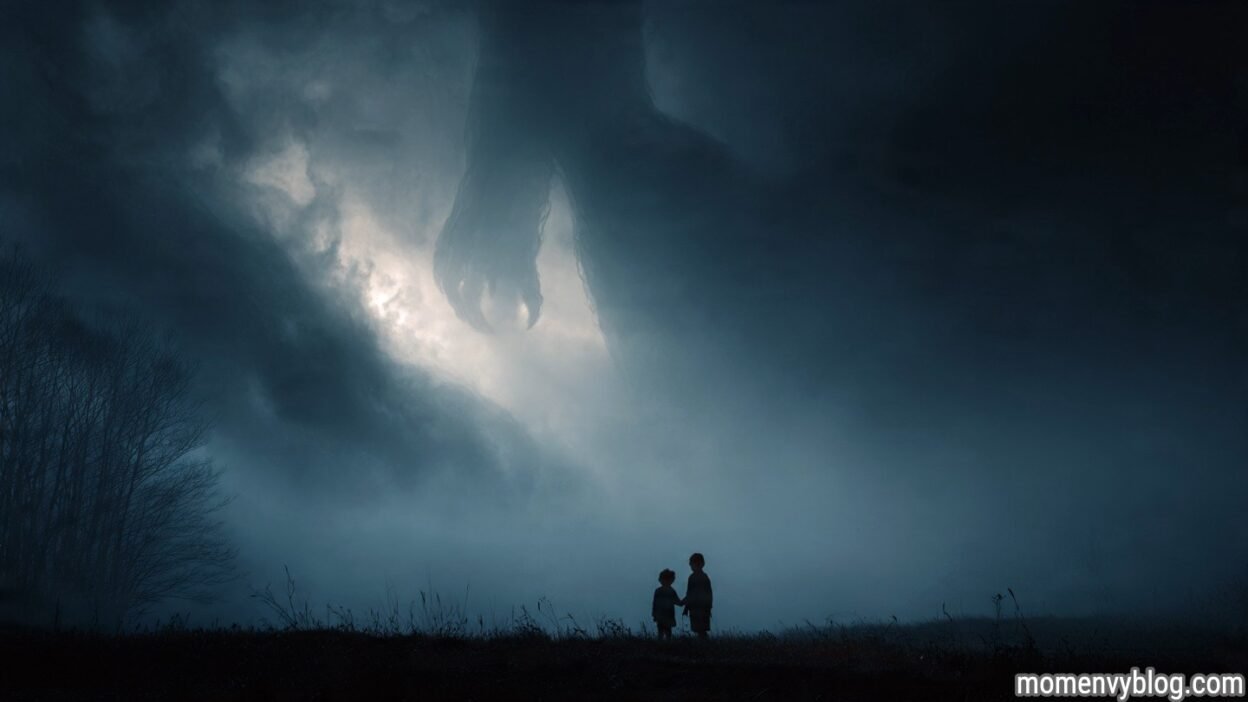
Adults often assume children fear events. And they may to a certain extent, but really, children fear instability. There is a difference.
A tragic event may occur, but so long as the child’s pillars of stability and anchors of reality remain (such as a loving and protective father), they will generally have a far easier time overcoming or managing the trauma of that experience.
Children are extraordinarily good at reading emotional states. Often better than adults, in fact—because they have to make up for the linguistic gap of their own neurological development from a young age. You, as their parent, are ahead of them by years: You know words they don’t know; you have experience they don’t have.
So, if a parent’s presence and emotional state are steady, the child can relax and feel secure. However, if a parent is erratic, unpredictable, or flat-out not present at all, the child’s nervous system can go through a roller coaster that damages them over the long term of their entire lives…even well into adulthood.
This is why, in Yield, the story doesn’t begin with a catastrophe.
It begins with quiet father-son conversations that imply parental preparation for tragedy long before the crisis arrives. The father (named Erik), one of the story’s two main characters, anticipates how his child will process living life without him, not because he’s guessing, but because he has already been paying attention with deep calculative foresight.
Erik is a modern warrior, a seasoned military veteran, and a family legend who has faced death many times throughout his life in various ways. Perhaps, too many times.
And like the Romans, who had memento mori (to remember that you will die), the Samurai who lived life in every breath, and the Norse who had the Hávamál (the sayings of the high one), Erik innately understood that his life could end in a multitude of ways at any time—so always be prepared.
Not simply to be self-prepared, but to prepare his family for what it will be like without him.
As a father and the head of his household, he was acutely aware of his own mortality and how his loss would traumatize his family; thus, he was always preparing his son, named Sigurt, for the worst.
To take his place.
But Erik also had shortcomings and inner demons he had wrestled with throughout his life. Emotional scarring from past failures helped shape him into a unique father figure.
While dying can be painful, death is comfortable; none of us remembers what it was like before we were born.
Thus, the biggest fear people have is in making the decision to truly live.
So, more than simply preparing his son for what it would be like without him, Erik was also raising Sigurt to go above and beyond where he fell short in life—while simultaneously torn about keeping his son safe.
“Every man dies. Not every man really lives.” — William Wallace (Braveheart, 1995)
Children sense this turmoil in their parents, subconsciously at the very least, more and more so as they grow. They sense when adults are half-present, clinging to illusions of control, trying to shield themselves as much as their kids.
…and their development is influenced by it.
“Nothing has a stronger influence psychologically on their environment and especially on their children than the unlived life of the parent.” — Carl Jung
As such, Sigurt continually challenges Erik on those unlived aspects of life as part of teenhood rebellion.
The Line Between Protection & Growth
But as death and suffering are inevitable aspects of life, and it is natural for parents to want to shield their children from as much of that pain as possible, one must ask where the line is between protecting a child and smothering that prevents them from growing.
The line is drawn at demonstrated competence, for even fully trained adult soldiers protect one another.
So, where has the individual proven they can stand independently? Where have they not?
In Erik’s parenting philosophy, demonstrated while he and his son traverse the Alaskan wilderness, children earn autonomy through experience, not simply reassurance.
As no two children are the same, the only way to determine where that line is for a specific child is to test them.
There is no practical alternative.
Opportunities to prove competence are not threats; they are the mechanism by which confidence is built. Remove those opportunities, and you don’t make a child safer—you make them fragile.
Parental Fear Never Fully Leaves You

Parents who encourage their children to become healthily autonomous often feel guilty about allowing their children the freedom to struggle.
But fear and guilt for this alone are not signs you’re failing as a parent. They are merely confirmation that you truly care about that. That you genuinely love your child.
It would signify something horrifically worse about you if you didn’t feel them.
The biggest parental mistake, then, is not in the existence of troubling emotions, but in allowing those emotions to control your decision-making.
Attachment creates fear. Fear tempts overprotection. Overprotection produces dependency. Dependency produces anxiety. And anxiety masquerades as sensitivity while quietly eroding resilience.
Maintaining your integrity under such emotional pressure, then, is the real challenge of fatherhood.
Resilience Is Not Merely Taught But Demonstrated.
Parents often ask how to teach resilience in age-appropriate ways. The answer is uncomfortable but simple: You can only teach what you can demonstrate.
Children do not internalize lectures. They internalize examples. They become what you are long before they become what you tell them to be.
They watch how you respond to stress, failure, uncertainty, and exhaustion. They watch how you recover. They watch how you treat yourself when you fall short.
Before asking how to raise resilient children, a parent should ask:
Can I hold my own composure while under pressure? And, if so—to what extent?
Find that limit through introspective self-discovery. Then recreate manageable scenarios where your children can see you navigate stress without collapsing or outsourcing responsibility due to panic.
From there, most of the teaching happens on its own through the demonstration of your very example.
What You Can Take From Yield
I write because my children will one day live in a world that will not explain itself to them.
I write because no one sat me down early in life and taught me how to be a better friend, how to regulate my emotions, how to fail without breaking, or how to forgive myself without lowering my standards. I had to learn those things from ground zero, through loss, scars, and reflection. Yield exists so my children—and their children—don’t have to start from nothing the way I did.
It’s a record of what I’ve learned from lived experience translated into a form that can survive me.
Every conversation in Yield is something I either said to my children, wished someone had said to me, or had to figure out on my own. I wrote it so that when my children face moments where I am not physically present—when they are afraid, unsure, or standing at the edge of a decision that will shape their lives—they will still have access to my thinking, my values, and my failures honestly examined, as well as how I became successful in life despite those failures.
If you are a parent, Yield offers an almost cinematic literary take on what it means to prepare children for the harshness of life without turning them into victims…but conquerors.
It demonstrates how strength and compassion coexist when they are earned rather than performed.
Even if you are not a parent, the book still applies. Because at its core, Yield is about learning how to stand upright in the middle of struggle and change.
It is about understanding that resilience is not merely endurance for its own sake, but the ability to recover, recalibrate, and carry on with your head held high, no matter how many scars you bear.