






Introduction
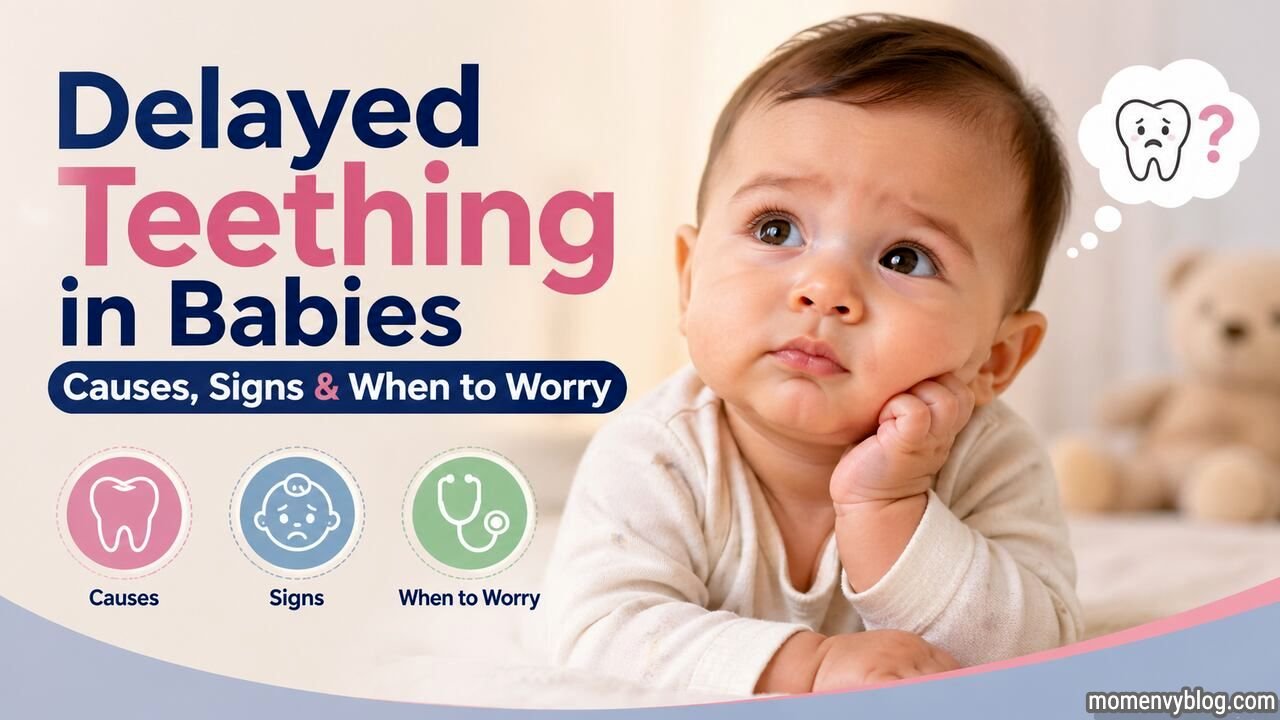
Many parents quietly worry when their baby’s teeth don’t show up “on time.” You might find yourself comparing your little one to other babies or searching photos for the tiniest sign of a tooth.
Here’s the reassuring truth: teething timelines vary a lot more than most people realize. Some perfectly healthy babies don’t get their first tooth until much later and that can still be completely normal.
If you’re feeling unsure, you’re not alone. Most moms go through this phase of wondering, “Is my baby okay?”
In this guide, we’ll gently walk through:
- What counts as delayed teething
- Common (and usually harmless) causes
- Signs teeth are on the way
- When to check with a dentist
If you’d like a broader understanding of how baby teeth develop, you can also explore this baby teeth guide for parents, which explains overall milestones and care in simple terms.
What Is Considered Delayed Teething?
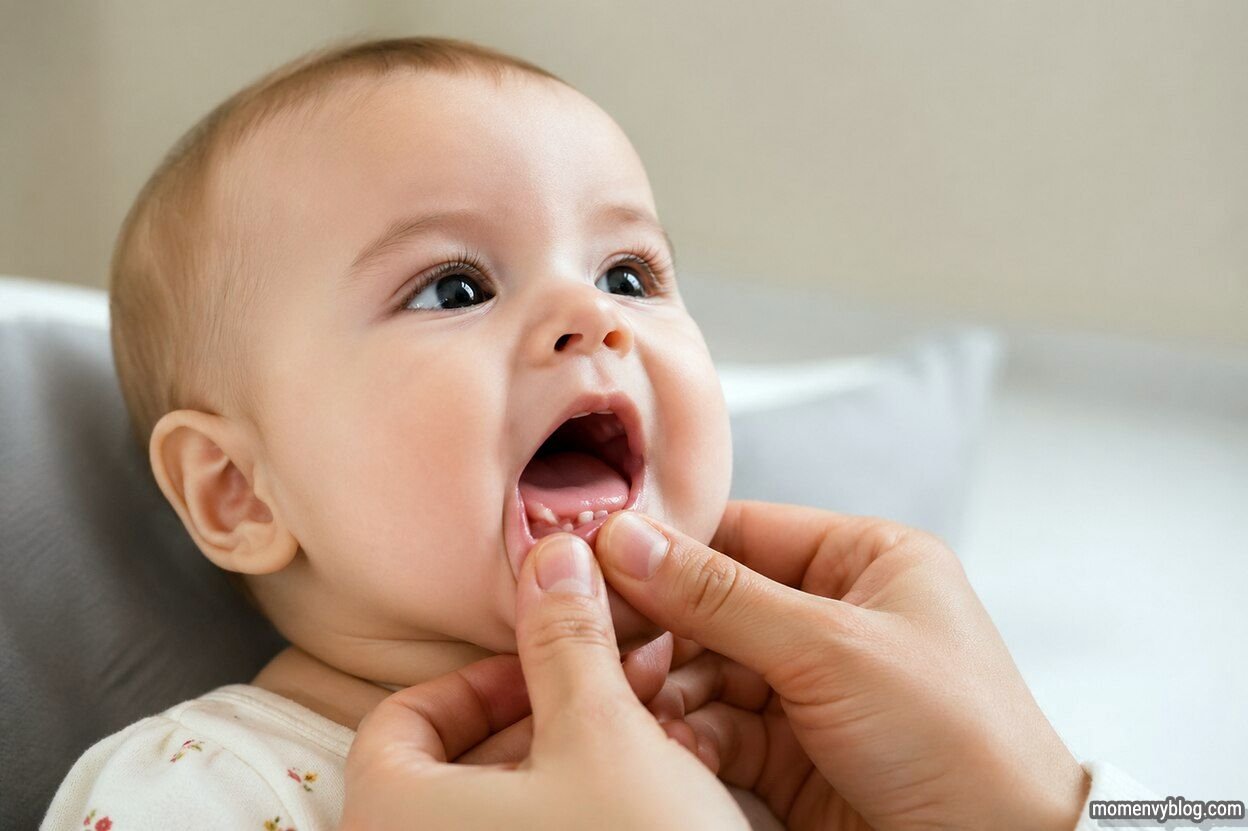
Most babies get their first tooth between 4 and 10 months of age.
So what counts as “delayed”?
- If no teeth have appeared by 12 months, it may be considered slightly delayed
- If no teeth by 15–18 months, it’s worth checking with a pediatric dentist
But here’s the important part:
👉 There is a wide range of normal.
Some babies:
- Get teeth as early as 3–4 months
- Others don’t get any until after their first birthday
Both can be completely healthy.
Teething is not a race. It’s more like a personal timeline unique to each child.
Average Baby Teeth Eruption Timeline (Quick Overview)
Here’s a simple snapshot:
- 6–10 months: Lower front teeth (usually first)
- 8–12 months: Upper front teeth
- 9–16 months: Side teeth
- 13–19 months: First molars
- 16–23 months: Canines
- 23–33 months: Second molars
By around age 2.5 to 3 years, most children have a full set of 20 baby teeth.
If you want a more detailed breakdown, you can check a full “when do baby teeth come in” eruption chart in the related cluster.
Common Causes of Delayed Teething
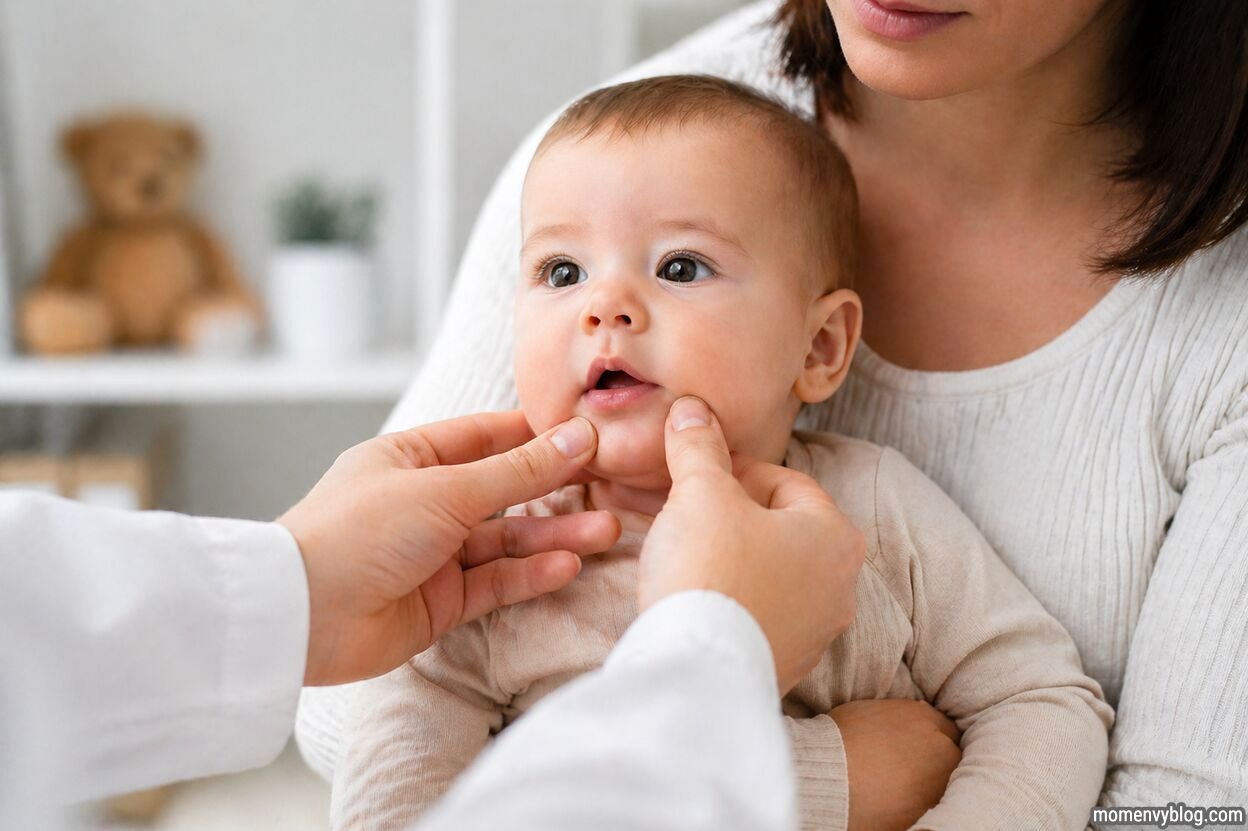
Let’s go through the most common reasons because understanding why can ease a lot of worry.
- Genetics (Most Common Cause)
If you or your partner had late teething as babies, your child may simply be following the same pattern.
👉 Many moms say:
“My baby didn’t get teeth until 14 months… and I was the same!”
This is often the biggest reason and completely normal.
- Premature Birth
Babies born early may reach milestones including teething a bit later.
- Their development timeline is often adjusted based on their due date
- Teeth may erupt later, but still in a healthy pattern
- Nutritional Factors
Teeth need certain nutrients to develop properly.
Low levels of:
- Vitamin D
- Calcium
can sometimes delay tooth eruption.
That said, in most cases:
👉 A balanced diet or breastfeeding/formula feeding already provides what your baby needs.
- Low Birth Weight
Babies with lower birth weight may experience:
- Slight delays in growth milestones
- Including tooth eruption
Again, this is usually temporary and self-correcting.
- Medical Conditions (Rare)
In rare cases, delayed teething may be linked to underlying conditions such as:
- Hormonal imbalances
- Genetic conditions
- Developmental disorders
Important reassurance:
👉 These are uncommon, and delayed teething alone usually does NOT mean something serious.
Signs Your Baby’s Teeth Are Coming (Even If Late)
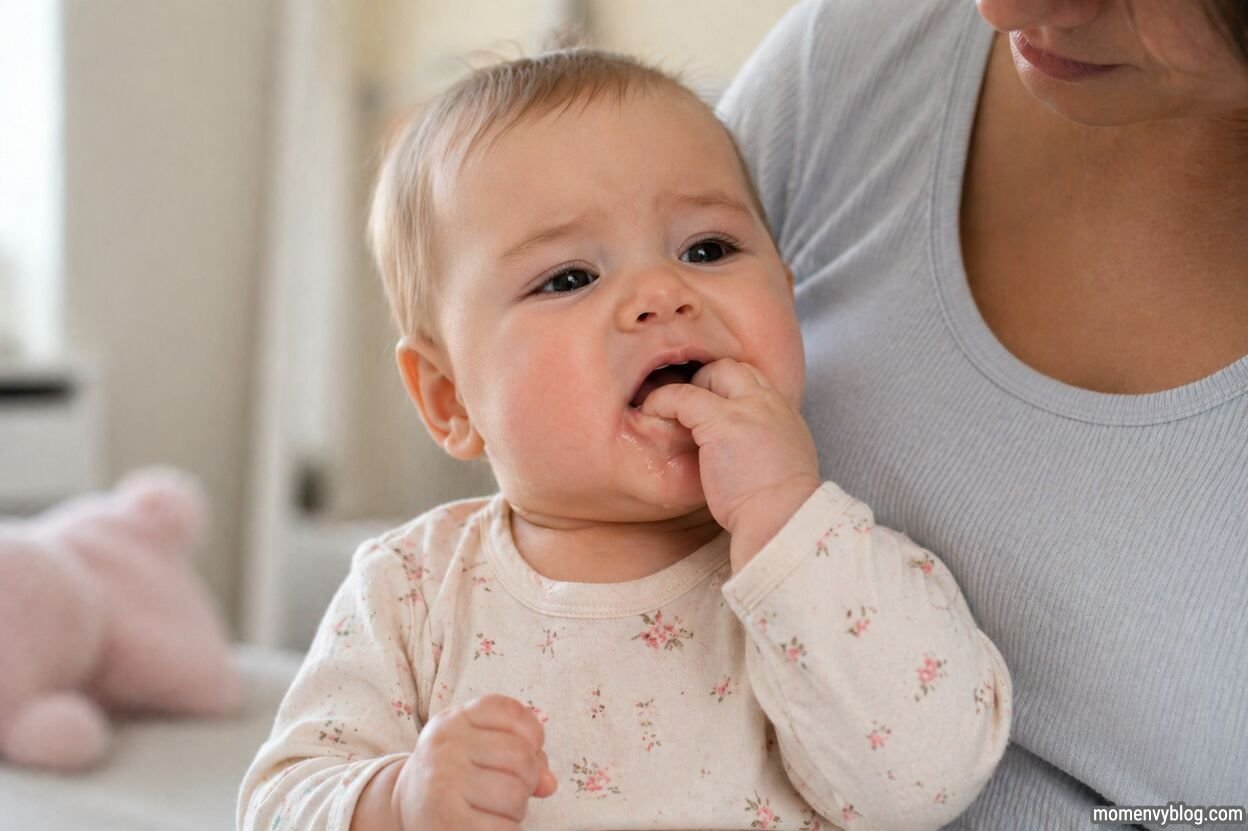
Even if you don’t see teeth yet, your baby may already be preparing for them.
Here’s what to look for:
✔ Gum Swelling
- Gums may look slightly raised or puffy
- You might feel hardness under the surface
✔ Increased Drooling
- More saliva than usual
- Wet bibs or clothing
✔ Chewing on Everything
- Fingers, toys, blankets
- This helps relieve gum pressure
✔ Mild Irritability
- Fussiness, especially at night
- Wanting extra comfort
These are classic signs that teeth are on their way even if they’re taking their time.
When Should Parents Be Concerned?
Let’s keep this simple and clear.
You may want to look a little closer if:
- Your baby has no teeth by 12–15 months
- There are no signs of teething at all
- Your child has other developmental delays (like growth or motor skills)
Even then don’t panic.
👉 In most cases, it turns out to be normal variation.
This is just a point where getting reassurance from a professional can help ease your mind.
When to See a Pediatric Dentist
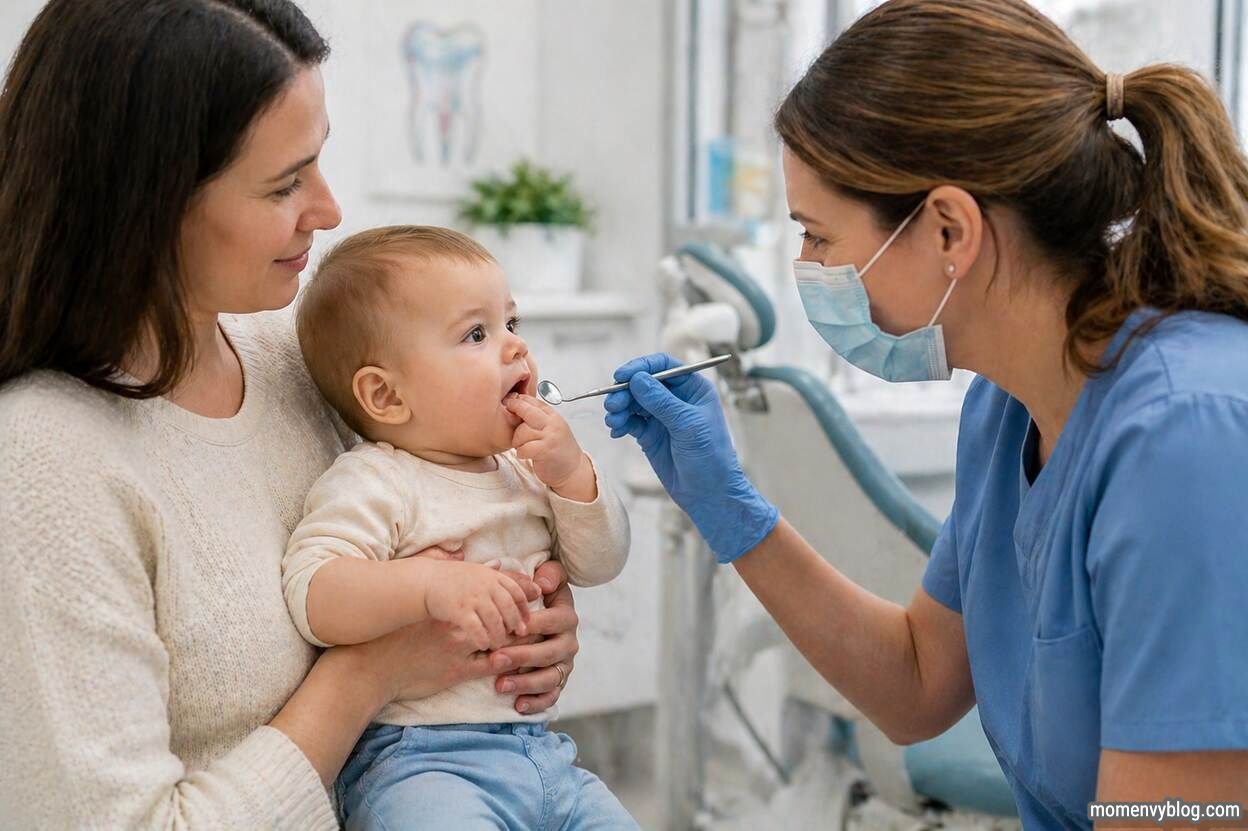
It’s a good idea to visit a pediatric dentist if:
- No teeth by 12–15 months
- You feel unsure or worried
- You want peace of mind
What the dentist will do:
- Check your baby’s gums
- Look at jaw development
- Review feeding and growth history
- Rarely, suggest an X-ray (only if needed)
Most visits end with:
👉 “Everything looks fine just give it time.”
Early visits are preventive, not scary.
What Parents Can Do at Home
Even if teeth haven’t appeared yet, you can still support healthy development.
✔ Offer a Balanced Diet
- Breast milk or formula (primary nutrition)
- Introduce nutrient-rich foods when appropriate
✔ Maintain Gentle Gum Care
- Use a clean, damp cloth
- Gently wipe gums once a day
✔ Encourage Safe Teething Habits
- Offer soft teething toys
- Let your baby chew safely
✔ Be Patient
- Teeth will come your baby is not “behind,” just different
What NOT to Do
This part is very important.
Avoid:
❌ Applying clove oil or unknown remedies
❌ Giving aspirin or adult medications
❌ Using teething gels with harmful ingredients
❌ Comparing your baby too much with others
❌ Forcing hard foods too early
👉 If something feels questionable, it’s best to skip it.
FAQs
- Is it normal for a baby to have no teeth at 10 months?
Yes, absolutely. Many healthy babies don’t have teeth at this age.
- What if my baby has no teeth at 12 months?
Still often normal but it’s a good time to check with a dentist for reassurance.
- Can genetics cause delayed teething?
Yes, this is one of the most common reasons.
- Do late teeth mean weak teeth?
No. Late teeth can be just as strong and healthy as early ones.
- Does delayed teething affect speech?
Usually no. Speech development is influenced by many factors, not just teeth.
- Can vitamin deficiency delay teething?
In some cases, yes especially low vitamin D but this is not the most common cause.
- Should I worry if my baby isn’t drooling?
Not necessarily. Some babies show very few teething signs.
- Can teething be completely silent?
Yes! Some babies get teeth with little to no symptoms.
- Is delayed teething linked to intelligence or development?
No. Teething timing has no connection to intelligence.
- When do most babies get their first tooth?
Between 4 and 10 months but variation is normal.
- Can I speed up teething?
No safe way exists to speed it up. Nature follows its own timeline.
- Should I start brushing before teeth appear?
You can gently clean gums, but brushing starts once teeth erupt.
Conclusion
If your baby’s teeth are taking their time, take a deep breath you’re not alone, and this is often completely normal.
Most babies with delayed teething:
- Catch up naturally
- Develop strong, healthy teeth
- Don’t need any treatment
The key is simple:
👉 Observe, support, and stay calm.
And if you ever feel unsure, a quick dental visit can bring peace of mind.
For a broader understanding of your child’s oral health journey, you can explore the complete kids dental care guide to stay informed and confident every step of the way.