






Introduction
If your baby has suddenly become fussy, drooly, and obsessed with chewing everything in sight you’re probably in the middle of teething.
And yes… it can feel exhausting.
Many parents notice changes in sleep, feeding, and mood, and it’s completely normal to wonder, “Is this teething, or something else?”
Here’s the comforting truth: teething is a natural phase, and it doesn’t last forever. While some babies breeze through it, others need a little extra comfort and that’s where the right knowledge really helps.
In this guide, we’ll walk you through:
- Common teething symptoms (what’s normal vs not)
- How to tell teething apart from illness
- Safe, effective remedies that actually work
- What to avoid (very important!)
If you want a full overview of your baby’s dental development, you can explore this baby teeth guide for parents, which explains milestones and care step by step.
When Do Babies Start Teething?
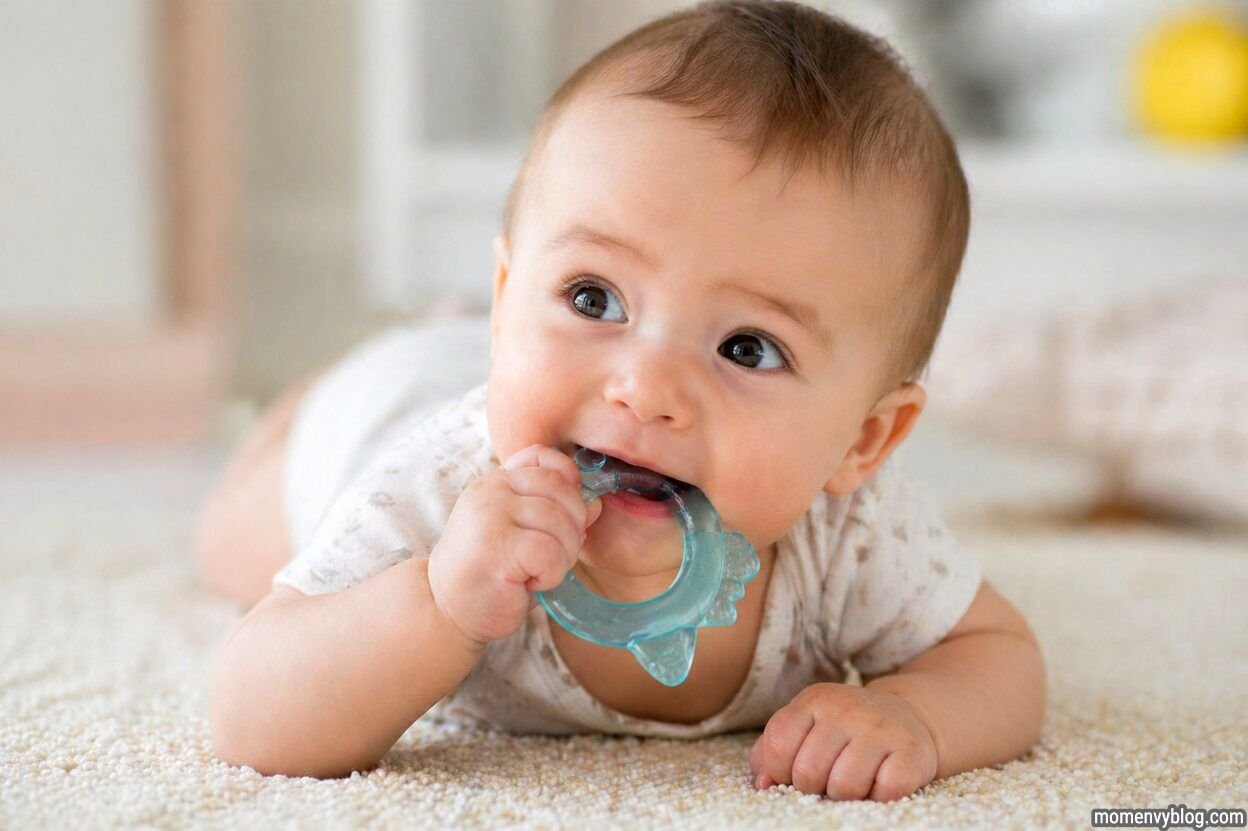
Most babies begin teething between 4 and 7 months of age, but there’s a wide range of normal.
Some babies:
- Start as early as 3 months
- Others may not show teeth until after 10–12 months
Both can be completely healthy.
If you’re curious about the full baby teeth eruption timeline, you can check that in the related cluster article it breaks down each stage in detail.
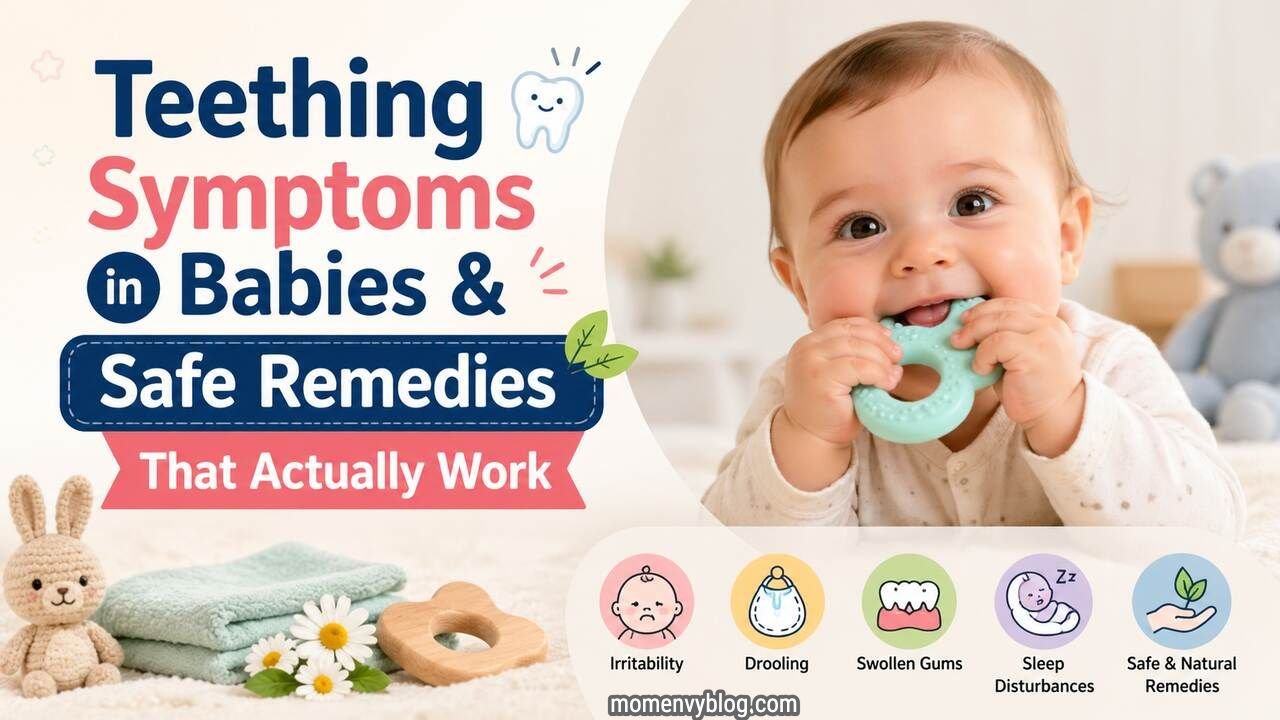
Common Teething Symptoms in Babies
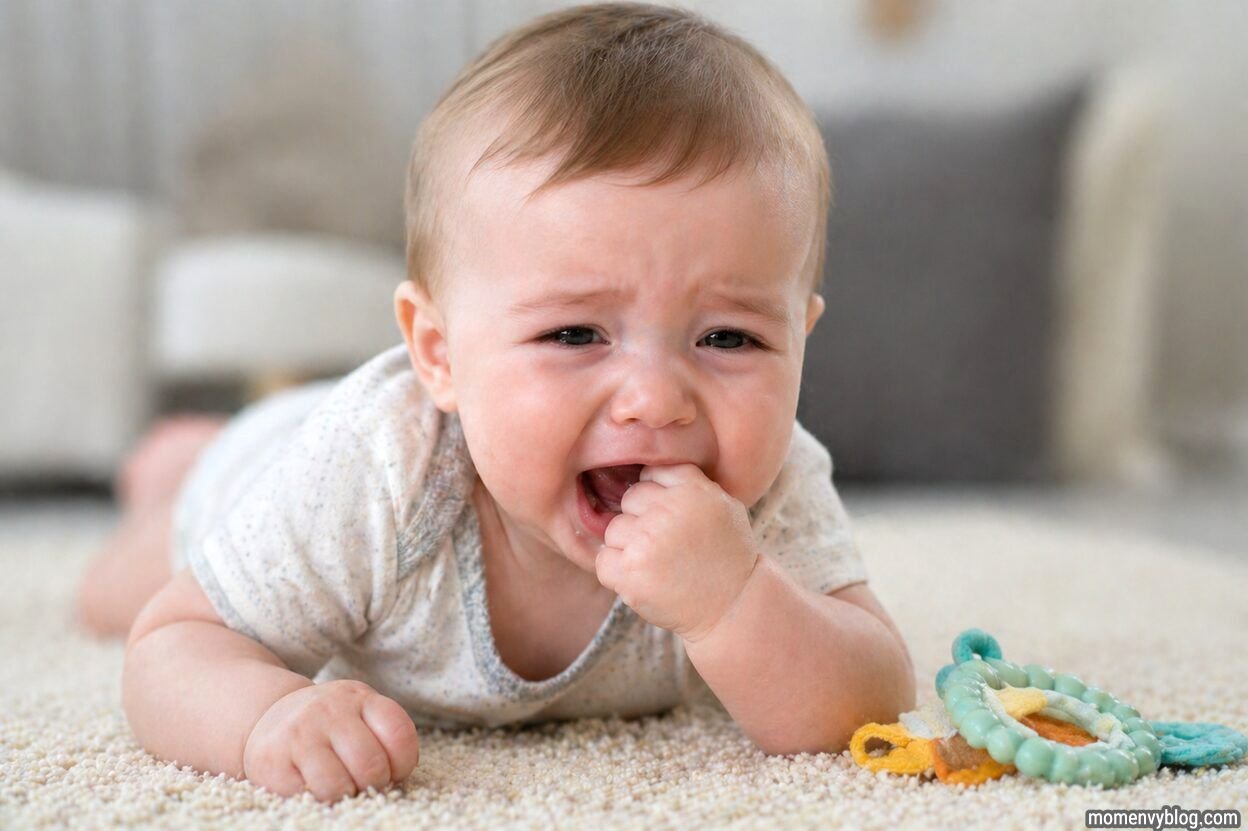
Teething symptoms can look different from baby to baby. Some show clear signs, while others barely react.
Here are the most common ones moms notice:
✔ Drooling
One of the earliest and most obvious signs.
- Your baby may drool much more than usual
- Clothes and bibs may get soaked quickly
- Skin around the mouth may become slightly irritated
👉 This happens because teething stimulates saliva production.
✔ Gum Swelling and Sensitivity
- Gums may look red or slightly puffy
- You might feel a firm area under the gum
- Your baby may react when gums are touched
This is often where the tooth is about to emerge.
✔ Chewing Behavior
Your baby may:
- Chew on fingers, toys, or anything within reach
- Bite down harder than usual
- Seek pressure on their gums
👉 Chewing helps relieve the discomfort of teeth pushing through.
✔ Irritability or Fussiness
Many parents notice:
- More crying than usual
- Clinginess
- Difficulty settling
This is usually due to gum discomfort not severe pain.
✔ Sleep Disturbances
Teething can interrupt sleep, especially at night.
Your baby may:
- Wake more frequently
- Have trouble falling asleep
- Seem restless
✔ Reduced Appetite
Some babies:
- Eat less than usual
- Refuse certain textures
- Prefer softer foods
This is because sucking or chewing may feel uncomfortable.
❗ Teething Myths (Important to Know)
Let’s clear up some very common worries:
❌ Fever
Teething does NOT cause high fever.
- A slight temperature rise? Maybe
- True fever (above 38°C / 100.4°F)? Likely something else
❌ Diarrhea
Teething does not directly cause diarrhea.
If your baby has:
- Loose stools
- Vomiting
- Lethargy
👉 It’s best to check with a doctor.
How to Tell If It’s Teething or Something Else
This is one of the biggest concerns for parents.
Signs it’s likely teething:
- Drooling
- Chewing behavior
- Mild fussiness
- Slight gum swelling
- Symptoms come and go
Signs it may NOT be teething:
- High fever
- Persistent diarrhea
- Severe coughing
- Rash on body
- Extreme lethargy
👉 When symptoms feel “too strong,” trust your instinct and seek medical advice.
Safe Teething Remedies That Actually Work
Let’s talk about what truly helps simple, safe, and effective options.
Natural Relief Methods
These are the go-to remedies most pediatric dentists recommend.
✔ Teething Rings
- Choose soft, BPA-free teething toys
- Look for textured surfaces
- Easy for your baby to hold
👉 These provide gentle pressure on sore gums.
✔ Cold (Not Frozen) Items
- Chill teething rings in the fridge
- Offer a cool, damp washcloth
⚠️ Avoid freezing:
Frozen items can be too hard and may hurt gums.
✔ Gentle Gum Massage
- Wash your hands
- Use a clean finger
- Gently rub your baby’s gums
This simple method often gives immediate relief.
Comfort Techniques
Sometimes, emotional comfort works just as well as physical relief.
✔ Extra Cuddling
- Hold your baby close
- Provide reassurance
- Skin-to-skin contact can help calm them
✔ Distraction
- Playtime
- Singing
- Gentle movement
👉 A distracted baby often forgets the discomfort temporarily.
✔ Routine Adjustments
- Offer naps earlier if needed
- Keep bedtime calm and predictable
- Be flexible during difficult days
Teething Remedies to AVOID
This is extremely important for your baby’s safety.
❌ Teething Gels with Harmful Ingredients
Avoid gels containing:
- Benzocaine
- Lidocaine
These can be dangerous for babies.
❌ Amber Teething Necklaces
Despite popularity, they are unsafe because of:
- Choking risk
- Strangulation risk
There’s no proven benefit.
❌ Unsafe Home Remedies
Avoid:
- Alcohol rubbing on gums
- Clove oil (too strong for babies)
- Honey (unsafe under 1 year)
👉 If it sounds questionable, it’s best not to try it.
Nighttime Teething How to Help Your Baby Sleep

Nighttime can be the hardest part.
Here’s what actually helps:
✔ Keep a Calm Bedtime Routine
- Warm bath
- Gentle massage
- Quiet environment
✔ Offer Comfort When Needed
- Pick up and soothe your baby
- Use soft voice and touch
✔ Use Safe Teething Tools Before Bed
- Give a teething ring before sleep
- Gentle gum massage
✔ Be Patient with Night Wakings
This phase is temporary even though it feels long.
👉 Many babies return to normal sleep once the tooth breaks through.
When to See a Doctor or Dentist

Most teething symptoms are mild and manageable at home.
However, you should seek help if your baby has:
- High fever
- Persistent diarrhea
- Refusal to eat for long periods
- Severe irritability
- No signs of teething but ongoing discomfort
Also, if you’re concerned about delayed teething in babies, a pediatric dentist can provide reassurance and guidance.
FAQs
- How long do teething symptoms last?
Usually a few days before and after the tooth emerges.
- Can teething cause fever?
No, not true fever. High temperature likely means illness.
- What is the best teething remedy?
Cold teething rings and gentle gum massage are the safest and most effective.
- Do all babies feel teething pain?
No. Some babies show very few symptoms.
- Why is teething worse at night?
Less distraction makes discomfort more noticeable.
- Can teething affect feeding?
Yes, babies may eat less temporarily.
- Are teething tablets safe?
Many are not recommended always check with a doctor.
- Should I give pain medication?
Only if advised by a doctor.
- Can teething cause a runny nose?
Mild symptoms can overlap, but persistent runny nose may not be teething.
- What age is teething most painful?
Usually between 6–18 months when multiple teeth erupt.
- Can I freeze teething toys?
No frozen items can harm gums.
- Is teething the same for every baby?
Not at all. Every baby experiences it differently.
Conclusion
Teething can feel overwhelming especially when your baby is uncomfortable and sleep is disrupted.
But here’s what every mom should remember:
👉 Teething is temporary.
👉 Your baby will get through it.
👉 Simple, safe comfort methods are usually enough.
You don’t need complicated remedies or risky solutions just patience, gentle care, and reassurance.
And if you ever feel unsure, you’re always doing the right thing by checking.
For a broader understanding of your child’s oral health journey, you can explore the complete kids dental care guide to feel more confident every step of the way.