








Quick Highlights
- At 3 weeks pregnant, ovulation and fertilization may have just occurred.
- A fertilized egg begins dividing into more cells while traveling toward the uterus.
- Implantation may begin near the end of this week, but timing varies.
- Most women do not have clear pregnancy symptoms or a positive home pregnancy test yet.
- Continue taking a prenatal vitamin with at least 400 micrograms of folic acid each day.
- Severe one-sided pain, fainting, shoulder pain, or heavy bleeding requires prompt medical attention.
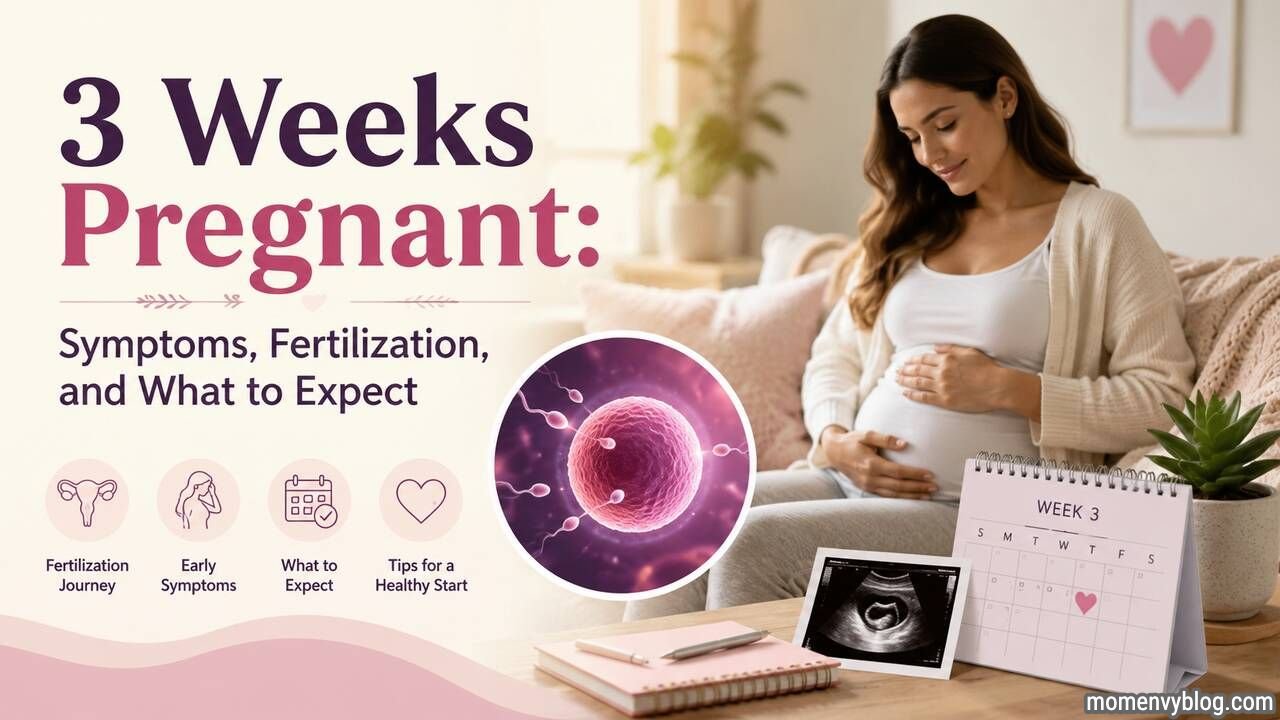
At 3 weeks pregnant, something remarkable may be happening even though you probably cannot feel it yet. An egg and sperm may have joined, creating a single fertilized cell that begins dividing as it travels toward your uterus.
This is one of the earliest stages of pregnancy. There is no visible baby bump, morning sickness is unlikely, and a home pregnancy test may still be negative.
The waiting can feel especially long when you are trying to conceive. I remember how easy it was to examine every cramp and wonder whether it meant something. At this stage, symptoms cannot give you a reliable answer. Time and correctly timed pregnancy testing are much more useful.
3 Weeks Pregnant at a Glance
| Pregnancy milestone | What may be happening |
| Gestational age | 3 weeks |
| Time since fertilization | Usually a few days or less |
| Developmental stage | Fertilized egg dividing into cells |
| Medical term | Zygote, then morula and blastocyst |
| Location | Traveling through the fallopian tube toward the uterus |
| Implantation | May begin near the end of week 3 or during week 4 |
| Baby size | Microscopic |
| Common symptoms | Usually none or mild, nonspecific changes |
| Pregnancy test | Often too early |
| Trimester | First trimester |
Are You Actually Pregnant at 3 Weeks?
Possibly, yes.
Pregnancy is counted from the first day of your last menstrual period, not from the day fertilization occurs. In a typical cycle, ovulation and fertilization happen around the end of pregnancy week 2 or the beginning of week 3. Actual timing depends on the length of your cycle and when you ovulate.
If an egg has been fertilized, you are biologically pregnant, although the pregnancy may not yet have implanted or produced enough pregnancy hormone for a home test to detect.
Some women ovulate earlier or later than the commonly used day-14 estimate. If your cycle is irregular, the events described in this guide may happen on a different schedule.
What Happens at 3 Weeks Pregnant?
Pregnancy week 3 is usually the week of fertilization and very early cell division.
The process may look like this:
- An ovary releases a mature egg during ovulation.
- The egg enters a fallopian tube.
- Sperm travel through the cervix and uterus toward the fallopian tube.
- One sperm may fertilize the egg.
- The fertilized egg begins dividing.
- The growing cluster of cells travels toward the uterus.
- Implantation may begin after the cluster reaches the uterine lining.
A fertilized egg is initially called a zygote. As it divides, it becomes a compact ball of cells called a morula. It later develops into a blastocyst, which can attach to the uterine lining.
Fertilization at 3 Weeks Pregnant
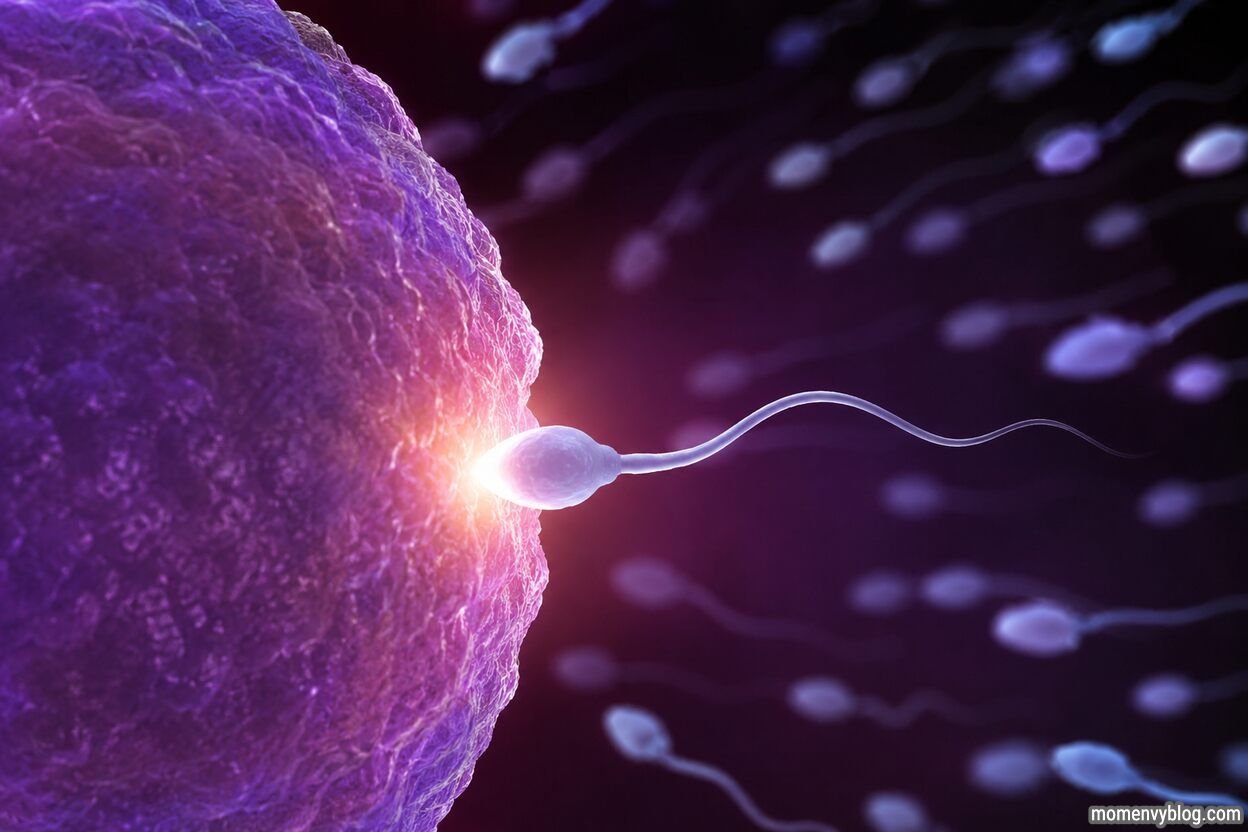
Fertilization usually takes place in a fallopian tube when one sperm enters an egg.
The genetic material from the egg and sperm combines, creating a complete set of chromosomes. These chromosomes contain the instructions that guide early development.
The sperm contributes either an X or Y chromosome, which determines the baby’s chromosomal sex at fertilization. This is established immediately, even though it cannot be identified on an ultrasound at this early stage.
Fertilization does not always occur immediately after sex. Sperm may remain alive in the reproductive tract for several days, while an egg remains available for fertilization for a much shorter time after ovulation. This is why sex in the days before ovulation can lead to pregnancy.
Baby Development at 3 Weeks Pregnant
Your developing pregnancy is still microscopic.
Shortly after fertilization, the zygote begins dividing without becoming much larger overall. One cell becomes two, two become four, and the process continues. By around three days after fertilization, the cluster may contain about 16 cells and be called a morula.
The cells will eventually begin taking on different jobs. Some will contribute to the embryo, while others will help form support structures such as the placenta.
At this stage, however, there are no recognizable:
- Arms or legs
- Facial features
- Organs
- Brain structures
- Heartbeat
- Placenta
- Amniotic sac visible on ultrasound
The cluster of cells is moving through the fallopian tube toward the uterus, where implantation must occur for the pregnancy to continue developing. ACOG describes this early cluster as traveling to the uterine lining, implanting, and then continuing to grow.
How Big Is the Baby at 3 Weeks Pregnant?
The developing cell cluster is microscopic and much too small to compare meaningfully with common foods or objects.
There is no fetus at this stage. Medical terminology changes as development progresses:
- Zygote: the single fertilized cell
- Morula: a compact ball of dividing cells
- Blastocyst: the structure that can implant in the uterus
- Embryo: the term used during the early developmental period after fertilization
- Fetus: the term used later in development
ACOG notes that the embryo stage continues during the first eight weeks after fertilization, followed by the fetal stage.
Implantation at 3 Weeks Pregnant
Implantation is the process in which the blastocyst attaches to and begins settling into the uterine lining.
It usually happens several days after fertilization. Depending on when ovulation and fertilization occurred, implantation may begin late in pregnancy week 3 or during week 4.
Once implantation begins, cells that will help form the placenta start producing human chorionic gonadotropin, better known as hCG. This is the hormone detected by pregnancy tests.
Implantation is an important step, but you cannot reliably feel or identify it. Many women notice nothing at all.
Can You Have Implantation Bleeding at 3 Weeks?

Light spotting may occur around the time a fertilized egg implants, but not everyone experiences it. Bleeding in early pregnancy can also have other causes, and spotting alone cannot confirm implantation.
Possible implantation-related spotting is often described as:
- Very light
- Pink, brown, or rust-colored
- Short-lived
- Lighter than a normal period
- Not enough to soak pads
However, there is no dependable way to identify the cause of spotting based only on its color or timing.
Contact a healthcare professional if you have bleeding during a known pregnancy, especially when it is heavy, persistent, painful, or accompanied by dizziness.
Can You Feel Pregnant at 3 Weeks?
Most women do not feel pregnant at 3 weeks.
Pregnancy hormone levels are only beginning to rise after implantation, so the classic symptoms associated with early pregnancy may not have started.
You might notice mild changes, but these can also be caused by ovulation, progesterone, an approaching period, stress, illness, or close attention to your body.
Possible but nonspecific changes include:
- Mild pelvic cramping
- Light spotting
- Breast tenderness
- Bloating
- Fatigue
- Mood changes
- Increased vaginal discharge
- A slight change in basal body temperature
Having no symptoms is completely normal.
3 Weeks Pregnant Symptoms
Mild cramping
Some women notice mild lower abdominal or pelvic cramping around ovulation or implantation.
Normal mild cramps may feel similar to light period cramps. They should not be severe, steadily worsening, or focused sharply on one side.
Light spotting
A small amount of spotting may happen around implantation, but many pregnant women never experience it. Spotting can have several causes and does not confirm pregnancy.
Breast tenderness
Hormonal changes after ovulation may make your breasts feel sore, heavy, or sensitive. This can happen whether or not conception occurred.
Bloating
Progesterone can slow digestion and contribute to bloating or gas. At 3 weeks, bloating is not caused by the size of the pregnancy.
Fatigue
You may feel more tired than usual, although clear pregnancy-related fatigue more commonly develops as hormone levels rise.
Increased discharge
Some women notice more vaginal discharge. Normal discharge is usually thin or milky and does not have a strong unpleasant odor.
Contact a healthcare professional if discharge is accompanied by itching, burning, pain, a foul odor, or an unusual color.
Elevated basal body temperature
If you track basal body temperature, it may remain elevated after ovulation when pregnancy occurs. Temperature tracking cannot confirm a pregnancy, but a sustained rise may encourage you to test when your period is due.
Can Morning Sickness Start at 3 Weeks Pregnant?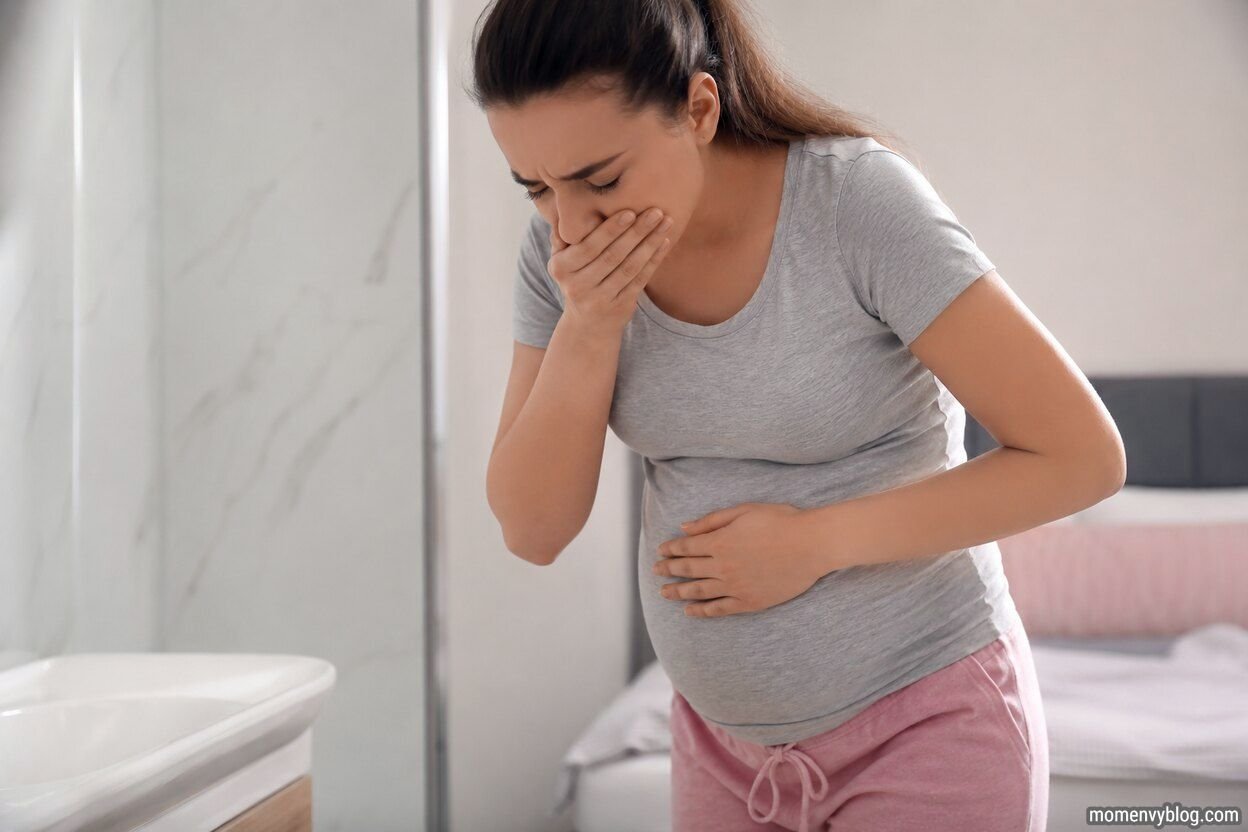
Morning sickness is unlikely at 3 weeks pregnant.
Pregnancy-related nausea usually begins later, after hCG and other hormone levels have risen. NHS guidance lists nausea among symptoms that may become noticeable in later early-pregnancy weeks, rather than immediately after fertilization.
Feeling sick at 3 weeks could have many causes, including:
- Anxiety
- A stomach illness
- Food-related illness
- Medication
- Hormonal changes
- Migraine
- Lack of sleep
Nausea by itself cannot tell you whether conception occurred.
What Does a 3 Weeks Pregnant Belly Look Like?
Your belly will not show a pregnancy bump at 3 weeks.
The developing pregnancy is microscopic, and your uterus has not enlarged enough to change your appearance. Any fullness is more likely related to:
- Bloating
- Gas
- Constipation
- Your period approaching
- Normal changes in body shape
There is no particular belly appearance that confirms a pregnancy this early.
Can You Get a Positive Pregnancy Test at 3 Weeks?
You might receive a positive result late in week 3, but many pregnant women will still test negative.
A home test works by detecting hCG in urine. This hormone begins rising after implantation, not immediately after fertilization.
Testing too early can produce a false-negative result, meaning you are pregnant but the test cannot yet detect enough hCG.
For a more reliable result:
- Wait until the day your period is expected.
- Follow the test instructions carefully.
- Avoid drinking excessive amounts of fluid immediately before testing.
- Consider using first-morning urine when testing early.
- Repeat the test after 48 to 72 hours if it is negative and your period does not begin.
Home pregnancy tests differ in sensitivity, so check the instructions for your specific product.
What Does a Faint Positive Test Mean?
A faint line that appears within the test’s stated reading time may indicate that hCG is present.
A faint positive can happen because:
- You tested very early.
- Your urine was diluted.
- Implantation occurred later than expected.
- The test is less sensitive.
Read the result only during the time window listed in the instructions. A line that appears much later may be an evaporation or indent line rather than a true positive.
Repeat the test in a couple of days or contact a healthcare professional if the result remains unclear.
Can an Ultrasound See a Pregnancy at 3 Weeks?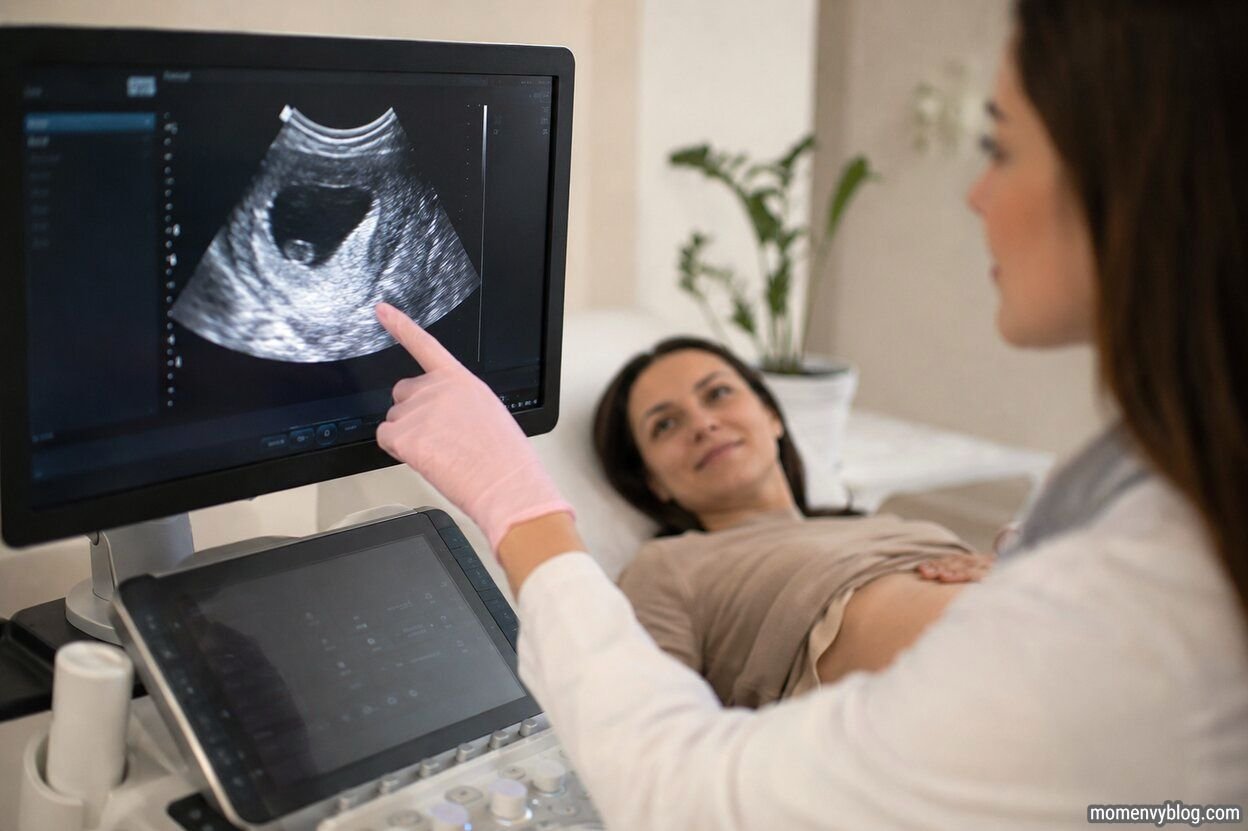
No. A normal pregnancy is too small to be seen on an ultrasound at 3 weeks.
There will be no visible:
- Gestational sac
- Yolk sac
- Embryo
- Fetal pole
- Heartbeat
Even a transvaginal ultrasound is generally unable to confirm a pregnancy this soon.
An ultrasound performed later in the first trimester can help confirm pregnancy location, assess development, and establish gestational age. First-trimester ultrasound measurements are the most accurate ultrasound method for confirming pregnancy dating.
Is There a Heartbeat at 3 Weeks Pregnant?
No detectable heartbeat exists at 3 weeks pregnant.
The cells that will eventually form the heart have not yet developed into a working structure. Claims about hearing or seeing a heartbeat this early are not medically accurate.
Cardiac development begins later, and cardiac activity becomes detectable on ultrasound only after further development.
Is 3 Weeks Pregnant Considered the First Trimester?
Yes. Week 3 is part of the first trimester.
Pregnancy lasts about 40 weeks when counted from the first day of the last menstrual period, and those weeks are divided into three trimesters.
Although this is very early, important developmental processes are beginning. Healthy preconception and early-pregnancy habits matter even before you receive a positive test.
What Should You Do at 3 Weeks Pregnant?
1. Keep Taking Folic Acid
Take a prenatal vitamin that provides at least 400 micrograms of folic acid daily, unless your healthcare provider has prescribed a different amount.
Folic acid taken before conception and during early pregnancy helps prevent serious neural tube defects affecting the developing brain and spine. The CDC recommends 400 micrograms daily for women capable of becoming pregnant.
Certain people may need a higher medically prescribed dose due to their health history, medications, or a previous pregnancy affected by a neural tube defect. Do not increase your dose without professional advice.
2. Avoid Alcohol
There is no known safe amount or timing of alcohol use during pregnancy. The safest choice is to avoid alcohol when you are pregnant or may be pregnant. Alcohol exposure during pregnancy can affect development.
Do not panic if you drank before realizing pregnancy was possible. Stop now and discuss any concerns honestly with your healthcare provider.
3. Stop Smoking and Avoid Recreational Drugs
Smoking, vaping, and recreational drug use can affect pregnancy and general health.
Ask a healthcare professional for support rather than trying to manage dependence alone. Treatment and support options can be tailored to your situation.
4. Review Your Medications
Check all medicines and supplements with a doctor, midwife, or pharmacist, including:
- Prescription medicines
- Over-the-counter pain relievers
- Cold and allergy medicines
- Herbal products
- Skin treatments
- Vitamins
- Weight-loss products
- Sleep aids
Do not stop a prescription medicine suddenly unless the prescribing clinician tells you to do so. Poorly controlled health conditions can also create pregnancy risks.
5. Limit Caffeine
Pay attention to caffeine from coffee, tea, soda, energy drinks, chocolate, and some medicines.
Recommendations can vary by country and personal health history, so discuss your intake with your pregnancy care provider. Energy drinks are generally not a good choice during pregnancy because they may contain high caffeine levels and additional stimulants.
6. Eat for Health, Not for Two
You do not need extra calories for a microscopic pregnancy.
Focus on balanced meals containing:
- Vegetables and fruit
- Whole grains
- Beans and lentils
- Lean protein
- Eggs
- Pasteurized dairy or fortified alternatives
- Healthy fats
- Water
Avoid starting a restrictive diet unless it is medically supervised.
7. Choose Pregnancy-Safe Foods
Food-safety precautions become important as soon as pregnancy is possible.
Be cautious with:
- Raw or undercooked meat
- Raw eggs
- Unpasteurized milk or cheese
- Refrigerated foods that have not been stored safely
- Raw sprouts
- Fish high in mercury
- Unwashed produce
Food recommendations differ by location, so follow your national health guidance and your clinician’s advice.
8. Continue Gentle Exercise
Most women can continue normal moderate activity while trying to conceive and during an uncomplicated early pregnancy.
Walking, swimming, prenatal yoga, and light strength training may be suitable. Speak with your healthcare provider before beginning a demanding new routine, especially if you have a health condition, previous pregnancy complications, pain, or bleeding.
9. Track Your Dates
Record:
- The first day of your last period
- Your typical cycle length
- The date of a positive ovulation test
- Possible ovulation symptoms
- Dates of intercourse or fertility treatment
- Pregnancy test dates and results
These details can help estimate gestational age and guide testing.
10. Protect Your Emotional Well-Being
The two-week wait can feel much longer than two weeks.
Try to avoid testing repeatedly before a result could be accurate. Helpful distractions may include:
- Gentle exercise
- Time outdoors
- Reading
- A favorite show
- Calling a friend
- Preparing healthy meals
- Limiting pregnancy forums if they increase anxiety
It is normal to feel hopeful and worried at the same time.
What Should You Avoid at 3 Weeks Pregnant?

Avoid:
- Alcohol
- Smoking and vaping
- Recreational drugs
- Taking medicines without checking their safety
- High-dose supplements not prescribed by a clinician
- Raw or undercooked high-risk foods
- Excessive heat exposure that raises your core body temperature
- Harmful chemical or workplace exposures
- Crash diets
- Excessive pregnancy testing
You do not need to avoid ordinary daily movement, bending, climbing stairs, or sleeping in a particular position at 3 weeks.
Can Sex Harm a Pregnancy at 3 Weeks?
Sex does not normally harm an uncomplicated early pregnancy.
The developing cell cluster is microscopic and, after implantation, protected within the uterus. Normal intercourse does not dislodge a healthy implanted pregnancy.
A healthcare provider may recommend avoiding sex temporarily if you have:
- Significant bleeding
- Severe pain
- Certain fertility-treatment instructions
- A known medical complication
- Specific guidance based on your history
Mild cramping or light spotting can sometimes occur after sex because the cervix may be sensitive, but any concerning bleeding should be assessed.
Can You Have Twins at 3 Weeks Pregnant?
Yes, a twin pregnancy may begin at this stage, but you will not know yet.
Fraternal twins develop when two separate eggs are fertilized. Identical twins develop when one fertilized egg divides into two embryos.
Symptoms and home pregnancy test results cannot reliably tell you whether you are carrying twins. An ultrasound later in pregnancy is used to identify a multiple pregnancy.
What If You Drank Alcohol Before Knowing?
Many women drink alcohol before realizing they may be pregnant.
Do not blame yourself. Stop drinking once you know pregnancy is possible and discuss your concerns with your healthcare provider. They can consider the amount, timing, and frequency and provide guidance based on your individual circumstances.
The safest recommendation going forward is to avoid alcohol throughout pregnancy.
What If You Took Medicine Before Knowing?
Do not assume that taking a medicine means the pregnancy has been harmed.
Risk depends on:
- The specific medicine
- The dose
- How often it was taken
- The timing of exposure
- Your health condition
- Other medicines or supplements
Contact a doctor, pharmacist, or pregnancy medication information service for personalized advice. Do not stop an essential prescribed medicine without guidance.
When Should You Call a Healthcare Professional?

Contact a healthcare professional if you have:
- Bleeding heavier than your normal period
- Persistent or worsening pelvic pain
- Pain mainly on one side
- Severe abdominal pain
- Shoulder-tip pain
- Fainting or severe dizziness
- Fever
- Painful urination
- Foul-smelling discharge
- A positive pregnancy test with bleeding or pain
Heavy bleeding, fainting, severe pain, or sharp one-sided pain can require urgent assessment.
At 3 weeks, a pregnancy may be too early to locate on ultrasound. A clinician may use symptoms, repeat hCG blood tests, and later imaging when there is concern about an ectopic pregnancy or pregnancy loss.
3 Weeks Pregnant Checklist
- Continue taking a prenatal vitamin with folic acid.
- Avoid alcohol, smoking, vaping, and recreational drugs.
- Review medicines and supplements with a healthcare professional.
- Eat balanced meals and follow pregnancy food-safety guidance.
- Continue moderate physical activity when appropriate.
- Record your menstrual and ovulation dates.
- Wait until the appropriate time to take a pregnancy test.
- Repeat a negative test if your period does not arrive.
- Contact a clinician about heavy bleeding or significant pain.
- Prepare for what may happen during week 4.
What Happens at 4 Weeks Pregnant?
At 4 weeks pregnant, implantation has usually happened or is completing. hCG begins rising, and a home pregnancy test is more likely to detect it.
You may also:
- Miss your expected period
- Receive your first positive pregnancy test
- Notice mild cramping
- Experience light spotting
- Feel more tired
- Develop breast tenderness
- Have no symptoms at all
The next guide should explain pregnancy testing, implantation, early development, and what to do after your first positive result.
Next article: 4 Weeks Pregnant: Symptoms, Baby Development, and What to Expect
FAQ’s
Is 3 weeks pregnant too early to know?
For many women, yes. Implantation may not have happened yet, or hCG may still be too low for a home pregnancy test. Testing around the expected date of your period gives a more reliable result.
What is happening at 3 weeks pregnant?
Ovulation and fertilization may have occurred. The fertilized egg begins dividing while traveling through the fallopian tube toward the uterus.
Are you really pregnant at 3 weeks?
You may be pregnant if fertilization has occurred. However, implantation may still be pending, and a pregnancy test may not yet detect hCG.
Can I have pregnancy symptoms at 3 weeks?
You may notice mild cramping, spotting, breast tenderness, fatigue, or bloating, but these symptoms are not reliable proof of pregnancy. Many women have no symptoms.
Can you get a positive pregnancy test at 3 weeks?
It is possible late in the week, particularly when ovulation and implantation occurred early. However, a negative result is common because hCG may still be too low.
Can you see a baby on an ultrasound at 3 weeks?
No. The developing pregnancy is microscopic and cannot yet be seen on an ultrasound.
Does a baby have a heartbeat at 3 weeks?
No. The heart has not developed enough to produce detectable cardiac activity.
Can implantation happen at 3 weeks pregnant?
Yes. Implantation may begin near the end of week 3, depending on when ovulation and fertilization occurred.
Is cramping normal at 3 weeks pregnant?
Mild, brief cramps can occur around ovulation or implantation. Severe, worsening, or one-sided pain should be assessed by a healthcare professional.
Is spotting normal at 3 weeks pregnant?
Light spotting may occur, but bleeding can have several causes. Contact a clinician if it is heavy, painful, persistent, or accompanied by dizziness.
What should hCG be at 3 weeks pregnant?
hCG levels vary widely and may still be undetectable, especially before implantation. A single number is less informative than the clinical situation and, when medically needed, the pattern of change over time.
Can I have morning sickness at 3 weeks?
It is unlikely. Pregnancy-related nausea more often begins later as hormone levels rise.
How many months is 3 weeks pregnant?
Three weeks pregnant is generally considered part of the first month and first trimester.
What if my test is negative at 3 weeks?
Wait until your expected period and test again. You may have tested too early, ovulated later than expected, or not conceived during this cycle.
When should I make my first prenatal appointment?
Contact a pregnancy care provider after a positive test to ask when they want to see you. Appointment timing may be earlier if you have pain, bleeding, a history of ectopic pregnancy, fertility treatment, medication concerns, or a high-risk health condition.
The Bottom Line
At 3 weeks pregnant, fertilization may have occurred and the resulting cluster of cells may be dividing as it travels toward the uterus.
You probably will not feel different yet. A visible bump, a detectable heartbeat, and clear pregnancy symptoms do not occur this early. Even a home pregnancy test may still be negative.
For now, continue taking folic acid, avoid substances that could affect pregnancy, review your medications, and give your body enough time before testing. Seek prompt medical care for severe pain, one-sided pain, fainting, shoulder pain, or heavy bleeding.
Medical note: This article provides general educational information and is not a substitute for personalized advice, diagnosis, or treatment from a qualified healthcare professional.


