






Quick Highlights
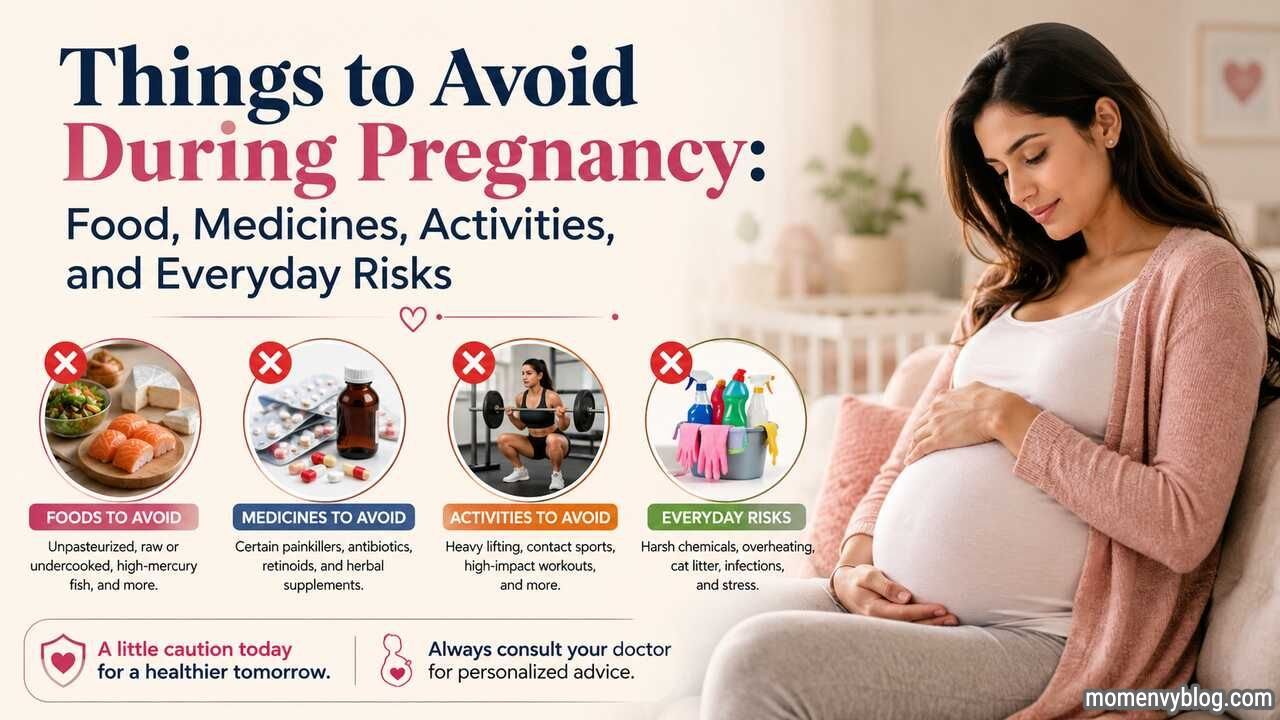
- Avoid alcohol, smoking, vaping, recreational drugs, raw or undercooked animal foods, unpasteurized products, and fish that are high in mercury.
- Limit caffeine to no more than 200 mg per day unless your maternity care provider gives you different advice.
- Do not stop prescription medicine suddenly. Ask a doctor or pharmacist before taking medicines, herbal remedies, or supplements.
- Avoid overheating, scuba diving, contact sports, and activities with a high risk of falling or abdominal injury.
- Many things are not completely forbidden during pregnancy. Deli meat, exercise, lifting, travel, painting, and caring for cats can often be made safer with sensible precautions.
Pregnancy advice can quickly become overwhelming. One person tells you not to lift a grocery bag, while someone else says she exercised until the day she delivered.
The truth is usually more balanced. Some exposures should be avoided completely, while others can be managed with safer preparation, lower amounts, or a few practical changes.
I found it much easier during my own pregnancies to separate the rules into three groups: avoid, limit, and use caution. That approach protects you and your baby without making normal daily life feel frightening.
This guide covers the most important foods, drinks, medicines, activities, infections, and environmental risks to discuss with your doctor or midwife.
What Should You Completely Avoid During Pregnancy?
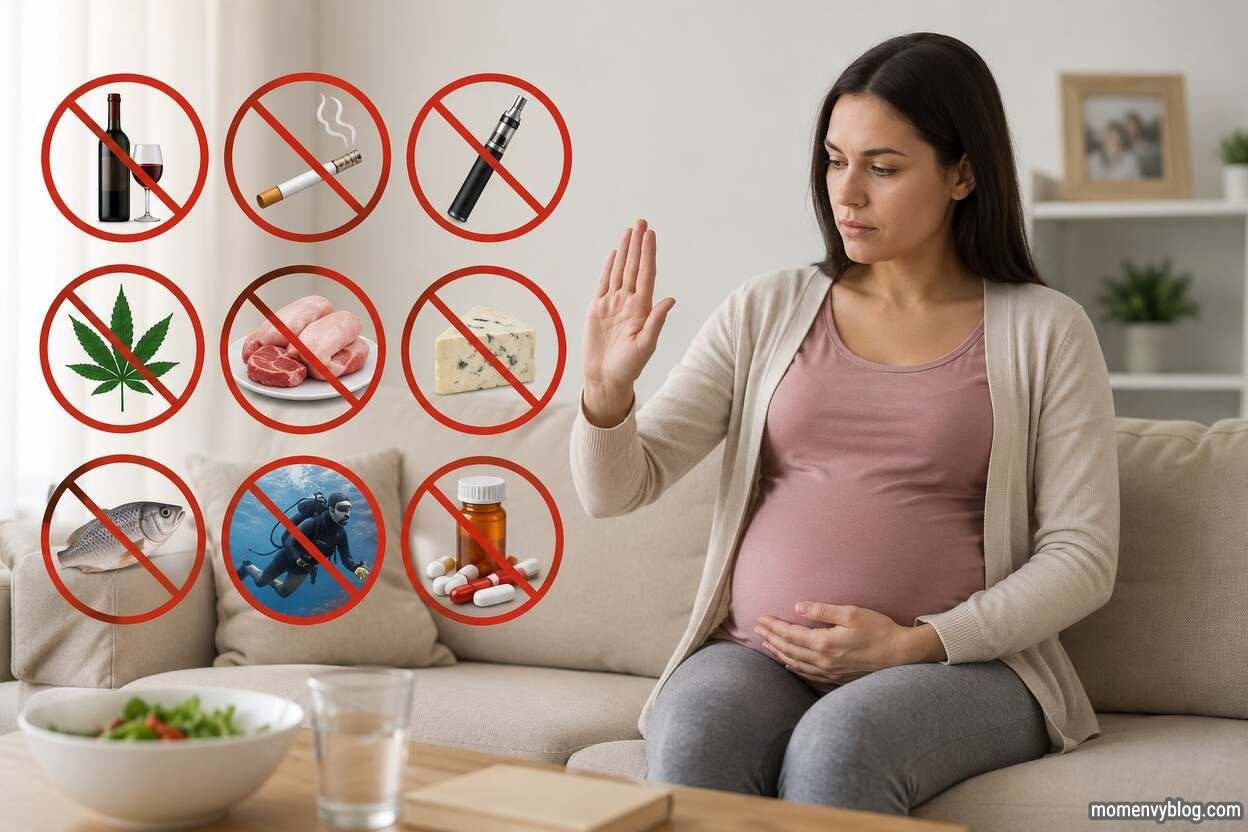
The most important things to avoid are:
- Alcohol
- Smoking and secondhand smoke
- Vaping and nicotine products
- Cannabis and recreational drugs
- Raw or undercooked meat, poultry, seafood, and eggs
- Unpasteurized milk and unsafe cheeses
- Fish with the highest mercury levels
- Scuba diving
- Medicines or supplements that have not been checked for pregnancy safety
Other activities, such as exercise, lifting, travel, painting, and using hair products, are not automatically unsafe. The details matter.
1. Alcohol
The safest choice during pregnancy is to avoid alcohol completely.
There is no known safe amount, safe time, or safe type of alcohol during pregnancy. Beer, wine, spirits, cocktails, and alcohol-containing drinks can all expose a developing baby to alcohol.
Alcohol passes through the placenta and can affect fetal development. Drinking during pregnancy is associated with miscarriage, premature birth, low birth weight, stillbirth, and fetal alcohol spectrum disorders.
If you drank before realizing you were pregnant, do not panic. Stop drinking and tell your maternity care provider honestly. The sooner alcohol use stops, the better.
2. Smoking and Secondhand Smoke
Avoid smoking during pregnancy and try to stay away from secondhand smoke.
Smoking reduces the oxygen available to your baby and increases the risk of:
- Placental problems
- Premature birth
- Low birth weight
- Stillbirth
- Sudden infant death syndrome
- Breathing problems after birth
Secondhand smoke is also harmful. Ask family members not to smoke inside your home, car, or near you.
Quitting can be difficult, especially if smoking has been part of your routine for years. Ask your doctor or midwife about pregnancy-safe stop-smoking support rather than trying to manage cravings alone.
3. Vaping and Nicotine Products
Vaping should not be treated as harmless during pregnancy.
Many vaping products contain nicotine, which can affect the developing brain and lungs. Aerosols may also contain flavorings, metals, and other chemicals.
Avoid:
- Nicotine vapes
- Nicotine pouches
- Cigarettes
- Cigars
- Hookah
- Chewing tobacco
- Unapproved nicotine products
Do not switch from cigarettes to vaping without discussing a quitting plan with a healthcare professional. The best support depends on your health, smoking habits, and available treatments.
4. Cannabis and Recreational Drugs
Avoid cannabis in every form during pregnancy, including:
- Smoking
- Vaping
- Edibles
- Oils
- Gummies
- Products containing THC
Cannabis should not be used to treat pregnancy nausea without medical guidance. Product strength and ingredients can vary, and “natural” does not mean pregnancy-safe.
Cocaine, methamphetamine, heroin, non-prescribed opioids, MDMA, and other recreational drugs can cause serious complications.
Do not stop opioids or other substances suddenly without medical help if you may be dependent on them. Withdrawal can also be dangerous. Contact a doctor or addiction-treatment service for confidential support.
5. Raw or Undercooked Meat and Poultry
Avoid raw or undercooked meat and poultry because they may carry harmful bacteria or parasites.
Examples include:
- Rare or undercooked burgers
- Raw or rare steak
- Undercooked chicken
- Raw sausage
- Raw meat dishes
- Tasting meat before it is fully cooked
Use a food thermometer rather than judging doneness by color alone. Wash your hands, utensils, and preparation surfaces after handling raw meat.
Keep raw meat separate from foods that will be eaten without further cooking.
6. Raw or Undercooked Eggs
Raw and undercooked eggs may contain Salmonella.
Be careful with foods that may contain uncooked egg, including:
- Homemade mayonnaise
- Raw cake batter
- Cookie dough
- Homemade mousse
- Some homemade salad dressings
- Homemade ice cream
- Eggnog
Commercial products are often made with pasteurized eggs, but check the label.
Cook eggs until the white and yolk are firm unless you are using eggs that are specifically produced and approved for safe raw or lightly cooked consumption in your country.
7. Raw Seafood and Refrigerated Smoked Seafood
Raw fish and shellfish can contain harmful bacteria, viruses, or parasites.
Avoid:
- Raw oysters
- Raw clams
- Raw mussels
- Sushi containing raw seafood
- Ceviche that has not been properly cooked
- Undercooked scallops
- Chilled smoked seafood unless it is cooked in a dish
Refrigerated smoked salmon and other smoked seafood may carry Listeria. Cooking it until steaming hot lowers the risk.
Cooked sushi made with vegetables, cooked fish, or cooked seafood can be a safer option when it is prepared hygienically.
8. Unpasteurized Milk, Cheese, and Juice
Avoid unpasteurized milk and foods made from it.
Unpasteurized products can carry bacteria such as Listeria, Salmonella, Campylobacter, and E. coli.
Check labels on:
- Milk
- Cheese
- Yogurt
- Ice cream
- Fruit juice
- Cider
Soft cheese is not automatically unsafe. Many soft cheeses sold in supermarkets are made with pasteurized milk.
Check the label and follow local pregnancy guidance, especially for:
- Queso fresco
- Queso blanco
- Brie
- Camembert
- Feta
- Blue-veined cheese
Even pasteurized queso fresco-type cheeses have been linked to Listeria when made or handled in unsafe conditions. Buy refrigerated products from reputable sources and follow storage instructions carefully. The FDA warns that Listeria during pregnancy can cause serious complications, including miscarriage, stillbirth, and premature delivery.
9. Deli Meat and Hot Dogs That Have Not Been Reheated
You do not necessarily need to avoid deli meat for your entire pregnancy, but it should be handled carefully.
Cold deli meats, hot dogs, and refrigerated meat spreads may carry Listeria. Heat deli meat and hot dogs until steaming hot before eating.
This includes:
- Turkey slices
- Ham
- Bologna
- Salami
- Prepared chicken slices
- Hot dogs
After heating, eat the food promptly rather than allowing it to sit at room temperature.
Choose shelf-stable meat spreads instead of refrigerated pâté or meat spreads.
10. Fish With High Mercury Levels
Fish provides protein, iodine, omega-3 fats, vitamin D, and other nutrients that support pregnancy. You do not need to avoid all fish.
The FDA recommends that pregnant and breastfeeding women eat 8 to 12 ounces, or about two to three servings, of lower-mercury fish each week.
Avoid fish in the FDA’s highest-mercury category, including:
- Shark
- Swordfish
- King mackerel
- Marlin
- Orange roughy
- Tilefish from the Gulf of Mexico
- Bigeye tuna
Safer lower-mercury choices include:
- Salmon
- Shrimp
- Pollock
- Sardines
- Tilapia
- Cod
- Canned light tuna
Albacore or white tuna contains more mercury than canned light tuna, so follow current serving guidance.
Check local advisories before eating fish caught by family or friends.
11. Too Much Caffeine
You do not have to give up caffeine completely, but the amount matters.
ACOG advises limiting caffeine to less than 200 mg per day during pregnancy.
Approximate amounts vary, but caffeine may be found in:
- Coffee
- Tea
- Cola
- Energy drinks
- Chocolate
- Pre-workout products
- Headache remedies
- Some cold and flu medicines
A large café coffee can contain far more caffeine than a small cup made at home. Check serving sizes rather than counting drinks alone.
Energy drinks are best avoided because they may contain high caffeine levels and additional stimulants or herbal ingredients.
12. Medicines That Have Not Been Checked
Do not assume a medicine is safe simply because it is sold without a prescription.
Before taking anything, check with a doctor, midwife, or pharmacist. This includes:
- Pain relievers
- Cold and flu medicine
- Antihistamines
- Sleep aids
- Heartburn treatments
- Acne medicines
- Laxatives
- Herbal products
- Essential oils taken by mouth
- Weight-loss products
Some nonsteroidal anti-inflammatory drugs, including ibuprofen and naproxen, may cause problems during pregnancy, particularly later in pregnancy. Use them only when a healthcare professional specifically recommends them.
Paracetamol, called acetaminophen in the United States, is commonly used during pregnancy, but it should still be taken at the recommended dose and only when needed.
Never stop prescription medicine suddenly
Stopping treatment may be more dangerous than continuing it.
This is especially important for medicines used to manage:
- Epilepsy
- Asthma
- Depression
- Anxiety
- Bipolar disorder
- High blood pressure
- Diabetes
- Blood clots
- Thyroid conditions
- Autoimmune diseases
For example, the NHS advises pregnant people with asthma not to stop prescribed asthma medicine without medical advice because poorly controlled asthma can create risks for both mother and baby.
Ask for a medication review as soon as you know you are pregnant.
13. High-Dose Vitamins and Unchecked Supplements
More vitamins are not always better.
Avoid taking supplements unless the dose and ingredients have been checked for pregnancy. This includes:
- Herbal remedies
- Detox products
- Weight-loss supplements
- Bodybuilding supplements
- High-dose vitamin A
- Unregulated fertility products
- “Hormone balancing” products
Too much preformed vitamin A, also called retinol, can harm a developing baby. Avoid liver and liver products because they can contain high levels of vitamin A.
Do not take multiple prenatal vitamins at the same time. That can lead to excessive amounts of certain nutrients.
Use a prenatal vitamin recommended by your healthcare provider and check before adding anything else.
14. Overheating
Pregnancy can make it harder for your body to manage heat.
Avoid situations that raise your core body temperature or make you feel faint, dehydrated, or unwell.
Use caution with:
- Hot tubs
- Jacuzzis
- Saunas
- Steam rooms
- Hot yoga
- Exercise in extreme heat
- Very hot baths
Some hot tubs reach around 40°C, or 104°F. NHS guidance notes concerns about overheating, dehydration, and fainting during pregnancy.
A comfortably warm bath is different from soaking in very hot water. Get out if you feel dizzy, overheated, nauseated, weak, or unusually thirsty.
During hot weather:
- Exercise early or indoors.
- Wear breathable clothing.
- Drink water regularly.
- Take breaks.
- Avoid sitting in a hot parked car.
15. Contact Sports and Activities With a High Fall Risk
Exercise is healthy for most uncomplicated pregnancies, but some activities carry an unnecessary injury risk.
Avoid or discuss alternatives for:
- Boxing
- Kickboxing with contact
- Martial arts sparring
- Ice hockey
- Rugby
- Soccer with contact
- Downhill skiing
- Horseback riding
- Gymnastics
- Outdoor cycling on unsafe roads
- Climbing at heights
- Activities that could cause abdominal impact
Your balance changes as pregnancy progresses. An activity that felt easy before pregnancy may become less stable later.
Walking, swimming, stationary cycling, modified strength training, low-impact aerobics, and prenatal yoga are often more suitable options.
16. Scuba Diving
Avoid scuba diving during pregnancy.
Changes in pressure can expose a developing baby to decompression-related risks. Snorkeling at the surface may be acceptable for some pregnant women who are confident swimmers and have medical clearance, but scuba diving is not recommended.
17. Exercising Until You Are Exhausted
Pregnancy is not the time to push through dizziness, pain, extreme breathlessness, or exhaustion.
You should usually be able to speak in full sentences during moderate exercise.
Stop exercising and seek medical advice if you experience:
- Vaginal bleeding
- Fluid leaking from the vagina
- Regular painful contractions
- Chest pain
- Dizziness or fainting
- Severe shortness of breath
- Calf pain or swelling
- Severe headache
- Muscle weakness affecting balance
Exercise recommendations may be different if you have placenta problems, cervical weakness, preeclampsia, severe anemia, heart or lung disease, or a risk of premature labor.
18. Unsafe Heavy Lifting
Heavy lifting is not automatically forbidden during pregnancy. Many women continue working, caring for children, carrying groceries, and strength training with suitable adjustments.
The risk depends on:
- The weight
- How often you lift
- How far you carry it
- Your lifting technique
- Your stage of pregnancy
- Your previous experience
- Whether you have pain or pregnancy complications
Avoid:
- Sudden maximum-effort lifts
- Holding your breath and straining
- Lifting while twisting
- Carrying a load that blocks your view
- Lifting from an unstable surface
- Continuing through pelvic or back pain
To lift more safely:
- Stand close to the object.
- Widen your stance.
- Bend your knees.
- Keep the load close to your body.
- Breathe out as you stand.
- Turn with your feet instead of twisting your spine.
Ask for help with awkward furniture, full laundry baskets on stairs, large water containers, and other loads that affect your balance.
19. Cat Litter and Soil Without Protection
Cats do not need to be removed from your home during pregnancy.
The concern is toxoplasmosis, a parasitic infection that may be present in cat feces and contaminated soil.
Ask someone else to clean the litter box when possible. When that is not possible:
- Wear disposable gloves.
- Change the litter daily.
- Wash your hands thoroughly afterward.
- Do not touch your face while cleaning.
- Keep cats indoors.
- Do not feed cats raw meat.
Wear gloves while gardening or handling soil. Wash produce carefully because contaminated soil can remain on fruits and vegetables.
You are more likely to be exposed through contaminated food or soil than by simply touching or living with a cat.
20. Gardening Without Gloves
Soil may contain Toxoplasma and other organisms.
Wear gloves when:
- Gardening
- Repotting plants
- Handling compost
- Cleaning outdoor areas
- Working in a sandbox
Wash your hands afterward, even when gloves were used.
Keep outdoor sandboxes covered when children are not using them because cats may use them as litter boxes.
21. Unnecessary Chemical and Fume Exposure
Normal household cleaning is generally manageable with ventilation and sensible precautions.
Avoid:
- Mixing bleach with ammonia
- Mixing multiple cleaners
- Strong fumes in enclosed rooms
- Pesticide exposure
- Solvent-heavy products without ventilation
- Removing old lead paint
- Sanding or scraping unknown paint
- Handling industrial chemicals without protection
When cleaning:
- Open windows.
- Wear gloves.
- Follow the product label.
- Use the smallest amount needed.
- Leave the room if fumes make you dizzy or nauseated.
- Ask someone else to handle strong products.
“Natural” cleaners can also irritate the lungs or skin. Natural does not always mean harmless.
22. Painting in Poorly Ventilated Spaces
Painting a nursery is not automatically dangerous, but exposure should be minimized.
Choose:
- Water-based, low-VOC paint
- Good ventilation
- Short work periods
- Gloves and protective clothing
Avoid:
- Spray painting
- Solvent-based paint
- Paint stripper
- Sanding old paint
- Removing paint that may contain lead
- Spending hours in a freshly painted closed room
Older homes may contain lead-based paint. Do not scrape, sand, or remove it yourself during pregnancy.
Let someone else handle demolition, old paint removal, and products with strong solvents.
23. Food That Has Been Left Out Too Long
Pregnancy increases the importance of everyday food hygiene.
Avoid eating perishable food that has been left at room temperature for too long, especially:
- Meat
- Poultry
- Seafood
- Eggs
- Dairy products
- Cooked rice
- Prepared salads
- Takeout leftovers
Refrigerate leftovers promptly. Reheat them until steaming hot and do not repeatedly cool and reheat the same food.
Check refrigerator temperatures and pay attention to use-by dates.
24. Unwashed Fruits, Vegetables, and Sprouts
Wash fruits and vegetables thoroughly under running water before eating, cutting, or cooking them.
Do not use soap or household cleaners on produce.
Raw sprouts, including alfalfa, clover, mung bean, and radish sprouts, can carry bacteria that are difficult to wash away. Cook sprouts thoroughly before eating them during pregnancy.
Also avoid salads or cut fruit that appear poorly refrigerated or have been sitting out for a long time.
25. Unwashed Hands During Food Preparation
Handwashing is one of the simplest ways to reduce infection risk.
Wash your hands:
- Before preparing food
- After touching raw meat
- After using the bathroom
- After changing diapers
- After touching animals
- After gardening
- Before eating
- After handling garbage
Use separate cutting boards for raw meat and ready-to-eat foods when possible.
26. Sick People and Infection Exposure When Possible
You cannot avoid every illness, especially when you already have children at home. Still, a few precautions help.
Try to avoid close contact with people who have:
- Chickenpox
- Rubella
- Measles
- Flu
- COVID-19
- Vomiting or diarrhea
- Other contagious infections
Children in daycare may carry cytomegalovirus, or CMV, in saliva and urine. Reduce exposure by:
- Washing your hands after diaper changes
- Not sharing cups or utensils with young children
- Avoiding kissing young children directly on the mouth
- Cleaning surfaces that contact saliva or urine
Contact your maternity care provider promptly if you are exposed to chickenpox, rubella, measles, or another infection that may affect pregnancy.
27. Skipping Recommended Vaccinations
Pregnancy is not a reason to avoid every vaccine.
Some vaccines are specifically recommended during pregnancy because they protect both mother and baby. Others, particularly certain live vaccines, are usually avoided.
Recommendations vary by country, season, health history, and pregnancy stage.
Ask your doctor or midwife about:
- Influenza vaccination
- Whooping cough vaccination
- COVID-19 vaccination
- RSV vaccination where available and recommended
Do not rely on social media claims or assume that every vaccine follows the same rule.
28. Cleaning Rodent Droppings Without Precautions
Rodent urine, droppings, saliva, and nesting materials may carry infection.
Do not sweep or vacuum dry droppings because this can send contaminated particles into the air.
Ask someone else to handle infestations. When exposure cannot be avoided, follow local public-health cleanup guidance and use gloves, disinfectant, and good ventilation.
Keep food sealed and address gaps or entry points that allow rodents inside.
29. Dental Care Myths
Do not avoid necessary dental care simply because you are pregnant.
Untreated gum disease, tooth decay, and dental infection can worsen.
Tell your dentist that you are pregnant and how far along you are. Routine cleanings and many necessary treatments can be performed with pregnancy-appropriate precautions.
Avoid elective cosmetic procedures that can safely wait, but do not delay treatment for:
- Severe tooth pain
- Facial swelling
- Dental abscess
- Broken teeth
- Signs of infection
30. Unsafe Travel Situations
Travel is possible during many uncomplicated pregnancies, but some situations require extra planning.
Avoid or reconsider travel when:
- Your doctor has restricted it.
- You have bleeding or premature-labor symptoms.
- You have severe pregnancy complications.
- You are traveling somewhere without suitable medical care.
- There is a relevant infectious-disease outbreak.
- Your airline will not accept passengers at your pregnancy stage.
On longer journeys:
- Move your legs regularly.
- Take walking breaks.
- Drink water.
- Wear the seat belt correctly.
- Keep prenatal records and medicines with you.
Place the lap belt low across your hips and below your belly. The shoulder belt should sit between your breasts and across your chest.
31. Sleeping Flat on Your Back for Long Periods Later in Pregnancy
After the middle of pregnancy, lying flat on your back for a long time may make you feel dizzy, nauseated, or breathless because the uterus can press on major blood vessels.
Side sleeping is often more comfortable later in pregnancy.
Do not panic if you wake up on your back. Simply roll onto your side and return to sleep.
Pillows behind your back, between your knees, or under your belly may help you stay comfortable.
32. Very High Heels and Unstable Shoes
High heels do not directly harm a baby, but they can increase the risk of falls, ankle injuries, and back discomfort as your balance changes.
Choose shoes with:
- Good grip
- A stable heel
- Enough room for swelling
- Arch support
- Secure straps or laces
Flip-flops can also be unstable and may not provide enough support for long periods.
You do not need to give up every stylish shoe. Save less stable options for short occasions and choose supportive footwear for everyday walking.
Things You Usually Do Not Need to Avoid Completely
Pregnancy restrictions are often presented as all-or-nothing rules. Many everyday activities can continue with modifications.
| Activity | Safer approach |
| Coffee | Keep total caffeine below 200 mg per day |
| Deli meat | Heat until steaming hot |
| Fish | Choose 2 to 3 servings of lower-mercury fish weekly |
| Exercise | Use moderate intensity and pregnancy-safe modifications |
| Lifting | Reduce heavy or awkward loads and use good technique |
| Painting | Use low-VOC paint with ventilation |
| Cats | Avoid litter when possible and use gloves when necessary |
| Travel | Check medical advice, timing, destination, and airline rules |
| Dental care | Continue routine and necessary treatment |
| Hair treatments | Use ventilation and avoid unnecessary chemical exposure |
When Should You Call a Doctor or Midwife?
Contact your maternity care provider promptly if you develop:
- Vaginal bleeding
- Fluid leaking from the vagina
- Severe abdominal pain
- Persistent vomiting
- Fever
- Chest pain
- Difficulty breathing
- Severe headache
- Vision changes
- Sudden swelling
- Painful or regular contractions before term
- Reduced fetal movement once you usually feel a pattern
- One-sided calf pain or swelling
- Symptoms after eating recalled or possibly contaminated food
Seek emergency care for severe bleeding, fainting, seizures, severe breathing difficulty, chest pain, or other life-threatening symptoms.
What If You Already Ate or Did Something on This List?
Do not assume that one exposure has harmed your baby.
Many pregnant women eat a food, take a medicine, drink alcohol, use a hot tub, or handle cat litter before learning that there may be a risk.
Take these steps:
- Stop or avoid further exposure.
- Write down what happened.
- Note the amount, date, and pregnancy week.
- Check the product label if relevant.
- Contact your doctor, midwife, pharmacist, or local poison-information service.
- Follow any monitoring or testing advice.
Avoid searching through frightening stories online. Risk depends on the exact exposure, amount, timing, and your individual health.
Frequently Asked Questions
What are the most important things to avoid during pregnancy?
The highest-priority items are alcohol, smoking, vaping, recreational drugs, high-mercury fish, unpasteurized products, raw or undercooked animal foods, unsafe medicines, overheating, scuba diving, and activities with a high risk of falling or abdominal injury.
Can I drink coffee while pregnant?
Yes, most pregnant women can have some caffeine. Keep total daily caffeine below 200 mg unless your healthcare provider recommends a different limit. Remember to count tea, chocolate, cola, energy drinks, and medicines containing caffeine.
Can I eat deli meat during pregnancy?
Deli meat is safer when heated until steaming hot. Cold deli meat may carry Listeria, which is particularly concerning during pregnancy.
Can I eat sushi while pregnant?
Cooked sushi and vegetarian sushi can be safer choices when prepared hygienically. Avoid sushi containing raw or undercooked fish or shellfish.
Can I eat tuna during pregnancy?
Yes, but the type and amount matter. Canned light tuna is generally lower in mercury than albacore or white tuna. Avoid bigeye tuna and follow current FDA serving guidance.
Can I exercise while pregnant?
Most women with uncomplicated pregnancies are encouraged to remain active. Avoid activities with high fall, collision, overheating, or abdominal-injury risks. Ask your maternity care provider about any personal restrictions.
Is it safe to lift my toddler while pregnant?
Many pregnant women can continue lifting a child, especially early in pregnancy. Use good technique, avoid twisting, and ask for help if the child is heavy or the lift causes pelvic, abdominal, or back pain.
Can I paint the nursery while pregnant?
Occasional painting with water-based, low-VOC paint in a well-ventilated room is generally lower risk. Avoid solvent-heavy products, spray paint, paint stripping, and disturbing old paint that may contain lead.
Can I clean a litter box while pregnant?
Ask someone else when possible. Otherwise, wear disposable gloves, change the litter daily, avoid touching your face, and wash your hands thoroughly afterward.
Can I take ibuprofen while pregnant?
Do not take ibuprofen unless a healthcare professional tells you to. Its risks vary by pregnancy stage, and it is particularly concerning later in pregnancy.
Can I take herbal remedies during pregnancy?
Do not assume herbal products are safe. Many have not been adequately studied in pregnancy, may contain active drug-like ingredients, or may interact with medicines. Check with a doctor or pharmacist first.
Is it safe to use a hot tub during pregnancy?
Hot tubs are best avoided because they may raise body temperature and cause overheating, dehydration, or fainting. A warm bath is generally different, but get out if you feel hot, dizzy, weak, or uncomfortable.
Should I avoid all cheese during pregnancy?
No. Many cheeses are safe, especially hard cheeses and products made with pasteurized milk. Check labels and local guidance. Some soft, mold-ripened, blue, or queso fresco-type cheeses need extra caution or cooking.
What household cleaning products should I avoid?
Avoid mixing cleaners, strong fumes in enclosed spaces, pesticides, solvents, and products without clear safety directions. Use gloves, open windows, and follow label instructions.
Is flying safe during pregnancy?
Flying may be safe during an uncomplicated pregnancy, but airline limits and individual medical risks vary. Ask your maternity care provider before booking, especially later in pregnancy or if you have complications.
The Bottom Line
Pregnancy safety is not about avoiding every food, activity, or household task. It is about recognizing the exposures that pose a real risk and making practical changes where needed.
Avoid alcohol, smoking, vaping, recreational drugs, unsafe foods, unchecked medicines, overheating, and high-risk activities. Limit caffeine, choose lower-mercury fish, handle food carefully, and ask for personalized medical advice when a rule is unclear.
Most importantly, do not stop prescribed treatment or make major health decisions based only on something you read online. Your doctor, midwife, and pharmacist can help you balance the benefits and risks for your specific pregnancy.
Medical note: This article provides general educational information. It does not replace individual advice from a qualified healthcare professional.

