







Quick Highlights
- A healthy pregnancy diet can support blood pressure control, but it cannot treat gestational hypertension or preeclampsia on its own.
- Build meals around vegetables, fruit, whole grains, beans, lean protein, lower-mercury fish, nuts, seeds, and calcium-rich foods.
- Cut back on highly processed and salty foods rather than trying to remove sodium completely.
- Do not start potassium, magnesium, calcium, aspirin, or herbal supplements for blood pressure unless your maternity care provider recommends them.
- High blood pressure often causes no symptoms. Keep all prenatal appointments and seek urgent care for severe headache, vision changes, pain below the ribs, sudden swelling, or very high blood pressure readings.
Finding out that your blood pressure is high during pregnancy can make every meal feel like something you need to analyze.
Diet does matter, but it is only one part of care. High blood pressure during pregnancy may need closer monitoring, blood tests, urine tests, medication, or additional checks on your baby.
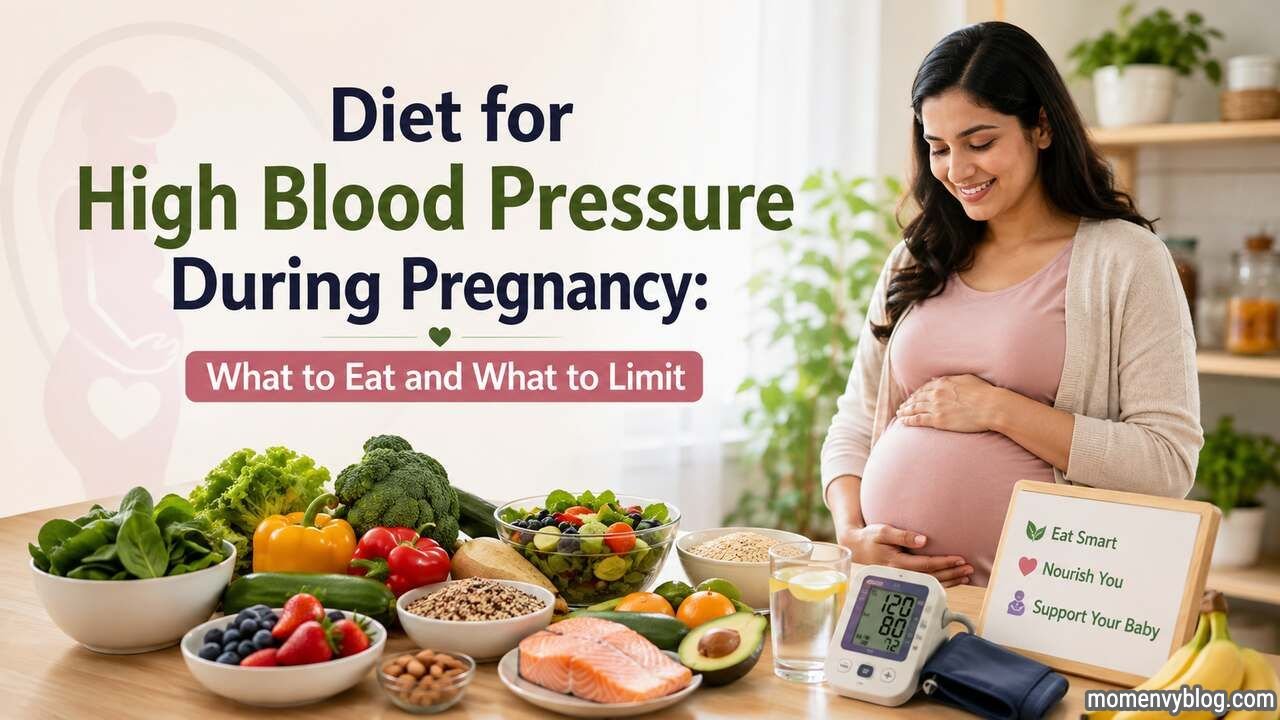
The most useful approach is not a strict “blood pressure diet.” It is a balanced pregnancy eating pattern that limits excessive sodium and highly processed foods while providing enough protein, calcium, fiber, healthy fats, and other nutrients.
Here is what to eat, what to limit, and when diet is not enough.
Can Diet Lower High Blood Pressure During Pregnancy?
A healthy diet may help support healthier blood pressure, but it should not be used as a substitute for medical treatment.
The NHS recommends a healthy, balanced diet and regular physical activity as part of managing blood pressure during pregnancy. However, some women will also need medication and closer maternity care.
High blood pressure during pregnancy can increase the risk of complications, including:
- Preeclampsia
- Preterm birth
- Placental abruption
- Reduced blood flow to the placenta
- Fetal growth problems
- Cesarean delivery
- Serious maternal complications
ACOG explains that pregnancy-related hypertension can affect both the mother and baby and may require medical treatment depending on the type and severity.
Think of food as supportive care, not a replacement for prenatal treatment.
What Is Considered High Blood Pressure During Pregnancy?
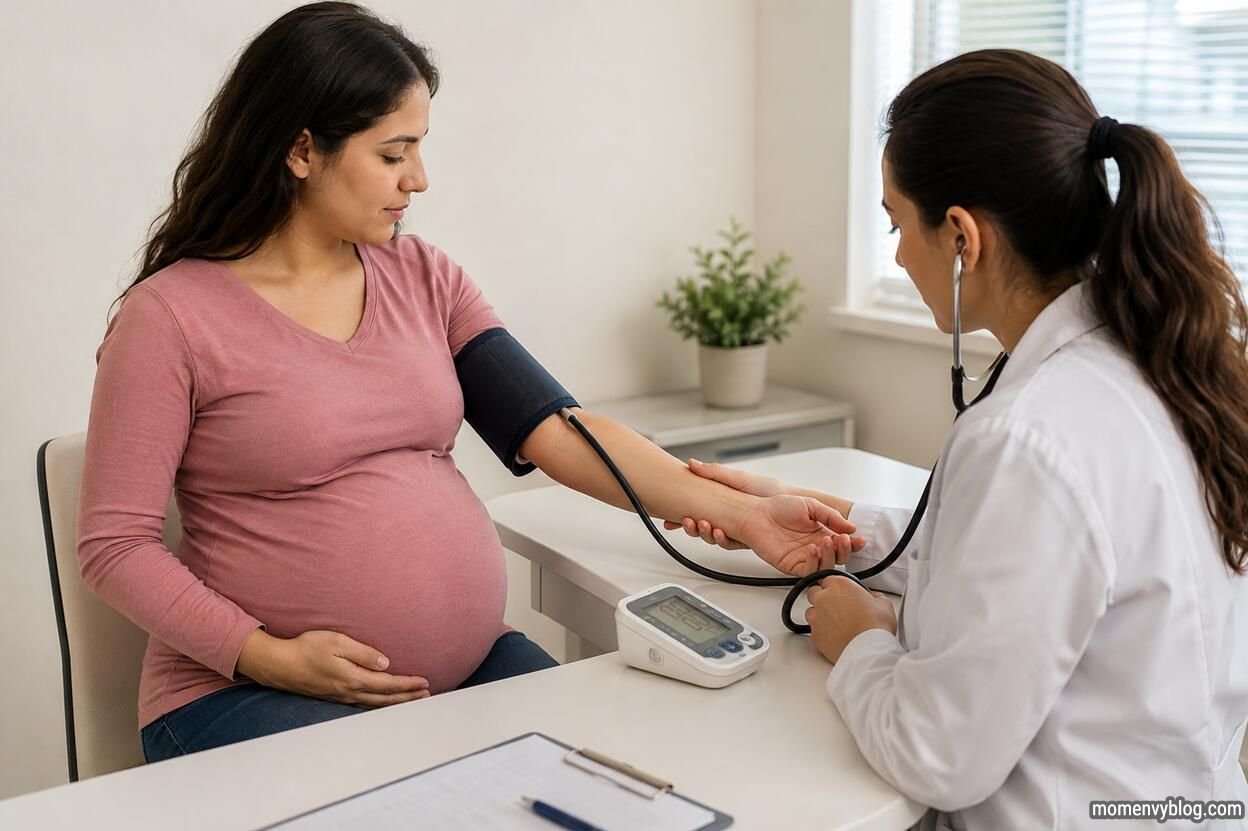
Blood pressure is recorded as two numbers, such as 120/80 mmHg.
During pregnancy, the NHS defines hypertension as a reading between 140/90 and 159/109 mmHg.
A reading of 160/110 mmHg or higher is considered severe hypertension and requires treatment.
Do not diagnose yourself from one home reading unless your maternity team has given you instructions for monitoring.
If you are checking your blood pressure at home, use a monitor that your doctor or maternity unit considers suitable for pregnancy.
Types of High Blood Pressure During Pregnancy
Understanding which type you have matters because they are not managed in exactly the same way.
Chronic hypertension
Chronic hypertension means high blood pressure was present before pregnancy or developed before 20 weeks.
Some women already take blood pressure medicine before becoming pregnant. Do not stop or change it without speaking to your doctor.
ACOG notes that chronic hypertension increases the risk of preeclampsia and other pregnancy complications.
Gestational hypertension
Gestational hypertension develops after 20 weeks in someone whose blood pressure was previously normal.
It does not automatically mean you have preeclampsia, but your maternity team will usually monitor you more closely because the condition can progress.
Preeclampsia
Preeclampsia is a serious pregnancy condition associated with high blood pressure and signs that other organs may be affected.
It usually develops after 20 weeks, although it can also occur after delivery.
Early signs may not cause noticeable symptoms, which is why blood pressure and urine checks at prenatal appointments are so important.
Best Foods for High Blood Pressure During Pregnancy
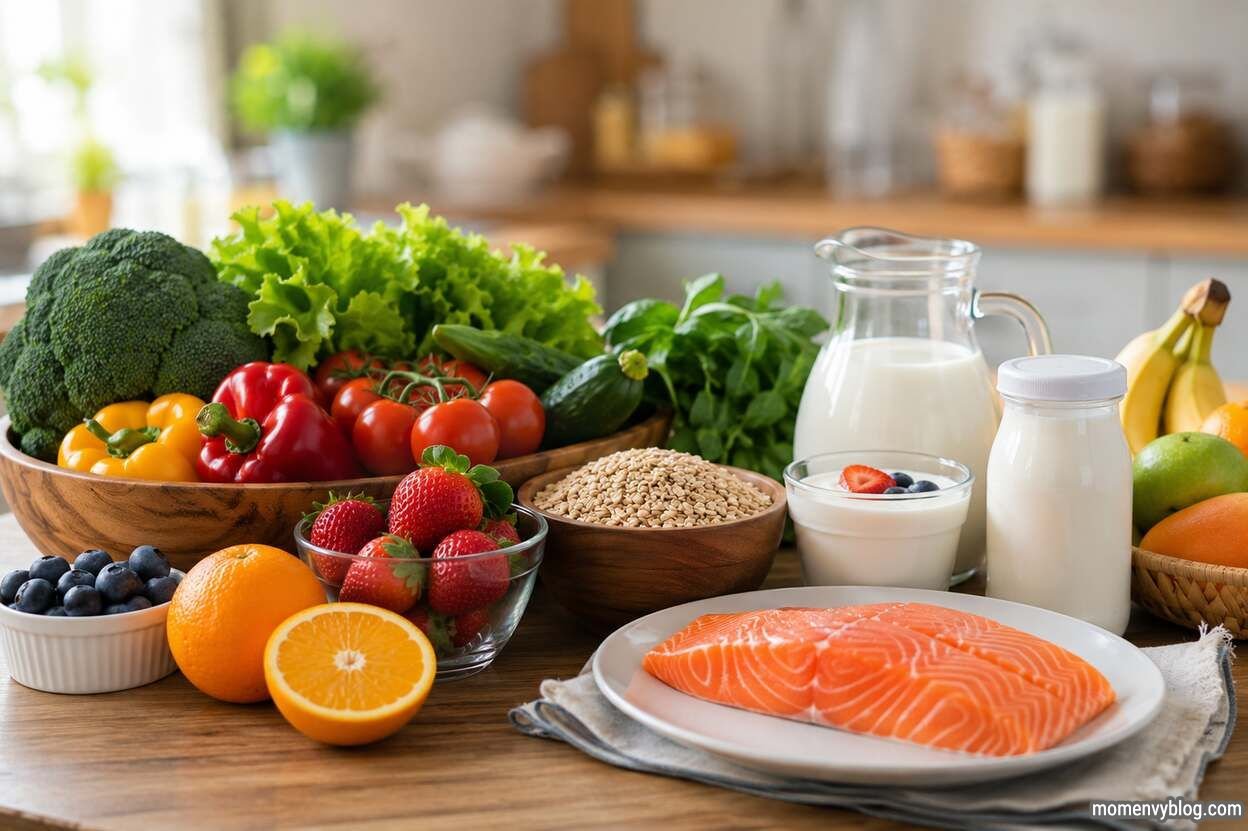
There is no single food that will quickly lower pregnancy blood pressure.
Instead, focus on an overall eating pattern made up mostly of minimally processed foods.
1. Vegetables
Vegetables provide fiber, potassium, folate, vitamin C, and many other nutrients needed during pregnancy.
Try to include vegetables at lunch and dinner and, when possible, breakfast too.
Good choices include:
- Spinach
- Broccoli
- Carrots
- Bell peppers
- Tomatoes
- Sweet potatoes
- Green beans
- Peas
- Cabbage
- Cauliflower
- Zucchini
- Pumpkin
Fresh and frozen vegetables are both useful.
Frozen vegetables without added sauces are often lower in sodium than heavily seasoned or canned versions.
Easy ways to eat more vegetables
- Add spinach to eggs.
- Add peppers and tomatoes to sandwiches.
- Stir vegetables into lentils.
- Roast mixed vegetables with olive oil.
- Add frozen vegetables to soups.
- Keep chopped cucumber and carrots ready for snacks.
2. Fruit
Fruit is a practical source of potassium, fiber, vitamins, and natural carbohydrates.
Examples include:
- Bananas
- Oranges
- Apples
- Pears
- Berries
- Kiwi
- Peaches
- Melon
- Mango
- Avocado
Whole fruit is usually more filling than juice because it contains more fiber.
Fruit juice can also contain a large amount of sugar in a small serving, so it should not replace most whole fruit.
3. Whole Grains
Whole grains can provide fiber, magnesium, B vitamins, and steady energy.
Good options include:
- Oats
- Brown rice
- Whole-wheat bread
- Barley
- Quinoa
- Whole-grain pasta
- Whole-grain cereal
Check packaged breads and cereals for sodium because some contain more salt than you might expect.
4. Beans, Lentils, and Chickpeas
Beans and lentils are especially useful during pregnancy because they provide:
- Protein
- Fiber
- Iron
- Folate
- Potassium
- Magnesium
Try:
- Lentil soup
- Chickpea salad
- Bean chili
- Hummus
- Lentil curry
- Black beans with brown rice
If you use canned beans, choose a low-sodium version when possible.
Rinsing canned beans under running water can also reduce some of the sodium.
5. Lean Protein
Protein supports your baby’s growth and helps make meals more filling.
Pregnancy-friendly protein sources include:
- Chicken
- Turkey
- Eggs
- Beans
- Lentils
- Chickpeas
- Tofu
- Plain Greek yogurt
- Lower-mercury fish
- Lean cuts of meat
Choose fresh meat more often than heavily processed versions such as sausage, bacon, deli meat, and cured meats because processed meats can be very high in sodium.
6. Lower-Mercury Fish
Fish can provide protein, omega-3 fats, iodine, vitamin D, and other nutrients that are useful during pregnancy.
The FDA recommends that pregnant women eat 2 to 3 servings, or about 8 to 12 ounces, of lower-mercury fish per week.
Examples of lower-mercury choices include:
- Salmon
- Sardines
- Shrimp
- Pollock
- Tilapia
- Cod
- Canned light tuna
Avoid fish in the highest-mercury category and follow current FDA or local guidance for tuna and locally caught fish.
How you prepare fish matters too. Grilled, baked, or poached fish is usually a better choice for blood pressure than heavily salted, smoked, breaded, or fried fish.
7. Milk, Yogurt, and Other Calcium-Rich Foods
Calcium is important during pregnancy for your baby’s bones and teeth as well as your own health.
Sources include:
- Milk
- Plain yogurt
- Greek yogurt
- Pasteurized cheese
- Calcium-fortified plant milks
- Calcium-set tofu
- Some leafy green vegetables
Choose pasteurized dairy products during pregnancy.
Some cheeses can be high in sodium, so portion size and label reading are helpful when you are managing blood pressure.
8. Nuts and Seeds
Unsalted nuts and seeds provide healthy fats, protein, fiber, magnesium, and other nutrients.
Try:
- Almonds
- Walnuts
- Pistachios
- Chia seeds
- Flaxseed
- Pumpkin seeds
- Sunflower seeds
Choose unsalted versions rather than heavily salted snack nuts.
A small handful can make a useful snack when paired with fruit or yogurt.
9. Healthy Fats
You do not need to eat a low-fat diet during pregnancy.
Choose more unsaturated fats, including:
- Olive oil
- Avocado
- Nuts
- Seeds
- Nut butter
- Lower-mercury oily fish
WHO recommends favoring unsaturated fats and minimally processed foods as part of a healthy eating pattern.
Foods Rich in Potassium
Potassium helps with normal nerve, muscle, and fluid function and plays a role in blood pressure regulation.
Food sources include:
- Bananas
- Potatoes
- Sweet potatoes
- Beans
- Lentils
- Spinach
- Avocado
- Yogurt
- Oranges
- Tomatoes
- Dried fruit
WHO notes that potassium can help counter some of the blood-pressure effects of high sodium intake.
However, this does not mean you should start potassium supplements.
Too much supplemental potassium can be dangerous, especially if you have kidney problems or take certain medicines.
Get potassium mainly from food unless your doctor recommends something different.
Should You Reduce Salt During Pregnancy?
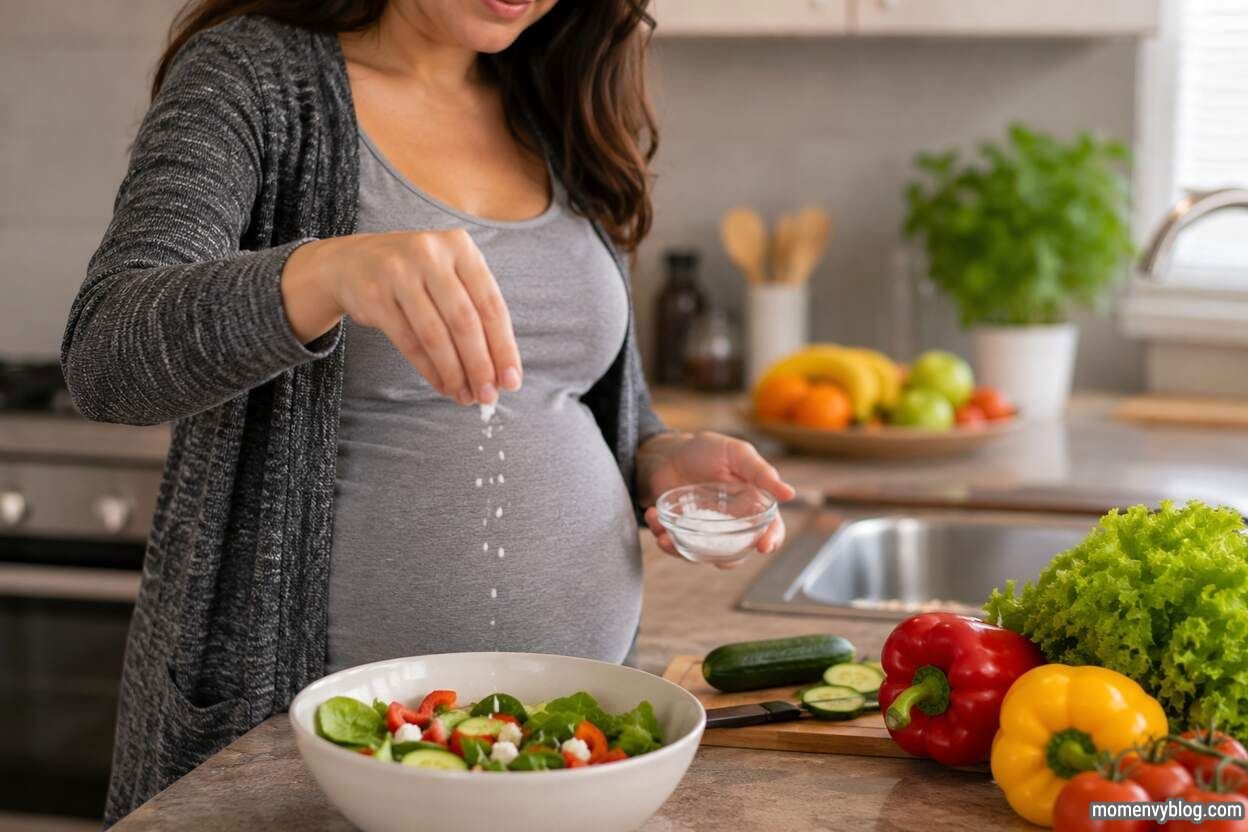
Reducing excessive salt intake can be helpful, but pregnancy is not the time to try an extreme zero-sodium diet.
Sodium is an essential mineral. The goal is to reduce excess, particularly from heavily processed foods.
WHO recommends that adults generally keep sodium intake below 2,000 mg per day, which is equivalent to less than about 5 grams of salt.
Your doctor or dietitian may give you different advice based on:
- Your blood pressure
- Medications
- Kidney health
- Other medical conditions
- Your overall pregnancy diet
Do not dramatically restrict sodium without guidance.
Where Does Most Sodium Come From?
Many people assume the salt shaker is the main problem.
Often, much more sodium comes from packaged, restaurant, and processed foods.
WHO identifies processed foods and salty condiments as major sources of dietary sodium.
Common high-sodium foods include:
- Instant noodles
- Canned soups
- Bouillon and stock cubes
- Packaged sauces
- Soy sauce
- Fish sauce
- Ketchup
- Pickles
- Chips
- Salted crackers
- Fast food
- Frozen pizza
- Processed cheese
- Bacon
- Sausage
- Salami
- Deli meat
- Smoked foods
- Ready-made meals
You do not have to cook everything from scratch. Simply choosing lower-sodium versions can make a noticeable difference.
How to Read Sodium on Food Labels
Look at both the amount of sodium and the serving size.
A package may look low in sodium until you realize the label is based on a very small serving.
When comparing two similar products, choose the one with less sodium whenever the rest of the nutrition profile is suitable.
Also look for phrases such as:
- No added salt
- Unsalted
- Low sodium
- Reduced sodium
“Reduced sodium” does not necessarily mean the food is low in sodium. It only means it has less than the regular version.
Foods to Limit With High Blood Pressure During Pregnancy
You do not need a perfect diet.
It is more useful to reduce the foods that add large amounts of sodium, saturated fat, or added sugar without providing many pregnancy nutrients.
Limit:
- Fast food
- Instant noodles
- Highly salted snacks
- Processed meats
- Sugary drinks
- Large portions of fried foods
- Heavily salted restaurant meals
- Packaged soups and sauces
- Pickles in large amounts
- Salted nuts
- Processed cheese
- High-caffeine beverages
- Energy drinks
What About Caffeine?
ACOG recommends limiting caffeine during pregnancy to less than 200 mg per day.
If you also have high blood pressure, your doctor may suggest a lower amount depending on your readings and symptoms.
Caffeine is found in:
- Coffee
- Tea
- Cola
- Chocolate
- Energy drinks
- Some headache medicines
- Some pre-workout supplements
Coffee-shop drinks can contain much more caffeine than a small home-brewed cup.
Energy drinks are best avoided during pregnancy because they can contain high caffeine levels and other stimulants.
Does the DASH Diet Work During Pregnancy?
The DASH diet was originally developed as an eating pattern to help manage high blood pressure.
It emphasizes:
- Vegetables
- Fruit
- Whole grains
- Beans
- Nuts
- Lower-fat dairy
- Lean protein
- Lower sodium intake
Those principles overlap strongly with a healthy pregnancy diet.
However, pregnancy has additional nutritional requirements, including adequate calories, protein, iron, folate, iodine, choline, calcium, and other nutrients.
Do not follow a calorie-restricted or weight-loss version of DASH during pregnancy unless you are under professional supervision.
A registered dietitian familiar with pregnancy can help adapt a DASH-style eating pattern to your needs.
A Sample One-Day Meal Plan
This is an example, not a prescription. Portion sizes and calorie needs vary between women and pregnancy stages.
Breakfast
- Oatmeal cooked with milk
- Berries or sliced banana
- A spoonful of unsalted nut butter
- Water
Morning snack
- Plain Greek yogurt
- Fresh fruit
Lunch
- Grilled chicken or chickpeas
- Brown rice or quinoa
- Mixed salad with cucumber, tomato, carrots, and avocado
- Olive oil and lemon dressing
Afternoon snack
- Apple or pear
- Small handful of unsalted almonds
Dinner
- Baked salmon
- Roasted sweet potato
- Steamed broccoli
- Plain yogurt or another calcium-rich food
Evening snack if hungry
- Whole-grain toast with unsalted peanut butter
- Milk or fortified plant milk
This type of day provides vegetables, fruit, whole grains, protein, healthy fats, potassium-rich foods, and calcium without relying heavily on processed foods.
Easy Low-Sodium Meal Ideas
You do not need complicated recipes.
Try:
- Oatmeal with berries and walnuts
- Eggs with spinach and whole-grain toast
- Lentil soup made with reduced-sodium stock
- Chickpea and avocado salad
- Grilled chicken with brown rice and vegetables
- Baked salmon with sweet potato
- Bean tacos with lettuce, tomato, and avocado
- Plain yogurt with fruit and chia seeds
- Homemade vegetable soup
- Quinoa bowls with beans and roasted vegetables
Use herbs, garlic, lemon, ginger, pepper, paprika, cumin, coriander, and other spices to add flavor without relying only on salt.
Pregnancy-Friendly Snack Ideas
Keep easy snacks available so you are less likely to rely on salty packaged foods.
Options include:
- Banana with unsalted peanut butter
- Apple and unsalted almonds
- Plain yogurt with berries
- Carrots and hummus
- Whole-grain toast with avocado
- Hard-boiled egg and fruit
- Cottage cheese with fruit, if sodium fits your plan
- Unsalted popcorn
- Cucumber with yogurt dip
- Homemade trail mix without salted nuts
Should You Drink More Water?
Hydration is important during pregnancy, but drinking huge amounts of water will not “flush out” high blood pressure.
Drink regularly throughout the day and pay attention to thirst, weather, exercise, vomiting, and your doctor’s advice.
Water is usually the simplest choice.
Limit drinks that add large amounts of:
- Sugar
- Sodium
- Caffeine
- Stimulants
Do not deliberately restrict fluids unless your healthcare team specifically advises it.
Should You Take Magnesium for High Blood Pressure?
Do not start magnesium supplements solely to lower pregnancy blood pressure without medical guidance.
The NHS states that there is not enough evidence to show that supplements such as magnesium, folic acid, or fish oil prevent high blood pressure during pregnancy.
Magnesium-containing foods can still be part of a healthy diet.
Examples include:
- Nuts
- Seeds
- Beans
- Whole grains
- Leafy vegetables
This is different from taking high-dose supplements.
Should You Take Calcium?
Calcium is an important pregnancy nutrient.
In some circumstances, healthcare professionals may recommend calcium supplements to women who do not get enough calcium from food or who have specific risk factors for preeclampsia.
The NHS advises that calcium supplementation for preeclampsia prevention should be used when recommended by a healthcare professional.
Do not assume a high-dose supplement is appropriate for everyone.
What About Low-Dose Aspirin?
Some pregnant women at increased risk of preeclampsia are prescribed low-dose aspirin.
This may include women with certain risk factors such as:
- Previous preeclampsia
- Chronic hypertension
- Kidney disease
- Diabetes
- Autoimmune disease
- Multiple pregnancy
Do not start aspirin because you read that it can prevent preeclampsia.
The NHS specifically advises taking aspirin for this purpose only when prescribed by a doctor or midwife.
Can Exercise Help?
Regular activity can support cardiovascular health and may help keep blood pressure in a healthier range.
The NHS recommends staying active, with activities such as walking or swimming, for women with high blood pressure when medically appropriate.
Possible activities include:
- Walking
- Swimming
- Prenatal yoga
- Stationary cycling
- Low-impact strength exercise
Your doctor may recommend activity restrictions if you have severe hypertension, preeclampsia, fetal growth concerns, bleeding, or other complications.
Do not start a demanding new workout program after being diagnosed with pregnancy hypertension without asking your maternity team.
Can You Manage High Blood Pressure Without Medication?
Sometimes lifestyle measures are enough. Sometimes they are not.
Medication may be necessary even if you:
- Eat very well
- Avoid salty foods
- Exercise appropriately
- Maintain a healthy weight
- Have no symptoms
Needing medication does not mean you caused the hypertension or failed to control it through diet.
Pregnancy-related hypertension is influenced by many factors that food alone cannot change.
Your maternity team will decide whether treatment is needed based on your readings, pregnancy stage, medical history, test results, and the health of your baby.
Do Not Stop Blood Pressure Medication on Your Own
Some blood pressure medicines used outside pregnancy may need to be changed when you become pregnant.
However, stopping treatment suddenly can also be unsafe.
If you were taking medication before pregnancy, contact your doctor as soon as possible for a medication review.
Your doctor can choose a treatment that is more appropriate for pregnancy if a change is needed.
How to Monitor Blood Pressure at Home
Some women with hypertension are asked to monitor their blood pressure at home.
Use a device recommended or validated for pregnancy.
For a more reliable reading:
- Sit quietly for several minutes.
- Keep your back supported.
- Place both feet on the floor.
- Support your arm at heart level.
- Use the correct cuff size.
- Avoid talking during the reading.
- Follow the schedule your maternity team gave you.
- Record each reading.
Do not repeatedly check every few minutes because anxiety can make readings harder to interpret.
Your maternity team should tell you which readings require a phone call or urgent assessment.
A pregnancy blood pressure of 160/110 mmHg or higher is considered severe hypertension and needs medical treatment.
High Blood Pressure Can Have No Symptoms
This is one of the most important things to understand.
You may feel completely well and still have high blood pressure.
That is why prenatal visits should not be skipped simply because you feel fine.
Routine appointments may include:
- Blood pressure checks
- Urine testing
- Blood tests
- Fetal growth monitoring
- Additional scans
- Placental assessment
The exact monitoring depends on your condition.
Warning Signs of Preeclampsia
Contact your maternity unit or seek prompt medical attention if you develop:
- A severe headache that does not go away
- Blurred vision
- Flashing lights or other vision changes
- Pain beneath the ribs, especially on the right side
- Sudden swelling of the face, hands, or feet
- Vomiting
- Feeling suddenly very unwell
- Persistent severe heartburn that does not improve as expected
The NHS lists these as symptoms that need immediate assessment because they may be associated with preeclampsia.
Reduced fetal movement should also be reported promptly once you have reached the stage when you normally feel your baby’s usual movement pattern.
What If Your Blood Pressure Suddenly Rises?
Do not try to treat a sudden high reading with bananas, water, garlic, lemon juice, or another home remedy.
Sit quietly and repeat the measurement according to the instructions your maternity team has given you.
Contact your maternity unit if the reading is above the threshold they have set for you.
Seek urgent medical advice for readings around 160/110 mmHg or higher, particularly if they persist or you also have headache, vision changes, upper abdominal pain, breathing difficulty, or feel unwell.
Foods That Do Not “Cure” Pregnancy Hypertension
Online advice sometimes claims certain foods can quickly lower pregnancy blood pressure.
Examples include:
- Garlic
- Beetroot juice
- Lemon water
- Bananas
- Coconut water
- Celery juice
- Dark chocolate
- Apple cider vinegar
These foods may fit into a balanced diet in appropriate amounts, but none should be used as a treatment for gestational hypertension or preeclampsia.
Be especially careful with concentrated herbal drinks, powders, extracts, and supplements because pregnancy safety may not be well studied.
Frequently Asked Questions
What should I eat to lower blood pressure while pregnant?
Base meals around vegetables, fruit, whole grains, beans, lean protein, lower-mercury fish, calcium-rich foods, nuts, seeds, and healthy fats. Reduce highly processed and salty foods. Diet can support blood pressure management but does not replace medical treatment.
What foods should I avoid with high blood pressure during pregnancy?
Limit highly salted processed foods such as instant noodles, chips, processed meats, canned soups, salty sauces, fast food, and heavily processed ready meals. Also avoid pregnancy-unsafe foods such as raw animal products, unpasteurized dairy, alcohol, and high-mercury fish.
Are bananas good for high blood pressure during pregnancy?
Bananas provide potassium and can be part of a healthy diet. However, eating bananas will not treat gestational hypertension or preeclampsia.
Can drinking water lower blood pressure during pregnancy?
Normal hydration is important, but drinking extra water is not a treatment for high blood pressure. Follow your healthcare provider’s advice about fluids.
Is salt completely forbidden with pregnancy hypertension?
No. Sodium is an essential nutrient. The goal is usually to reduce excessive intake, especially from processed and restaurant foods, rather than eliminate salt completely.
Can I follow the DASH diet while pregnant?
A DASH-style pattern emphasizing vegetables, fruit, whole grains, beans, nuts, dairy, lean protein, and lower sodium can fit well with healthy pregnancy eating. Avoid calorie restriction and make sure pregnancy-specific nutritional needs are met.
Does potassium lower blood pressure during pregnancy?
Potassium-rich foods can be part of a heart-healthy diet, but potassium supplements should not be used to treat pregnancy hypertension unless prescribed.
Is beetroot juice safe for high blood pressure in pregnancy?
Beetroot can be included as a food in a balanced diet, but concentrated beetroot juice should not be relied on to treat pregnancy hypertension. Ask your healthcare provider before using concentrated products regularly.
Can high blood pressure in pregnancy go away with diet?
Sometimes blood pressure improves with healthy lifestyle measures, but pregnancy hypertension may persist or worsen regardless of diet. Some women need medication and additional monitoring.
Can preeclampsia be prevented with food?
No specific food has been proven to prevent preeclampsia. Healthy eating and appropriate activity are beneficial, while certain higher-risk women may be prescribed low-dose aspirin or calcium under medical supervision.
Should I take magnesium for high blood pressure during pregnancy?
Do not start a magnesium supplement for blood pressure unless your doctor recommends it. Current NHS guidance says there is not enough evidence that magnesium supplements prevent pregnancy hypertension.
What blood pressure is dangerous during pregnancy?
The NHS defines severe hypertension in pregnancy as 160/110 mmHg or higher. This requires medical treatment. Follow the individual instructions given by your maternity team.
Can high blood pressure hurt my baby?
High blood pressure can reduce blood flow to the placenta and may increase the risk of growth problems, premature birth, placental complications, and other problems. Good prenatal monitoring helps doctors identify and manage these risks.
The Bottom Line
A healthy diet can support blood pressure management during pregnancy, but it cannot replace medical care.
Focus on vegetables, fruit, whole grains, beans, lean protein, lower-mercury fish, calcium-rich foods, unsalted nuts, and healthy fats. Reduce excess sodium by cutting back on processed foods, salty sauces, processed meats, instant meals, and fast food.
Do not start supplements, aspirin, herbal remedies, or blood-pressure treatments on your own.
Most importantly, keep every prenatal appointment even if you feel completely well. Pregnancy hypertension can be symptomless, and conditions such as preeclampsia may need prompt treatment to protect both you and your baby.
Medical note: This article provides general educational information and does not replace individual advice, diagnosis, or treatment from a doctor, midwife, registered dietitian, or other qualified healthcare professional.

