








Quick Highlights
- At 10 weeks pregnant, your baby is about 30 mm long from head to bottom and is developing a more recognizable face, limbs, fingers, toes, and internal organs.
- Nausea, extreme tiredness, sore breasts, bloating, headaches, heartburn, food aversions, dizziness, and mood changes may still be strong this week.
- Your uterus is growing, but a clear baby bump may still not be visible. Bloating can make your clothes feel tighter.
- An ultrasound can usually show the pregnancy clearly by this stage, and movement may sometimes be seen even though you cannot feel it yet.
- Continue taking a prenatal vitamin with folic acid and follow your healthcare provider’s advice about medications, food safety, exercise, and prenatal screening.
- Seek prompt medical care for heavy bleeding, significant abdominal or pelvic pain, dizziness, fainting, or shoulder pain.
At 10 weeks pregnant, your baby is growing quickly and becoming more recognizable. The head, face, arms, legs, fingers, toes, and internal organs continue developing, and small movements may already be visible during an ultrasound even though you cannot feel them. Nausea, exhaustion, bloating, sore breasts, headaches, food aversions, and heartburn are also common at this stage.
In my experience, week 10 can feel like an important little milestone. You are getting closer to the end of the first trimester, but you may still feel very tired or sick. Some days may be easier than others, and symptoms do not have to follow the same pattern in every pregnancy.
10 Weeks Pregnant at a Glance
| Pregnancy milestone | What is happening |
| Gestational age | 10 weeks |
| Time since conception | Usually about 8 weeks |
| Developmental stage | Transitioning into the fetal stage |
| Approximate length | About 30 mm from head to bottom |
| Common size comparison | Small apricot |
| Major development | Face, limbs, fingers, toes, organs, bones, and nervous system |
| Ultrasound | Baby and movement may be visible |
| Pregnancy bump | May still be subtle |
| Trimester | First trimester |
| Time until estimated due date | About 30 weeks |
The NHS describes a 10-week baby as approximately 30 mm long from head to bottom, roughly the size of a small apricot.
What Happens at 10 Weeks Pregnant?
Week 10 is a period of continued rapid growth.
Your baby’s head is still large compared with the rest of the body, but the face is becoming more defined. The eyes, ears, upper lip, nostrils, and jaw continue developing, while the arms and legs become more recognizable compared with 9 weeks, when your baby is still developing rapidly and has a more distinctly curled, early fetal appearance.
Inside your body, the uterus is expanding and pregnancy hormones continue affecting your digestive system, breasts, energy levels, emotions, and appetite. The NHS notes that the uterus is around the size of a large orange at this stage and that progesterone can contribute to bloating, gas, and heartburn.
Is Your Baby an Embryo or a Fetus at 10 Weeks?
Around this stage, your baby is moving from the embryonic period into the fetal stage.
The earliest weeks focus heavily on establishing the body’s basic structures. From here, many of those structures continue growing, refining, and maturing.
You may see pregnancy resources use “embryo” or “fetus” slightly differently depending on whether they count developmental age from fertilization or gestational age from the last menstrual period.
For moms, the key point is simple: the major foundations are in place, and the next phase focuses increasingly on growth and maturation.
Baby Development at 10 Weeks Pregnant
The face looks more recognizable
Your baby’s face is becoming easier to distinguish.
Developing features include the:
- Eyes
- Eyelids
- Nose
- Nostrils
- Upper lip
- Jaw
- Ears
The NHS notes that the mouth has an upper lip, the nose has formed nostrils, and the jaw is taking shape.
Tiny tooth buds are forming
Inside the developing jaw are early structures that will eventually become baby teeth.
You will not see those first teeth for many months after birth, but their earliest foundations begin forming long before then.
Arms and legs are more developed
The limbs are longer and more defined than they were a few weeks ago.
The hands and feet continue developing, and the fingers and toes become increasingly distinct.
Your baby may be moving
Small, jerky movements may already occur at 10 weeks and can sometimes be seen on an ultrasound.
You will not feel these movements yet. For most moms, noticeable fetal movement comes much later in pregnancy.
The eyes and ears continue developing
The eyelids are forming and remain closed or partly closed while the eyes continue developing. The ears are also becoming more defined.
Internal organs continue maturing
Development continues in organs such as the:
- Liver
- Kidneys
- Pancreas
- Digestive system
- Lungs
- Reproductive structures
ACOG notes that during this early period, the kidneys begin producing urine, the pancreas starts producing insulin, and several other organ systems continue developing.
Cartilage and early bones are developing
Cartilage in the hands, feet, arms, and legs is beginning to develop and will gradually harden into bone.
Fingernails begin developing
Early fingernail structures also begin forming during this stage of pregnancy.
How Big Is Your Baby at 10 Weeks Pregnant?
Your baby is around 30 mm long from head to bottom, according to the NHS.
That is often compared with:
- A small apricot
- A large strawberry
- A small prune
These comparisons are only for fun. Healthcare professionals use measurements taken during ultrasound rather than food comparisons to assess pregnancy dating and growth.
What Does a 10 Weeks Pregnant Belly Look Like?

You may or may not look pregnant yet.
At 10 weeks, the uterus is growing but is still relatively low in the pelvis. The NHS notes that your jeans may begin feeling harder to fasten and compares the uterus at this stage with the size of a large orange.
Your belly may look fuller because of:
- Bloating
- Gas
- Constipation
- Slower digestion
- Uterine growth
- Previous pregnancies
- Your natural body shape
If you have been pregnant before, you may notice a small bump sooner than you did the first time.
I remember reaching for stretchy waistbands well before I looked obviously pregnant. You do not have to wait for a visible bump to choose clothes that feel comfortable.
10 Weeks Pregnant Symptoms
Symptoms at 10 weeks can include extreme tiredness, nausea, mood changes, metallic taste, breast tenderness, indigestion, heartburn, headaches, dizziness, food aversions, stronger smell sensitivity, milky discharge, spotting, mild cramps, skin changes, and bloating.
Nausea and vomiting
Morning sickness may still be one of your strongest symptoms.
You may feel sick:
- First thing in the morning
- When your stomach is empty
- After certain smells
- After eating
- In the afternoon
- At night
Try:
- Eating small meals regularly
- Keeping crackers beside the bed
- Avoiding an empty stomach
- Choosing cold foods if smells bother you
- Drinking fluids in small amounts
- Resting when tired
- Avoiding foods that clearly trigger nausea
Ask your healthcare provider for treatment if nausea is interfering with your ability to eat, drink, or function normally.
Extreme tiredness
Feeling exhausted remains common during the first trimester. The NHS notes that hormonal changes can make you feel tired, nauseated, and emotional during the first 12 weeks.
Try to:
- Go to bed earlier
- Sit down when you can
- Take short rest breaks
- Eat regularly
- Stay hydrated
- Accept practical help
If you are parenting other children, resting on command may not be realistic. I found it more useful to simplify what I could, such as easy dinners and fewer unnecessary errands.
Bloating and gas
Bloating can be especially noticeable at week 10.
Progesterone helps relax the uterus, but it also relaxes muscles in the digestive tract, which can contribute to gas, bloating, and digestive discomfort.
The NHS suggests smaller meals, eating slowly, sipping fluids, and taking a short walk after eating to help with digestive symptoms.
Heartburn and indigestion
Heartburn may begin or become more noticeable.
You may feel:
- Burning behind the breastbone
- Acid rising into the throat
- Burping
- Fullness after eating
- Indigestion
Try:
- Smaller meals
- Avoiding very large meals
- Not eating immediately before bed
- Identifying foods that trigger symptoms
- Sitting upright after eating
Ask your healthcare provider which antacids or treatments are safe during pregnancy.
Sore or fuller breasts
Your breasts may feel:
- Tender
- Heavy
- Swollen
- Tingly
- More sensitive around the nipples
These changes are common during the first trimester. ACOG includes breast enlargement and tenderness among typical early pregnancy body changes.
Frequent urination
You may continue needing to urinate more often.
This is a common first-trimester change.
Contact your healthcare provider if you also notice:
- Burning
- Pain
- Fever
- Cloudy urine
- Blood in your urine
- Back or side pain
Headaches
Pregnancy headaches may be related to:
- Hormonal changes
- Dehydration
- Hunger
- Fatigue
- Stress
- Caffeine reduction
- Poor sleep
Drink fluids regularly, eat consistent meals, and ask your healthcare provider which medications are safe if needed.
Dizziness
You may occasionally feel lightheaded or dizzy. The NHS includes dizziness among possible symptoms at 10 weeks.
Try:
- Getting up slowly
- Eating regular meals
- Drinking enough water
- Avoiding overheating
- Sitting down if you feel faint
Seek medical advice if dizziness is severe, persistent, or associated with bleeding, chest pain, fainting, or shortness of breath.
Food aversions
Foods you normally enjoy may still seem completely unappealing.
Common triggers may include:
- Meat
- Coffee
- Eggs
- Fried foods
- Garlic
- Strong spices
- Hot meals
Do not force yourself to eat a particular food. Find another nutritious option that you can tolerate.
Food cravings
Cravings can also happen this week.
Try to maintain an overall balanced diet, but do not worry if your appetite is unusual for a while.
Talk with your healthcare provider if you crave nonfood substances such as soil, chalk, clay, paper, or laundry starch.
Stronger sense of smell
Smells may still trigger nausea.
Perfume, cooking meat, coffee, refrigerators, smoke, pet food, or cleaning products may suddenly seem much stronger.
Cold foods and good ventilation can help.
Metallic taste
A metallic taste may still linger in your mouth.
You may find it helpful to:
- Sip cold water
- Chew sugar-free gum
- Brush your tongue gently
- Use plastic utensils
- Try tart foods if they do not trigger heartburn
Increased vaginal discharge
White or milky vaginal discharge can be normal during pregnancy.
Contact your healthcare provider if the discharge becomes:
- Green or gray
- Strongly yellow
- Foul-smelling
- Itchy
- Painful
- Associated with burning
Mild cramping
Light period-like cramps may still occur.
Possible causes include normal uterine changes, gas, constipation, and increased pelvic blood flow.
Seek medical advice if pain is:
- Severe
- Persistent
- Getting worse
- Mainly on one side
- Accompanied by bleeding
- Associated with dizziness or fainting
Light spotting
Light spotting can happen, but bleeding during pregnancy should be discussed with a healthcare professional.
MedlinePlus advises contacting a healthcare provider for bleeding in the first trimester because it can sometimes be associated with miscarriage or ectopic pregnancy.
Mood changes
You may feel:
- Irritable
- Tearful
- Anxious
- Excited
- Overwhelmed
Hormones, fatigue, nausea, uncertainty, work, finances, relationships, and previous pregnancy experiences can all contribute.
The NHS recommends speaking with a doctor or midwife if you feel anxious or low and need support.
Is It Normal to Have No Symptoms at 10 Weeks Pregnant?
Yes. Some women have only mild symptoms or very few symptoms at 10 weeks.
Pregnancy symptoms vary significantly from person to person. The NHS emphasizes that every pregnancy is different and not everyone notices all typical symptoms.
Symptoms can also change from day to day.
You might notice:
- Less nausea one morning
- Less breast tenderness
- More energy
- Fewer food aversions
This does not automatically mean something is wrong.
Contact your healthcare provider if you are concerned, particularly if symptom changes occur with bleeding, significant pain, dizziness, or fainting.
Are Pregnancy Symptoms Starting to Ease at 10 Weeks?
They can, but many women still feel quite unwell at week 10.
The NHS notes that early pregnancy symptoms often begin gradually fading as you approach the second trimester, when many people regain some energy.
For some moms, relief starts around weeks 10 to 12. For others, nausea and fatigue continue longer.
There is no exact week when you are supposed to feel better.
Can You See the Baby on an Ultrasound at 10 Weeks?
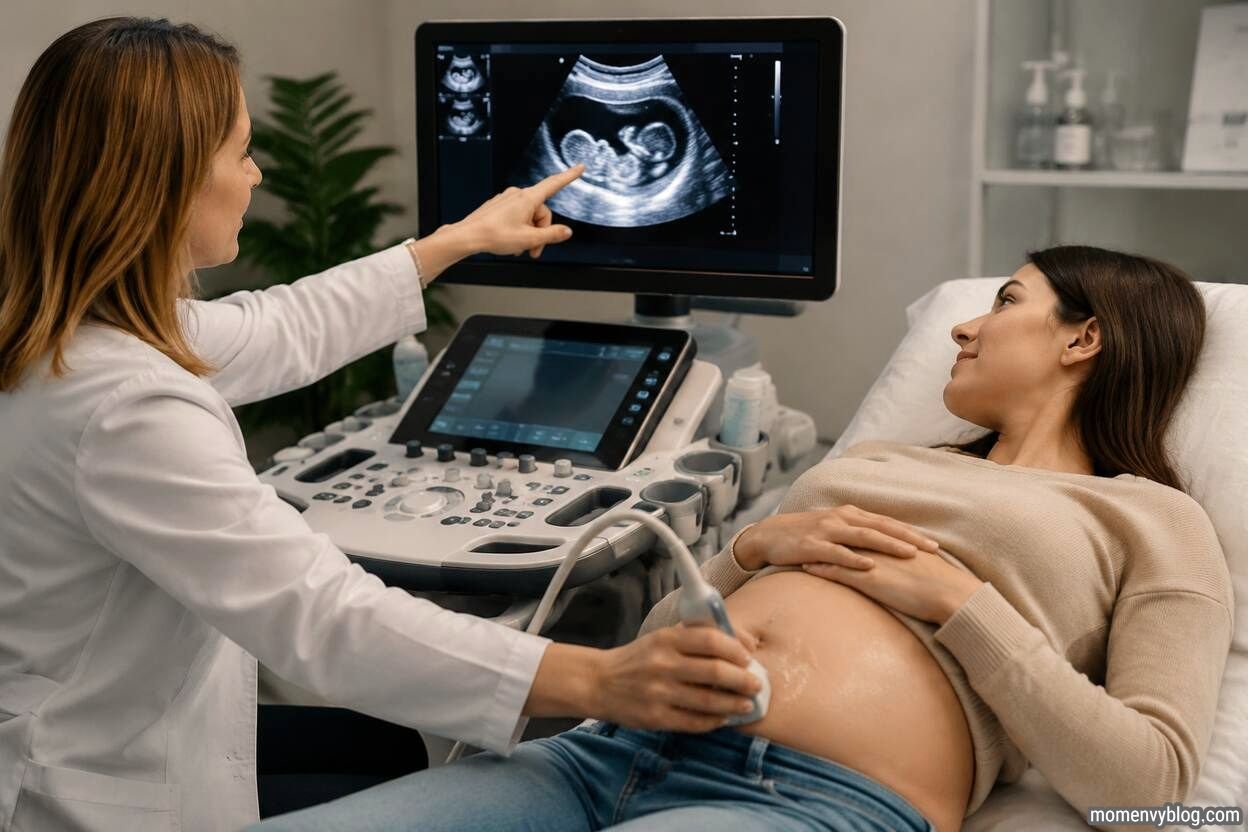
Yes. An ultrasound at 10 weeks can usually show the pregnancy much more clearly than an earlier scan.
You may see:
- The head
- The body
- Arms and legs
- Small movements
- Cardiac activity
- The gestational sac
- The yolk sac
- Crown-to-rump length
The NHS notes that movements may be visible during a scan even though you cannot feel them.
What Does a 10-Week Ultrasound Look Like?
The baby usually looks more recognizable than during earlier scans.
You may be able to make out:
- A relatively large head
- A curved body
- Arms
- Legs
- Small movements
The ultrasound image will still look very different from a newborn because development is far from complete.
Can You Hear the Heartbeat at 10 Weeks?
Cardiac activity can usually be seen on ultrasound by this stage when pregnancy dating is accurate.
A handheld Doppler may sometimes detect it around this period, but it can still be difficult depending on:
- Exact pregnancy dating
- Uterine position
- Placental location
- Body anatomy
- Equipment
- Baby’s position
Do not panic if you cannot find it with a home Doppler. Home devices should not be used to determine whether a pregnancy is healthy.
What If the Baby Measures Behind at 10 Weeks?
Measuring several days differently from your expected dates does not always indicate a problem.
Possible reasons include:
- Later ovulation
- Irregular cycles
- Uncertain last menstrual period
- Natural measurement variation
First-trimester ultrasound, using crown-to-rump length, is the most accurate ultrasound method for establishing or confirming gestational age.
Your healthcare provider will decide whether the difference requires an adjusted due date or follow-up scan.
Your First Prenatal or Booking Appointment
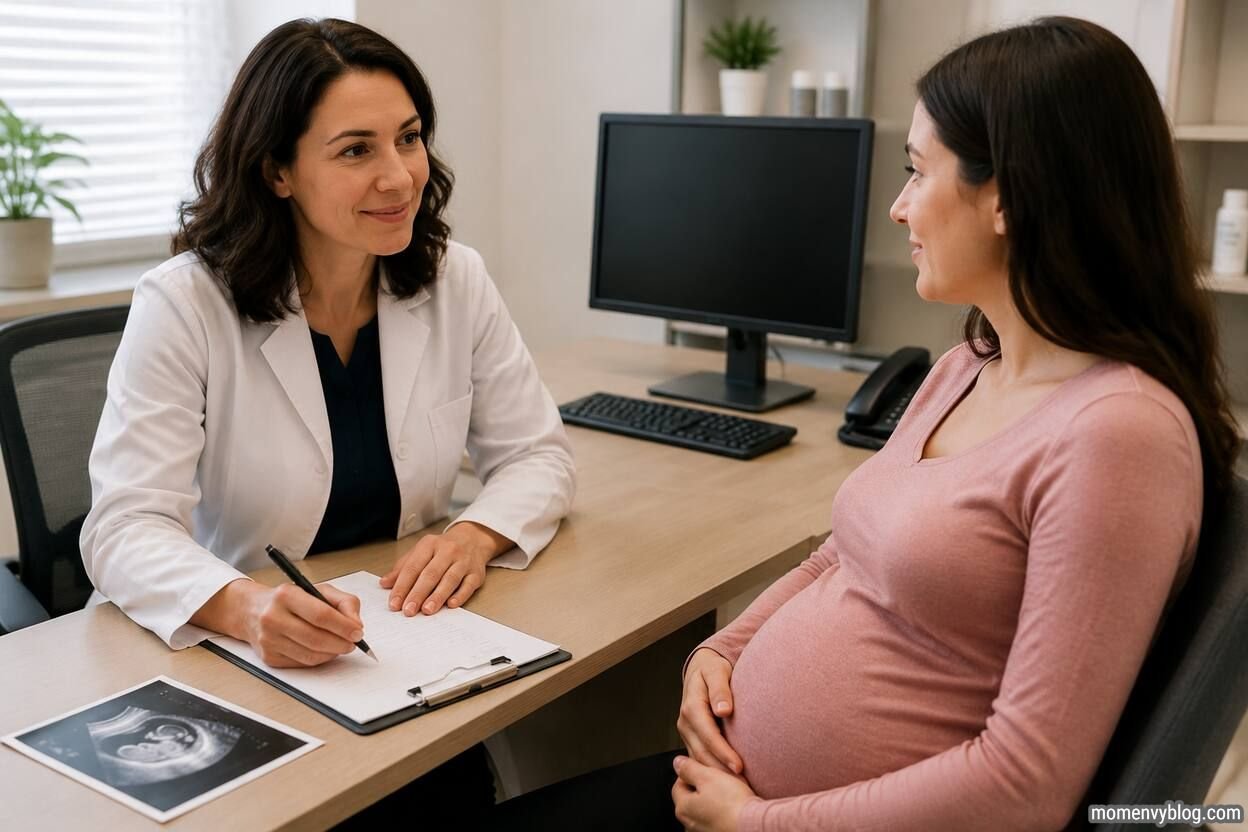
If you have not yet attended your first prenatal appointment, it may happen around this stage.
The NHS states that a booking appointment commonly occurs between weeks 8 and 12.
Depending on your healthcare system, your visit may include:
- Reviewing your medical history
- Discussing previous pregnancies
- Checking blood pressure
- Reviewing medications
- Blood tests
- Urine testing
- Discussing family history
- Reviewing lifestyle factors
- Discussing mental health
- Discussing prenatal screening
- Estimating your due date
This is a good time to bring up anything you have been quietly worrying about.
Prenatal Screening Around 10 Weeks
Your healthcare provider may begin discussing screening options.
Depending on your location and individual situation, these may include:
- Routine blood tests
- Blood group and Rh testing
- Infection screening
- Carrier screening
- Noninvasive prenatal screening
- First-trimester ultrasound
- Nuchal translucency screening
The NHS notes that screening for certain infections and chromosomal conditions may be offered around this stage.
Screening tests estimate the chance of certain conditions. They are different from diagnostic tests.
Your healthcare provider can explain the benefits, limitations, and timing of each test.
When Is the Dating Scan?
Timing varies by healthcare system.
In the NHS, the first dating scan is generally offered between 8 and 14 weeks.
The scan may help:
- Confirm gestational age
- Estimate the due date
- Check the pregnancy location
- Identify multiple pregnancies
- Assess early development
What Should You Do at 10 Weeks Pregnant?
1. Keep taking your prenatal vitamin
Continue the prenatal vitamin recommended by your healthcare provider.
The CDC recommends 400 micrograms of folic acid each day for women capable of becoming pregnant because it helps prevent neural tube defects.
The NHS advises taking 400 micrograms of folic acid daily through at least week 12.
Some women need a different dose based on medical history or medications, so follow individualized advice.
2. Attend or schedule prenatal care
If you have not already done so, arrange your first prenatal visit.
Ask about:
- Your due date
- Medications
- Prenatal screening
- Ultrasound timing
- Nutrition
- Exercise
- Vaccinations
- Nausea treatment
- Warning signs
3. Review all medicines and supplements
Tell your healthcare provider about:
- Prescription medicines
- Pain relievers
- Cold remedies
- Allergy medicines
- Herbal products
- Vitamins
- Skin treatments
- Sleep aids
- Workout supplements
Do not stop regular medication without speaking with your doctor first. The NHS specifically advises discussing regular medicines with a clinician rather than stopping them independently.
4. Eat balanced meals when you can
You do not need to “eat for two.”
The NHS recommends a balanced diet with a variety of foods and plenty of fruits and vegetables.
If nausea makes normal meals difficult, focus on manageable foods such as:
- Toast
- Oatmeal
- Yogurt
- Eggs
- Rice
- Potatoes
- Soup
- Bananas
- Nut butter
- Fruit
- Mild protein foods
Aim for balance across the week rather than perfection at every meal.
5. Manage bloating with smaller meals
The NHS suggests eating smaller meals, eating slowly, sipping fluids, and taking a short walk after meals to help manage bloating and digestive discomfort.
6. Stay hydrated
Drink regularly throughout the day.
If nausea makes drinking difficult, try:
- Small sips
- Cold water
- Ice chips
- Diluted juice
- Water-rich fruit
- Soup
Seek medical advice if you cannot keep fluids down.
7. Avoid alcohol and smoking
The NHS advises avoiding alcohol and stopping smoking during pregnancy.
Ask your healthcare provider for support if stopping smoking, vaping, alcohol, or recreational drugs is difficult.
8. Monitor caffeine
Keep track of caffeine from:
- Coffee
- Tea
- Cola
- Energy drinks
- Chocolate
- Some medicines
Follow the pregnancy limit recommended by your local health authority or healthcare provider.
9. Keep moving
Regular activity can support general health during pregnancy.
The NHS recommends aiming for around 150 minutes of activity each week during pregnancy when medically appropriate, although you can start with shorter sessions.
Options may include:
- Walking
- Swimming
- Stationary cycling
- Prenatal yoga
- Gentle strength training
- Low-impact exercise
Ask your healthcare provider if you have pregnancy complications or medical conditions that affect exercise.
10. Look after your emotional health
If anxiety or low mood is becoming difficult to manage, talk with your healthcare provider.
You do not need to wait until symptoms become severe to ask for support.
What Should You Avoid at 10 Weeks Pregnant?

Avoid or carefully manage:
- Alcohol
- Smoking and vaping
- Recreational drugs
- Medicines not reviewed for pregnancy
- High-dose supplements unless prescribed
- Foods considered unsafe in pregnancy
- Fish high in mercury
- Excessive caffeine
- Harmful chemical exposures
- Activities that cause significant overheating
- Crash diets
Normal walking, stairs, safe household activity, bending, and ordinary work do not typically harm an uncomplicated pregnancy.
Can Sex Cause Miscarriage at 10 Weeks?
Sex does not normally cause miscarriage in an uncomplicated pregnancy.
The developing baby is protected inside the uterus.
You may notice mild cramping or spotting after intercourse because the cervix can be more sensitive during pregnancy.
Contact your healthcare provider if you develop:
- Heavy bleeding
- Severe pain
- Persistent cramping
- Fluid leakage
- Symptoms that concern you
Follow any individual restrictions your clinician has given you.
Is Cramping Normal at 10 Weeks Pregnant?
Mild cramping can occur at 10 weeks and is listed among possible pregnancy symptoms by the NHS.
It may feel like:
- Light period cramps
- Gentle pulling
- Brief twinges
- Mild pelvic pressure
Gas and constipation can also cause abdominal discomfort.
Contact your healthcare provider if pain is severe, persistent, worsening, or mainly on one side.
Is Bleeding Normal at 10 Weeks Pregnant?

Light spotting can occur, but bleeding during pregnancy should be discussed with your healthcare provider.
MedlinePlus notes that first-trimester bleeding can sometimes be associated with miscarriage or ectopic pregnancy.
Seek prompt medical attention for:
- Heavy bleeding
- Bleeding with pain or cramping
- Dizziness with bleeding
- Abdominal or pelvic pain
Ectopic Pregnancy Warning Signs at 10 Weeks

An ectopic pregnancy occurs when a fertilized egg implants outside the main cavity of the uterus, most commonly in a fallopian tube.
Possible signs include light vaginal bleeding and pelvic pain. Emergency symptoms can include abdominal pain, shoulder pain, dizziness, or fainting.
Seek immediate medical care for:
- Severe abdominal or pelvic pain
- Strong one-sided pain
- Shoulder pain
- Heavy bleeding
- Severe dizziness
- Weakness
- Fainting
Ectopic pregnancy can become a medical emergency.
What Are the Signs of Miscarriage at 10 Weeks?
Possible symptoms of early pregnancy loss include:
- Vaginal spotting or bleeding
- Abdominal or lower-back cramping
- Passing fluid
- Passing tissue
- Clot-like material
MedlinePlus notes that some women with spotting do not miscarry, so symptoms alone cannot confirm pregnancy loss.
Early pregnancy loss is defined as a pregnancy loss before 13 completed weeks.
Contact your healthcare provider if you have bleeding, significant pain, or other symptoms that worry you.
Can You Be 10 Weeks Pregnant With Twins?
Yes. A twin pregnancy can usually be seen clearly on ultrasound by 10 weeks.
An ultrasound may show:
- Two embryos or fetuses
- Cardiac activity in each
- Whether separate gestational sacs are present
- Certain placental and membrane relationships
Symptoms such as strong nausea, severe fatigue, or a large belly cannot reliably confirm twins.
Ultrasound is the useful diagnostic tool for identifying a multiple pregnancy.
Can You Feel the Baby Move at 10 Weeks?
No, you normally cannot feel movement at 10 weeks.
Your baby may already make small movements that can sometimes be seen on ultrasound, but those movements are too tiny for you to notice.
Feeling movement comes later in pregnancy.
How Many Months Is 10 Weeks Pregnant?
At 10 weeks, you are generally considered to be in your third month of pregnancy and still within the first trimester.
Healthcare providers usually track pregnancy in weeks and days because calendar months do not divide evenly.
Your 10 Weeks Pregnant Checklist

Continue taking your prenatal vitamin.
Keep taking folic acid as recommended.
Attend or schedule your prenatal appointment.
Review medicines and supplements.
Discuss prenatal screening options.
Ask when your dating scan will take place.
Avoid alcohol, smoking, vaping, and recreational drugs.
Follow pregnancy food-safety guidance.
Eat smaller meals if bloating or nausea is strong.
Drink fluids regularly.
Monitor caffeine.
Continue suitable exercise.
Rest when your body needs it.
Seek help if nausea prevents you from eating or drinking.
Know the warning signs that require urgent care.
Read the 11 Weeks Pregnant guide next.
What Happens at 11 Weeks Pregnant?
At 11 weeks, your baby continues growing quickly and is moving further into the fetal stage.
During the next week:
- The head and face become more defined.
- Fingers and toes become clearer.
- Bones begin hardening.
- Internal organs continue maturing.
- The body begins lengthening.
- Small movements continue.
- Your dating or first-trimester scan may be approaching.
- Nausea and tiredness may begin easing for some women.
Next article: 11 Weeks Pregnant: Symptoms, Baby Development, and What to Expect
FAQ’s
What is happening at 10 weeks pregnant?
Your baby is around 30 mm long and is developing a more recognizable face, limbs, fingers, toes, internal organs, cartilage, and early bones. Small movements may be visible during an ultrasound.
What symptoms are common at 10 weeks pregnant?
Symptoms can include nausea, extreme fatigue, sore breasts, bloating, heartburn, headaches, dizziness, food aversions, metallic taste, smell sensitivity, mild cramps, and discharge.
Is it normal to have no symptoms at 10 weeks?
Yes. Not everyone experiences all pregnancy symptoms, and symptoms may change over time.
Are symptoms supposed to get better at 10 weeks?
They may begin easing, but many women continue experiencing nausea and tiredness until later in the first trimester or beyond.
How big is the baby at 10 weeks?
The NHS describes the baby as approximately 30 mm long from head to bottom, about the size of a small apricot.
Can you see the baby on an ultrasound at 10 weeks?
Yes. The baby can usually be seen clearly, and small movements may also be visible.
Can you feel movement at 10 weeks?
No. Your baby may move, but the movements are too small for you to feel yet.
Can you hear the heartbeat at 10 weeks?
Cardiac activity can normally be seen with ultrasound at this stage. A handheld Doppler may or may not detect it depending on several factors.
Is cramping normal at 10 weeks?
Mild, period-like cramping can occur. Severe, worsening, persistent, or one-sided pain should be medically assessed.
Is spotting normal at 10 weeks?
Light spotting can happen, but any pregnancy bleeding should be discussed with a healthcare professional. Heavy bleeding or bleeding with pain requires prompt medical attention.
Can I have a baby bump at 10 weeks?
You may notice a thicker waist or small amount of fullness, but bloating often contributes more than the baby itself at this stage.
Why am I so bloated at 10 weeks?
Progesterone relaxes muscles in the digestive tract, which can slow digestion and contribute to bloating, gas, and heartburn.
Should I still take folic acid at 10 weeks?
Yes. The CDC recommends 400 micrograms daily, and the NHS advises taking 400 micrograms through at least week 12.
When is the first pregnancy scan?
Timing depends on your healthcare system. In the NHS, the dating scan is typically offered between 8 and 14 weeks.
Can symptoms disappear at 10 weeks?
Yes. Symptoms may become less intense as you approach the second trimester. A change in symptoms alone does not prove there is a problem.
Can sex cause miscarriage at 10 weeks?
Sex does not normally cause miscarriage in an uncomplicated pregnancy.
When should I seek urgent care?
Seek prompt medical care for heavy bleeding, severe abdominal or pelvic pain, strong one-sided pain, shoulder pain, dizziness, or fainting.
How many months is 10 weeks pregnant?
Ten weeks pregnant is generally considered part of the third month and first trimester.
The Bottom Line
At 10 weeks pregnant, your baby is around 30 mm long and is becoming much more recognizable. The face, arms, legs, fingers, toes, internal organs, and skeletal structures continue developing, and small movements may already be visible on ultrasound.
You may still be dealing with nausea, exhaustion, bloating, heartburn, breast tenderness, food aversions, headaches, or dizziness. Symptoms may also begin easing as you move closer to the second trimester.
Continue your prenatal vitamin, attend prenatal appointments, discuss screening options, eat what you can tolerate, stay hydrated, and listen to your body. Seek medical care for heavy bleeding, severe pain, shoulder pain, dizziness, or fainting.
Medical note: This article provides general educational information and is not a substitute for personalized medical advice, diagnosis, or treatment from a qualified healthcare professional.


