








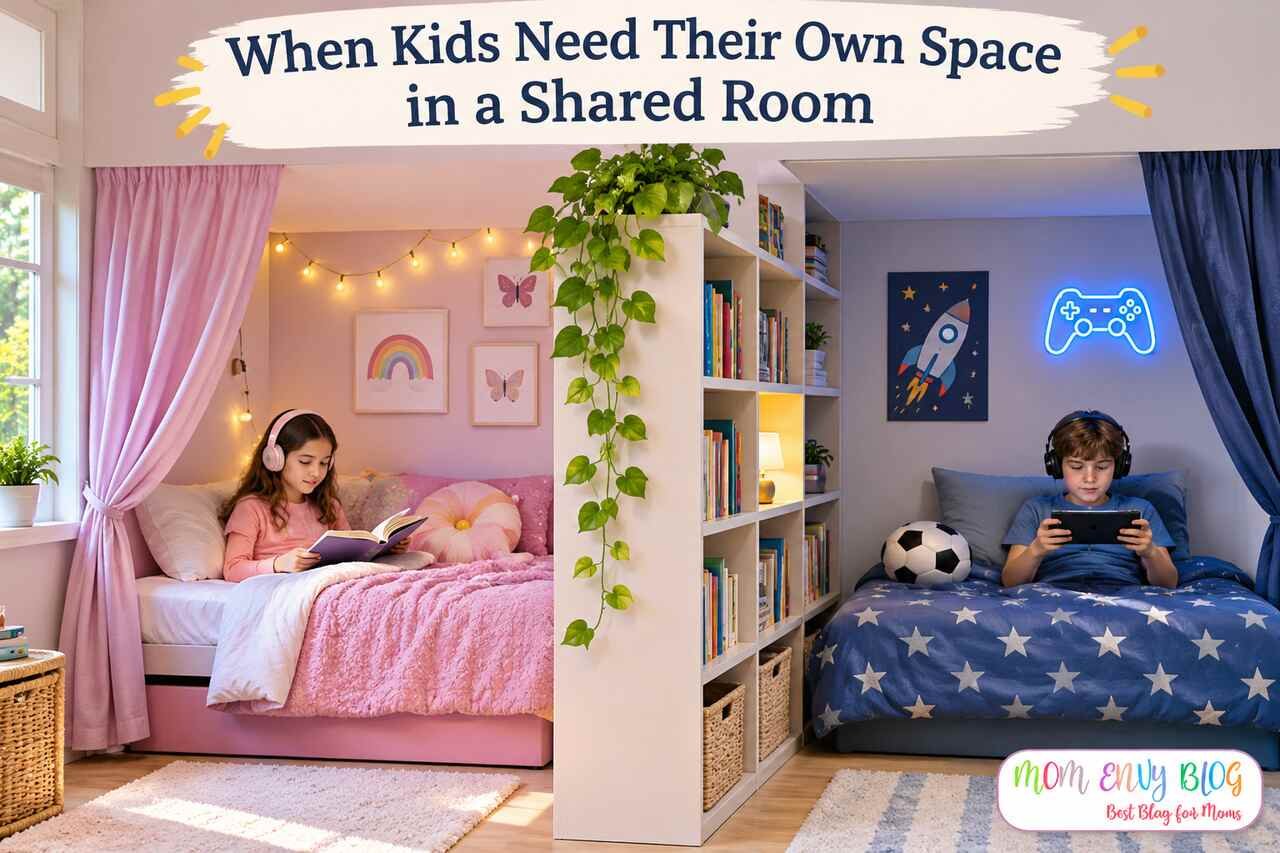
A shared bedroom can work beautifully until different bedtimes, homework needs, or personalities make each child crave a corner of their own. You may not need a larger home to solve the problem. Thoughtful furniture placement, simple dividers, and, in some cases, a lightweight partition can give siblings more privacy while keeping the room comfortable and practical. Start by looking at how your children use the space, then choose a solution that can adapt as they grow. Parents often realize that traditional twin beds take up too much floor space, making it helpful to consider selecting a bunk bed to maximize their bedroom layout.
The Sibling Sharing Dilemma
Room sharing often becomes harder when children reach different stages. One child may need a desk for schoolwork while a younger sibling still wants open floor space for toys. Even small disagreements over lighting, noise, and storage can make the room feel crowded. Implementing effective sibling room-sharing tips can help parents minimize daily friction and maintain peace in a shared bedroom.
Ask each child what would make the biggest difference. Their answers may be surprisingly simple, such as a private shelf or a reading light. This family’s shared bedroom solution shows how a physical division can create distinct areas in one room. If floor space is the main issue, this guide to selecting a bunk bed for your child’s room may also help you free up room for separate activity zones.
Visual Dividers Versus Solid Partitions
A visual divider works well when children want clear boundaries but don’t need full sound control. Open shelving can mark where one zone ends and the other begins while providing shared storage. Curtains, ceiling-mounted fabric panels, and folding screens offer more flexibility, especially in a rental or a room that may change function later.
Keep tall furniture securely anchored and preserve an open route to the door. You should also avoid blocking windows, heating vents, or cooling registers. For younger children, choose dividers without cords or unstable panels. Marking the floor with two rugs can be enough in a small room, particularly when each child also has a separate bedside area and designated drawers.
Building a Simple Stud Wall
A stud wall creates a stronger sense of separation and may suit a large bedroom with two windows and enough space for safe access on both sides. Before work begins, sketch the proposed layout and check local building requirements. Rules may cover ventilation, natural light, electrical work, and minimum room dimensions.
The usual project involves a timber or metal frame covered with board, then finished for painting. Homeowners and contractors can compare plaster & plasterboard, along with metal stud components and finishing supplies, when planning the materials. Hire qualified professionals if the wall affects wiring, heating, or structural elements. A poorly placed partition can create a dark, cramped area even when the construction itself looks neat.
Personalizing Each Child’s Zone
Give each child control over a few choices, such as bedding color, wall art, and storage labels. A consistent base color keeps the whole room connected, while different accent colors establish ownership. Removable decals and framed prints are easy to update when interests change.
Try to provide comparable essentials on each side: a reading light, accessible storage, and a surface for books or personal items. The pieces don’t have to match, but the setup should feel fair. Shared items can stay in a neutral central area, perhaps with one basket for games and another for art supplies. Once the zones are finished, agree on simple rules for borrowing belongings and keeping the walkway clear. Two small nameplates on opposite sides of the room can provide the final touch that makes each space feel genuinely personal.