








Quick Highlights
- At 2 weeks pregnant, you are usually not pregnant yet. Your body is preparing to release an egg.
- Ovulation often happens about 14 days before your next period, not automatically on cycle day 14.
- Your fertile window includes approximately the five days before ovulation, the day of ovulation, and about one day afterward.
- Clear, slippery cervical mucus and a positive ovulation test may suggest that ovulation is approaching.
- You cannot have reliable pregnancy symptoms or a positive pregnancy test before fertilization and implantation.
- If you are trying to conceive, having sex every one to two days during the fertile window is a practical approach.
At 2 weeks pregnant, your body may be approaching one of the most important points in the menstrual cycle: ovulation.
You are not usually pregnant yet. There is no embryo, implantation, or pregnancy hormone to detect. Instead, an egg is maturing inside an ovary while the lining of your uterus prepares for a possible pregnancy.
This guide is written for someone actively trying to conceive who wants a clear answer to three questions: When might I ovulate, which days should we try, and can any symptoms tell me I am pregnant yet?
What Does 2 Weeks Pregnant Mean?
Pregnancy is counted from the first day of your last menstrual period, even though conception usually happens about two weeks later. If you’re wondering what really happens during that very first week, don’t worry, we’ve got you covered. Take a look at our 1 Week Pregnant Guide to learn what to expect and how to prepare for the exciting journey ahead.
That makes pregnancy week 2 part of the preconception stage for most people. Your period has likely ended or is ending, estrogen is beginning to rise, and a follicle in one of your ovaries is preparing to release an egg.
At 2 weeks pregnant:
- You have not usually conceived yet.
- An egg is developing inside an ovarian follicle.
- Your uterine lining is beginning to thicken again.
- Ovulation may happen near the end of this week in a 28-day cycle.
- Sperm present before ovulation may fertilize the egg after it is released.
Ovulation is often described as occurring on day 14, but that is only an estimate for a typical 28-day cycle. A more useful rule is that ovulation often occurs around 14 days before the next period begins.
2 Weeks Pregnant at a Glance
| Pregnancy milestone | What may be happening |
| Gestational age | Week 2 |
| Are you pregnant yet? | Usually not |
| Baby development | No embryo or fetus yet |
| Main body change | A follicle and egg are maturing |
| Uterine lining | Thickening in preparation for possible implantation |
| Ovulation | May happen near the end of the week |
| Fertile window | May be open now |
| Pregnancy test | Too early |
| Main goal | Identify fertile days without relying on one sign alone |
Baby Development at 2 Weeks Pregnant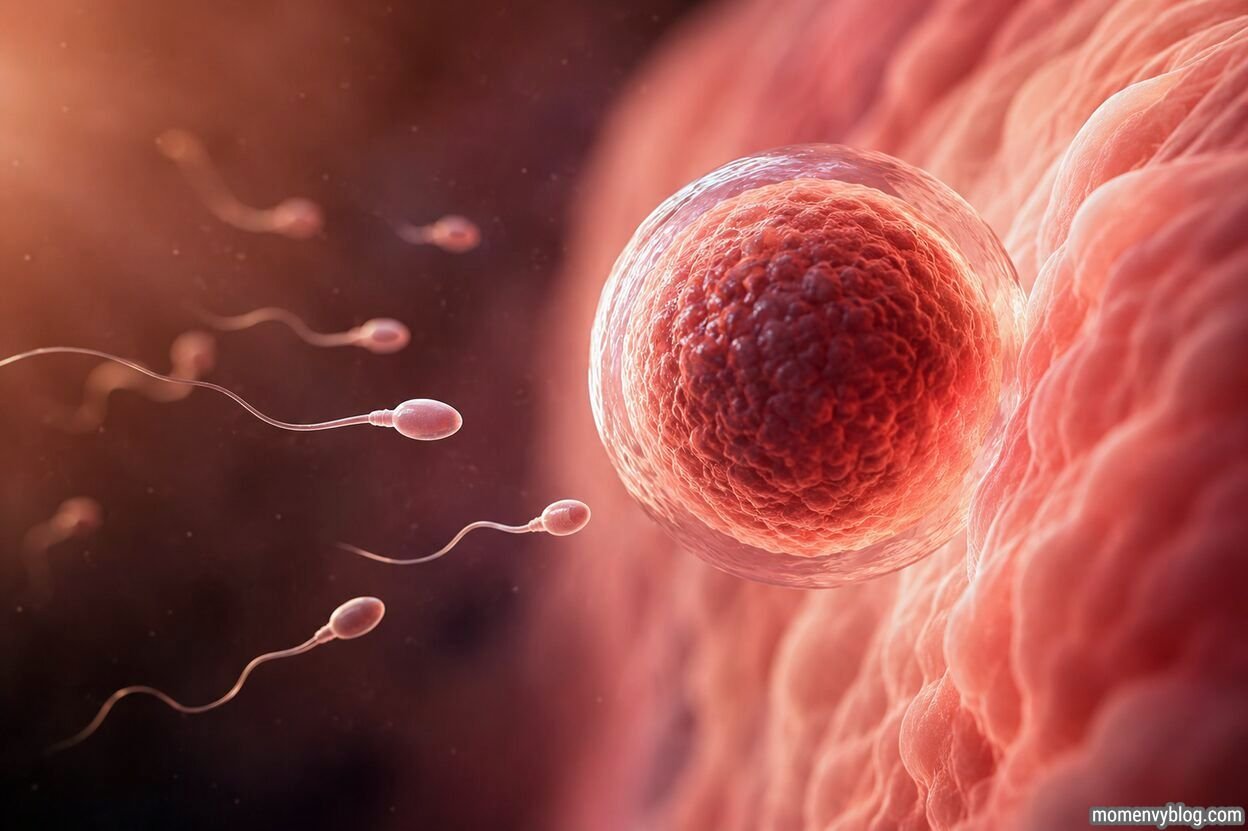
There is no developing baby at 2 weeks pregnant.
The egg that could become part of a pregnancy is still inside an ovarian follicle. Fertilization cannot happen until the ovary releases that egg.
During ovulation:
- A mature egg is released from an ovary.
- The egg enters a fallopian tube.
- Sperm may meet and fertilize the egg.
- If fertilization occurs, the resulting cell begins dividing as it travels toward the uterus.
- Implantation may happen several days later.
The menstrual cycle therefore includes a sequence of separate events. Ovulation is the release of the egg. Fertilization is the joining of egg and sperm. Implantation is the attachment of the developing pregnancy to the uterine lining.
These events do not all happen on the same day. ACOG describes ovulation as the release of an egg that then moves into a fallopian tube, where it may meet sperm.
How Big Is the Baby at 2 Weeks Pregnant?
There is no baby or embryo to measure at week 2.
Some pregnancy apps use fruit, seed, or food comparisons from the earliest weeks. However, any size comparison during week 2 is only decorative because fertilization has not normally happened yet.
The most accurate description is simple: an egg is maturing, but there is no developing baby.
What Is Happening in Your Body at 2 Weeks Pregnant?
Your ovaries and uterus are preparing for the possibility of conception.
A follicle becomes dominant
Several follicles may begin developing early in the menstrual cycle. Each contains an immature egg. Usually, one follicle becomes dominant and continues maturing.
Estrogen begins rising
The developing follicle produces estrogen. Rising estrogen helps rebuild the uterine lining that was shed during your period.
The uterine lining thickens
The endometrium, or uterine lining, begins becoming thicker and more supportive. If fertilization and implantation occur later, this lining will help support the early pregnancy.
Luteinizing hormone rises before ovulation
A surge in luteinizing hormone, commonly called LH, helps trigger the release of the egg. Ovulation predictor kits are designed to detect this rise. MedlinePlus notes that a positive urine ovulation test generally suggests ovulation may occur within the next 24 to 36 hours, although this does not happen exactly the same way for everyone.
Ovulation may occur
Once the mature egg is released, it enters a fallopian tube. The egg remains available for fertilization for about 24 hours. Sperm may survive inside the reproductive tract for several days, which is why sex before ovulation can result in pregnancy.
When Does Ovulation Happen?
Ovulation does not happen on the same cycle day for everyone.
In a regular 28-day cycle, it is often estimated around cycle day 14. However, women with shorter or longer cycles may ovulate earlier or later.
A better estimate is:
Expected first day of your next period minus approximately 14 days = estimated ovulation day
For example:
| Average cycle length | Possible ovulation estimate |
| 24 days | Around cycle day 10 |
| 26 days | Around cycle day 12 |
| 28 days | Around cycle day 14 |
| 30 days | Around cycle day 16 |
| 32 days | Around cycle day 18 |
| 35 days | Around cycle day 21 |
These are examples, not exact predictions. Ovulation can shift from one cycle to another because of stress, illness, travel, sleep changes, breastfeeding, hormonal conditions, age, and natural variation.
The NHS explains that ovulation commonly occurs about 10 to 16 days before the next period, while ACOG uses about 14 days before the next period as a practical estimate.
What Is the Fertile Window?
The fertile window is the group of days during which sex can potentially lead to pregnancy.
ACOG states that pregnancy can result from sex beginning about five days before ovulation through approximately one day afterward. This is possible because sperm may survive for up to five days, while the egg usually remains available for fertilization for about 24 hours.
Simple fertile-window example
Suppose you expect to ovulate on cycle day 14:
| Cycle day | Fertility estimate |
| Day 8 | Lower chance |
| Day 9 | Fertile window may begin |
| Day 10 | Fertile |
| Day 11 | Fertile |
| Day 12 | Highly useful day to try |
| Day 13 | Highly useful day to try |
| Day 14 | Estimated ovulation |
| Day 15 | Pregnancy may still be possible |
| Day 16 | Usually outside the main fertile window |
This table is an illustrative example, not a personal prediction. The exact days depend on when ovulation actually occurs.
My Practical Lesson From Tracking Ovulation
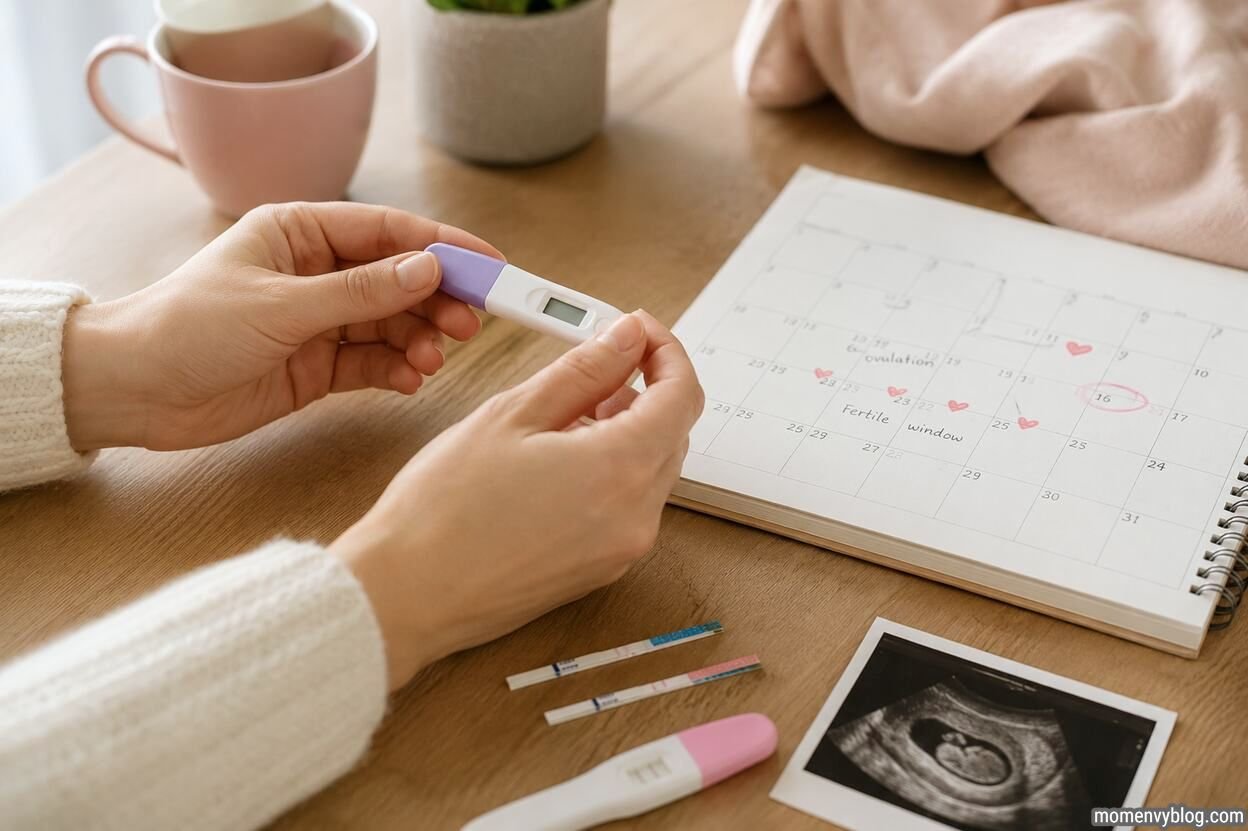
One lesson I learned as a mom is that fertility tracking can become more stressful than helpful when every sign is treated as a test you must pass.
It is easy to stare at an app, compare cervical mucus several times a day, and worry that one missed day has ruined the entire month. In real family life, children get sick, work runs late, and perfect timing rarely exists.
The more practical approach is to look for a pattern of signs and create a wider opportunity window. A calendar estimate can tell you when to start paying attention. Cervical mucus may show that estrogen is rising. An ovulation test may suggest the LH surge has begun. None of these tools needs to carry the whole decision by itself.
That lesson is especially helpful after you already have children. Trying to create one perfectly timed romantic evening while a toddler refuses bedtime is not always realistic. A simple every-other-day plan is often easier to follow than trying to identify one exact hour.
How to Identify Ovulation
No single home method can confirm ovulation perfectly for everyone. Combining two or three signs can provide a clearer picture.
1. Track Your Menstrual Cycle
Count the first day of full menstrual bleeding as cycle day 1.
Record:
- The first day of each period
- The number of days between periods
- How long bleeding lasts
- Whether your cycle is regular
- Any spotting between periods
After tracking several cycles, you may see a pattern. Calendar tracking is inexpensive and useful, but it predicts ovulation rather than proving that it happened.
A common calculation mistake
Do not automatically count 14 days forward from the beginning of your period.
Instead, estimate 14 days backward from the start of your next expected period. This distinction matters for cycles that are not 28 days long.
2. Check Cervical Mucus
Cervical mucus often changes as ovulation approaches.
You may notice a progression like this:
| Cycle stage | Possible cervical mucus |
| Just after the period | Dry, sticky, or minimal |
| Approaching ovulation | Creamy or lotion-like |
| Most fertile days | Clear, slippery, stretchy, or similar to raw egg white |
| After ovulation | Thicker, sticky, or dry again |
Slippery cervical mucus helps sperm move through the cervix. It can be a useful sign that the fertile window is open.
Cervical mucus may be harder to interpret if you have an infection, recently had sex, use lubricants, are breastfeeding, take certain medications, or have hormonal changes.
Contact a healthcare professional if discharge has a strong odor or comes with itching, burning, pain, fever, or an unusual color.
3. Use an Ovulation Predictor Kit
An ovulation predictor kit, or OPK, checks urine for an LH surge.
A positive result generally means ovulation may occur soon, often within approximately 24 to 36 hours, though the result does not guarantee that an egg will be released.
Follow the instructions for your specific kit because testing times and result formats vary.
Tips for using ovulation tests
- Begin testing before your estimated ovulation date.
- Test at roughly the same time each day.
- Avoid drinking a very large amount of fluid just before testing.
- Read the result within the stated time window.
- Do not assume a faint line is positive unless the instructions say so.
- Continue testing if your cycle timing is uncertain.
People with polycystic ovary syndrome or persistently elevated LH may see several positive or confusing results. A healthcare professional can help if ovulation tests do not match your cycle pattern.
4. Track Basal Body Temperature
Basal body temperature, or BBT, is your resting temperature before getting out of bed.
After ovulation, progesterone may cause a small, sustained rise in temperature. This pattern can help show that ovulation probably occurred.
BBT is better at confirming past ovulation than predicting it in time for sex that same cycle.
Temperature readings may be affected by:
- Poor sleep
- Fever or illness
- Alcohol
- Travel
- Shift work
- Getting up before measuring
- Taking your temperature at different times
Track the overall pattern rather than worrying about one unusual reading.
5. Notice Possible Ovulation Pain
Some women experience mild, one-sided lower abdominal discomfort around ovulation. This is sometimes called mittelschmerz.
Ovulation pain may last from a short time to a day or two. However, not everyone feels it, and pelvic pain can have many other causes. MedlinePlus describes mittelschmerz as one-sided lower abdominal pain occurring around the time an egg is released.
Seek medical care for severe, persistent, or worsening pain, especially if it comes with heavy bleeding, fever, vomiting, dizziness, or fainting.
Other Possible Signs of Ovulation
You may notice:
- Increased interest in sex
- Mild breast tenderness
- A small amount of spotting
- A heightened sense of smell
- Increased energy
- Bloating
- Cervical position changes
These signs are not reliable enough to identify ovulation by themselves.
Can You Have Pregnancy Symptoms at 2 Weeks?
You cannot have true pregnancy symptoms before fertilization and implantation.
At 2 weeks pregnant, symptoms are more likely to come from normal menstrual-cycle hormones or approaching ovulation.
Possible ovulation-related changes include:
- Slippery cervical mucus
- Mild pelvic discomfort
- Bloating
- Breast tenderness
- Increased libido
- Light spotting
- A positive ovulation test
These signs may suggest fertility, not pregnancy.
What Does 2 Weeks Pregnant Feel Like?
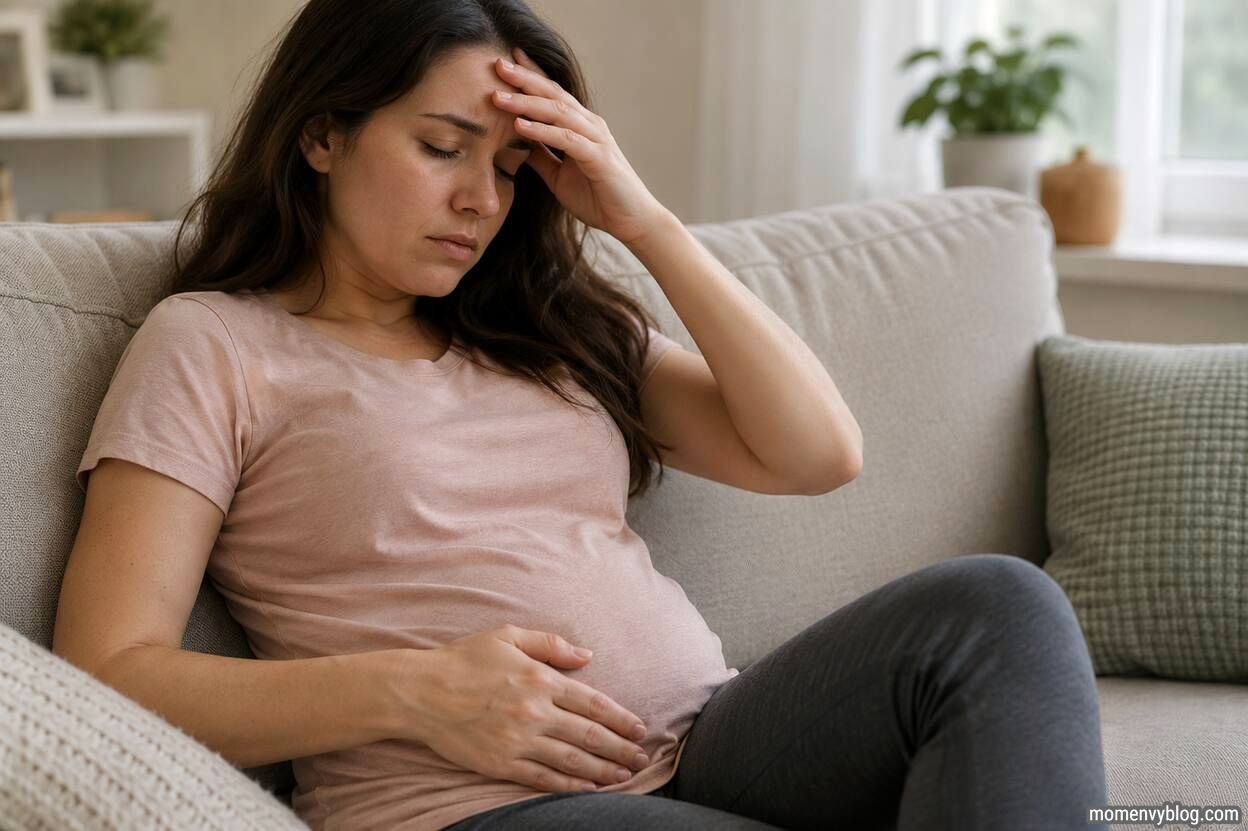
Many women feel completely normal at 2 weeks pregnant.
Others notice mild changes related to ovulation. You might feel a brief twinge on one side, notice wetter cervical mucus, or feel more interested in sex. You may also feel tired or bloated, but these symptoms are too general to confirm anything.
There is no specific sensation that proves an egg has been fertilized.
Can You Feel Conception?
No reliable physical symptom can tell you the exact moment fertilization occurs.
Fertilization happens inside a fallopian tube and cannot normally be felt. A twinge or cramp near ovulation is more likely related to the ovary releasing an egg than sperm meeting the egg.
Claims about feeling conception should be treated carefully because there is no home method that can verify the exact fertilization moment.
Can You Have Morning Sickness at 2 Weeks?
No. Pregnancy-related morning sickness cannot begin before implantation and the rise of pregnancy hormones.
Nausea during week 2 may be caused by:
- Normal hormonal changes
- Illness
- Anxiety
- Migraine
- Medication
- Food-related problems
- Digestive changes
Persistent or severe nausea should be discussed with a healthcare professional.
Can You Have Implantation Bleeding at 2 Weeks?
Implantation does not usually happen during the early part of week 2 because ovulation and fertilization have not yet occurred.
If ovulation happens near the end of week 2 and fertilization follows, implantation would generally occur later, during the following stage of the timeline.
Spotting around week 2 may be related to ovulation, hormonal changes, sex, cervical irritation, contraception changes, infection, or another cause.
Do not use spotting alone to decide whether you are pregnant.
Can You Get a Positive Pregnancy Test at 2 Weeks?
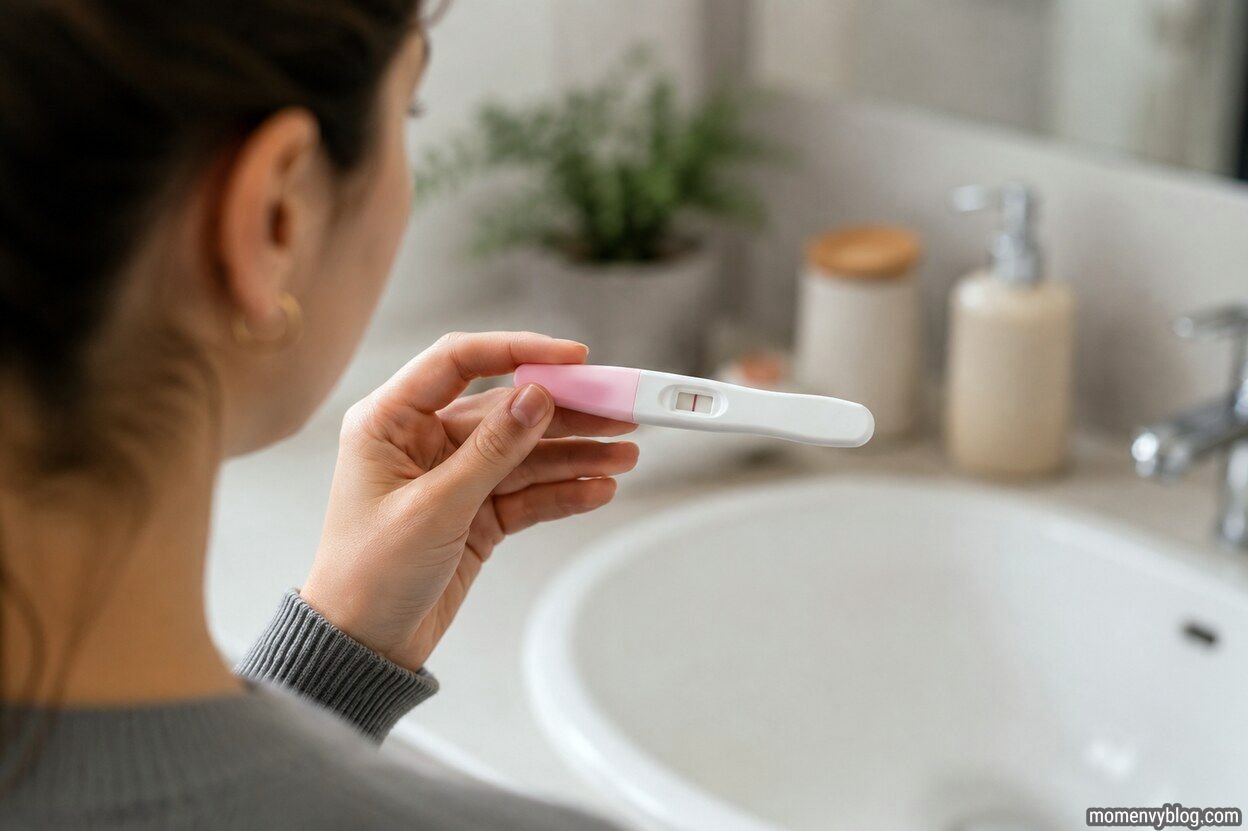
A home pregnancy test will usually be negative at 2 weeks pregnant.
Pregnancy tests detect human chorionic gonadotropin, or hCG, which begins rising after implantation. At week 2, implantation has not normally happened.
Testing now is not simply “a little early.” It is usually biologically too early for the hormone to be present.
What if the test is positive?
A positive test at what you believe is 2 weeks pregnant may mean:
- Your dates are incorrect.
- Your last bleeding was not a true period.
- You ovulated earlier than expected.
- You conceived during the previous cycle.
- hCG remains after a recent pregnancy or pregnancy loss.
- The result needs confirmation.
Contact your healthcare provider if you have a positive test along with pain, dizziness, fainting, or bleeding.
When Should You Take a Pregnancy Test?
For the most reliable home result, test on or after the day your next period is expected.
Some sensitive tests claim to work earlier, but testing early increases the chance of a false-negative result. A negative result before your expected period does not rule out pregnancy.
If your test is negative and your period does not begin, repeat the test according to the manufacturer’s instructions or contact your healthcare provider.
Best Time to Have Sex When Trying to Conceive
The highest chance of conception occurs when sperm are already present before the egg is released.
Because sperm can survive longer than the egg, the days before ovulation are especially useful. ACOG identifies the fertile period as roughly five days before ovulation through one day afterward.
Practical options
Low-pressure approach:
Have sex every two to three days throughout the cycle. The NHS recommends regular unprotected sex every two to three days for couples trying to conceive.
Fertile-window approach:
Have sex every one to two days beginning several days before expected ovulation and continuing through the day after.
Positive-OPK approach:
Have sex on the day of the positive test and over the next one or two days, while also including at least one or two days before the expected surge when possible.
There is no need to have sex several times in one day unless you both want to. A schedule that creates exhaustion, pain, or relationship stress is not a good long-term plan.
A Reusable Fertile-Window Framework
Use the CALM method each cycle.
C: Count your cycle
Record cycle day 1 and estimate when the next period may begin.
A: Anticipate a range
Count back about 14 days from the expected next period, then treat the five days before that estimate as potentially fertile.
L: Look for two signs
Choose at least two:
- Slippery cervical mucus
- Positive ovulation test
- Calendar estimate
- Basal temperature pattern
- Mild ovulation discomfort
Do not make one sign responsible for the entire decision.
M: Make a simple plan
Choose a schedule that works for your household, such as every other day during the estimated fertile window.
This framework is not a medical test. It is a practical way to reduce guesswork while accepting that ovulation cannot always be predicted exactly at home.
Example: Using the CALM Method
Imagine that your average cycle is 30 days.
Count: Your expected next period is around cycle day 31.
Anticipate: Counting backward suggests ovulation may occur near cycle day 16.
Look: You begin checking cervical mucus and using ovulation tests around cycle day 11 or 12.
Make a plan: You try on cycle days 11, 13, 15, and 16, then adjust if the ovulation test becomes positive earlier or later.
This does not guarantee pregnancy, but it provides several opportunities without depending on one perfectly timed day.
Should You Use a Fertility Lubricant?
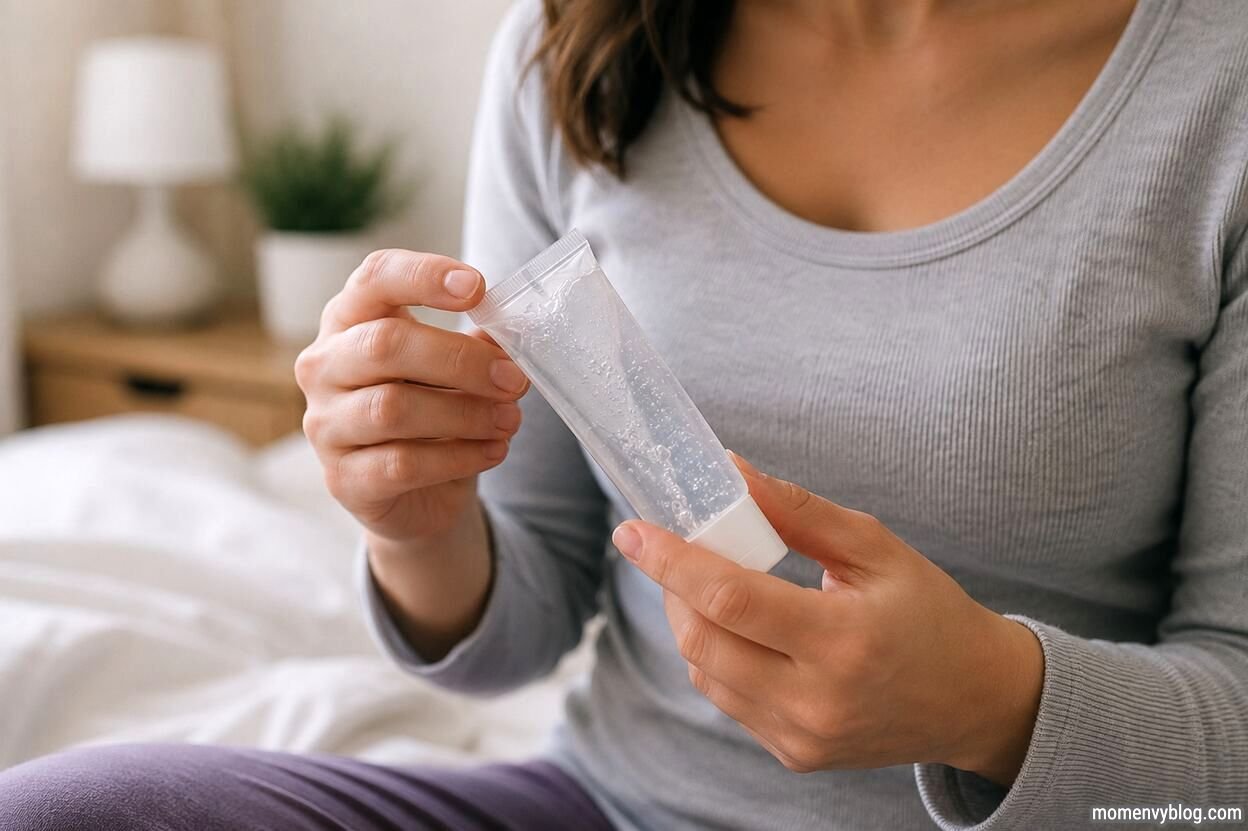
Some standard lubricants may affect sperm movement in laboratory settings. Couples who need lubricant while trying to conceive may prefer a product labeled fertility-friendly or sperm-friendly.
Do not use household oils or products inside the vagina unless a healthcare professional confirms they are appropriate. Some products can cause irritation, damage condoms, or disrupt the normal vaginal environment.
Lubricant does not improve fertility by itself. A fertility-friendly label generally means the product is designed to be less disruptive to sperm.
What Should You Do at 2 Weeks Pregnant?
1. Continue Taking Folic Acid
The CDC recommends that women who can become pregnant get 400 micrograms of folic acid daily. Taking it before and during early pregnancy helps reduce the risk of neural tube defects.
Some women need a different dose because of their medical history, medications, or a previous pregnancy affected by a neural tube defect. Ask your healthcare provider rather than increasing the dose yourself.
2. Review Medicines and Supplements
Review all prescription medicines, over-the-counter products, vitamins, herbal remedies, and supplements with a qualified healthcare professional.
Do not stop prescribed medication suddenly. The safest choice depends on the condition being treated, the medicine, and the risks of untreated illness.
3. Avoid Smoking and Recreational Drugs
Smoking and recreational drug use can affect fertility and pregnancy health. Seek professional support if stopping is difficult.
Avoid vaping as a substitute unless a healthcare professional has created a specific cessation plan with you.
4. Avoid Alcohol While Trying to Conceive
Because conception and early development occur before a missed period, avoiding alcohol while trying to conceive is the most cautious approach. The NHS recommends avoiding alcohol while attempting pregnancy.
5. Eat Regular, Balanced Meals
Choose a varied diet that includes:
- Vegetables and fruit
- Whole grains
- Beans and lentils
- Eggs, fish, meat, poultry, or other protein sources
- Dairy or fortified alternatives
- Healthy fats
- Adequate fluids
You do not need a restrictive “fertility cleanse.” Be cautious with expensive supplements that promise to regulate hormones or guarantee conception.
6. Keep Caffeine Moderate
You do not need to panic about one cup of coffee while trying to conceive. However, this is a useful time to check how much caffeine you consume from coffee, tea, energy drinks, soft drinks, chocolate, and certain medicines.
A gradual reduction may be easier than suddenly changing your routine after a positive pregnancy test.
7. Move Your Body Regularly
Moderate activity can support general health, sleep, stress management, and preparation for pregnancy.
Choose movement that is appropriate for your current fitness and health, such as:
- Walking
- Swimming
- Strength training
- Prenatal-style mobility work
- Cycling
- Yoga
Speak with a clinician before beginning intense exercise if you have health concerns or have been advised to limit activity.
8. Prioritize Sleep
Sleep does not guarantee conception, but it supports general physical and emotional health.
Aim for a routine that is realistic rather than perfect:
- Keep a regular bedtime when possible.
- Limit late caffeine.
- Make the bedroom dark and comfortable.
- Reduce screen use before bed.
- Ask for help if childcare makes rest difficult.
9. Check Vaccinations and Health Conditions
A preconception appointment can help review vaccinations, medications, chronic conditions, genetic history, and previous pregnancy complications.
MedlinePlus recommends preparing for pregnancy before conception, including reviewing health conditions, medicines, lifestyle, and prenatal care needs.
When Should You Ask for Fertility Help?
Not becoming pregnant during one or several cycles does not automatically mean something is wrong.
Seek advice sooner if you:
- Have very irregular or absent periods
- Suspect you are not ovulating
- Have severe pelvic pain
- Have a history of endometriosis
- Have polycystic ovary syndrome
- Have had pelvic inflammatory disease
- Have experienced repeated pregnancy loss
- Have a known uterine or tubal condition
- Have a partner with a known fertility concern
- Are using medicines that may affect fertility
- Are planning pregnancy after cancer treatment
- Have been advised to seek preconception care
Age also affects how long clinicians may suggest trying before an infertility evaluation. Fertility generally declines with age, with a faster decline during the mid-30s and beyond.
Your own doctor can advise you based on your age, medical history, cycle pattern, and local clinical guidance.
When Should You Contact a Healthcare Professional Now?

Get medical advice if you have:
- Severe or worsening pelvic pain
- Very heavy bleeding
- Fainting or dizziness
- Fever
- Pain during sex
- Foul-smelling discharge
- Persistent bleeding between periods
- Cycles that are repeatedly very short or very long
- No periods without a known reason
- A positive pregnancy test with pain or bleeding
Severe one-sided pain, shoulder pain, fainting, or heavy bleeding requires urgent assessment, especially if pregnancy is possible.
Common Mistakes During Pregnancy Week 2
Treating cycle day 14 as a fixed rule
Day 14 is an estimate for a 28-day cycle, not a universal ovulation date.
Waiting until the ovulation day to try
The days before ovulation matter because sperm can already be waiting when the egg is released.
Assuming a positive ovulation test means pregnancy
An ovulation test detects an LH surge. It does not detect pregnancy and does not prove that fertilization occurred.
Believing every cramp is implantation
Cramping during this week is more likely related to ovulation, the menstrual cycle, digestion, or another cause. Implantation happens later.
Testing for pregnancy immediately after sex
Pregnancy tests detect hCG after implantation, not sperm, fertilization, or ovulation.
Using too many tracking tools
Tracking temperature, mucus, apps, tests, symptoms, sleep, and wearable data can become overwhelming. Start with a calendar and one additional sign.
Blaming yourself for imperfect timing
Even well-timed sex does not guarantee pregnancy in a single cycle. Conception depends on several biological factors that cannot all be controlled.
2 Weeks Pregnant Checklist
Health preparation
- Take a prenatal vitamin with 400 micrograms of folic acid unless advised otherwise.
- Review medications and supplements with a healthcare professional.
- Avoid smoking, recreational drugs, and alcohol.
- Eat balanced meals and drink enough fluids.
- Check whether you need a preconception appointment.
Ovulation tracking
- Mark cycle day 1 on a calendar.
- Calculate your average cycle length.
- Estimate ovulation by counting back from your next expected period.
- Check for slippery cervical mucus.
- Begin ovulation testing before your estimated ovulation day.
- Record results without treating one test as perfect proof.
Trying to conceive
- Choose an every-day or every-other-day plan during the fertile window.
- Include the two or three days before expected ovulation.
- Use fertility-friendly lubricant if lubricant is needed.
- Avoid testing for pregnancy immediately after ovulation.
- Choose a date on or after your expected period for pregnancy testing.
A Simple Fertility Tracking Template
Copy this template into your phone notes or a notebook.
Cycle day:
Date:
Bleeding: None / Light / Moderate / Heavy
Cervical mucus: Dry / Sticky / Creamy / Slippery
Ovulation test: Not taken / Negative / Positive
Basal temperature:
Pelvic discomfort: None / Left / Right / Both
Sex or insemination: Yes / No
Medication or illness changes:
Notes:
The goal is to spot patterns, not to create a perfect record.
What Happens at 3 Weeks Pregnant?
At 3 weeks pregnant, ovulation and fertilization may have occurred.
If sperm fertilizes the egg, the resulting cell begins dividing while traveling through the fallopian tube toward the uterus. You still may not feel pregnant, and a home pregnancy test is often too early.
The next guide will explain:
- What happens during fertilization
- How early cells divide
- When implantation may begin
- Whether cramping or spotting means anything
- Why pregnancy tests are usually still negative
- What to do during the two-week wait
Next: 3 Weeks Pregnant: Fertilization, Early Development, and What to Expect
FAQ’s
Are you actually pregnant at 2 weeks?
Usually not. Pregnancy week 2 is counted from your last menstrual period, but ovulation and conception have not normally occurred yet.
Can conception happen at 2 weeks pregnant?
Yes. In a typical cycle, ovulation and possible fertilization may occur near the end of week 2. The exact timing depends on your cycle.
What symptoms do you have at 2 weeks pregnant?
You may notice signs related to ovulation, such as slippery cervical mucus, mild one-sided pelvic discomfort, increased libido, or a positive ovulation test. These are not pregnancy symptoms.
Can you get a positive test at 2 weeks pregnant?
Usually no. A pregnancy test detects hCG after implantation, which has not normally occurred at week 2.
Is there a baby at 2 weeks pregnant?
No embryo or fetus is present before fertilization. An egg may be maturing or may be released near the end of the week.
What does ovulation discharge look like?
Fertile cervical mucus is often clear, wet, slippery, and stretchy. It may resemble raw egg white. Not everyone sees this exact pattern.
How long does ovulation last?
The egg generally remains available for fertilization for about 24 hours after release. The fertile window is longer because sperm can survive for several days.
What does a positive ovulation test mean?
It means the test detected an LH surge and ovulation may occur soon, often within about 24 to 36 hours. It does not confirm pregnancy or guarantee that an egg will be released.
How often should we have sex during the fertile window?
Every one to two days is a practical option. Couples who do not want to track ovulation closely may have sex every two to three days throughout the cycle.
Can I ovulate without noticing symptoms?
Yes. Many women have no obvious ovulation symptoms. The absence of pain or visible cervical mucus does not prove that ovulation did not happen.
Can stress delay ovulation?
Stress may affect cycle timing in some people, but one stressful day does not automatically prevent ovulation. Look at the overall cycle pattern rather than blaming yourself for normal life stress.
Can I ovulate during my period?
Early ovulation is possible, especially with short or irregular cycles. Sex during a period can result in pregnancy if sperm survive until an egg is released.
Does an app know exactly when I ovulate?
No. An app estimates ovulation using the information entered and past cycle patterns. Government fertility tools also caution that calculator results are estimates rather than guarantees.
Should I lie down after sex to get pregnant?
There is no need to follow a special position or remain still for a long time. Sperm begin moving into the reproductive tract quickly. Choose what feels comfortable rather than turning the process into another rule.
Can I choose my baby’s sex by timing intercourse?
Timing methods cannot reliably guarantee a baby’s sex. Be cautious with charts, diets, and products that promise otherwise.
The Bottom Line
At 2 weeks pregnant, you are usually approaching ovulation rather than experiencing an established pregnancy.
Your most fertile days include the days before the egg is released, not only ovulation day itself. Track your cycle, look for more than one fertility sign, and use a realistic schedule that works for your relationship and family life.
You do not need perfect timing, a cupboard full of tests, or a special fertility routine. A simple plan, regular opportunities for conception, folic acid, and appropriate preconception care are the most useful priorities this week.
Medical note: This content provides general pregnancy information and is not a substitute for care from a doctor, midwife, or other qualified healthcare professional.


