









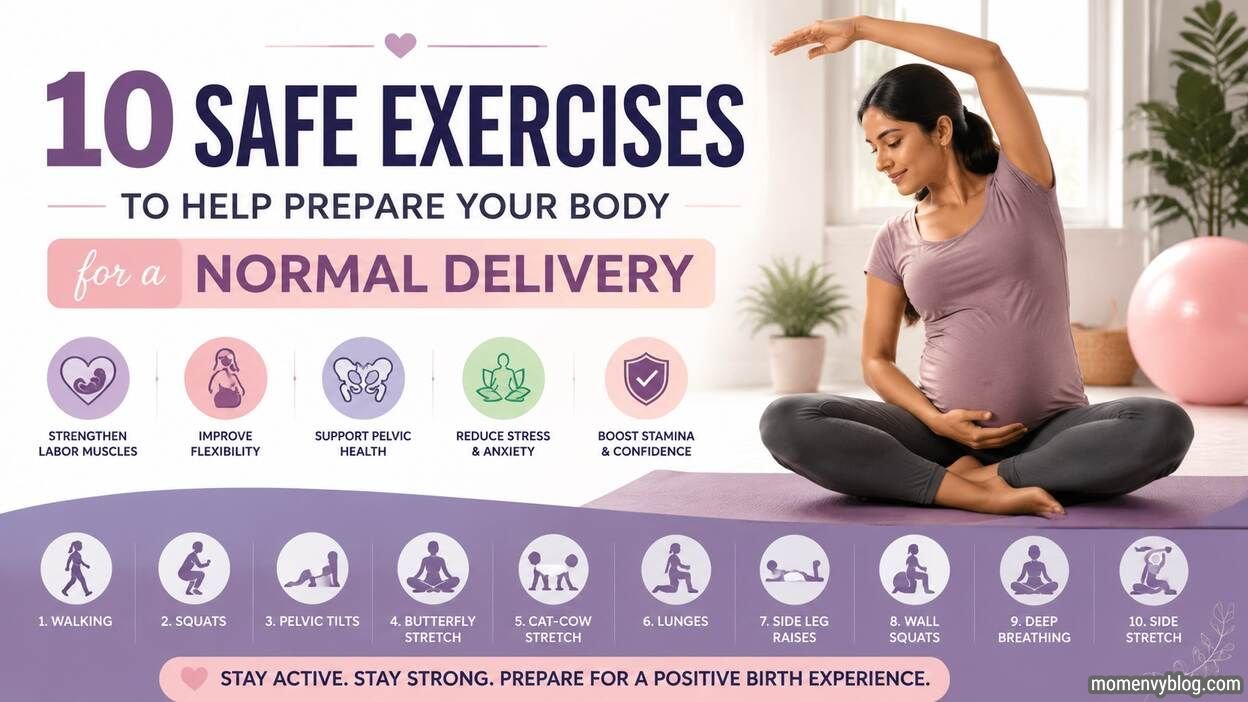
Quick Highlights
- Exercise can support strength, stamina, mobility, and comfort during pregnancy, but it cannot guarantee a vaginal birth.
- Walking, swimming, prenatal yoga, supported squats, pelvic tilts, and pelvic-floor exercises are suitable for many healthy pregnancies.
- Pregnant women without medical restrictions are generally advised to aim for at least 150 minutes of moderate activity each week.
- Start slowly if you were not active before pregnancy, and choose movements that feel stable and comfortable.
- Stop exercising and contact your maternity care provider if you have bleeding, fluid leakage, chest pain, dizziness, painful contractions, or other warning signs.
I remember how much better gentle walking and stretching made me feel during my own pregnancies. The goal was never to force my body into a certain birth outcome. It was to stay mobile, manage discomfort, and prepare as safely as possible.
Always check with your doctor, midwife, or maternity care provider before starting a new pregnancy exercise routine, especially if you have complications or have been advised to limit activity.
Can Exercise Help You Have a Normal Delivery?
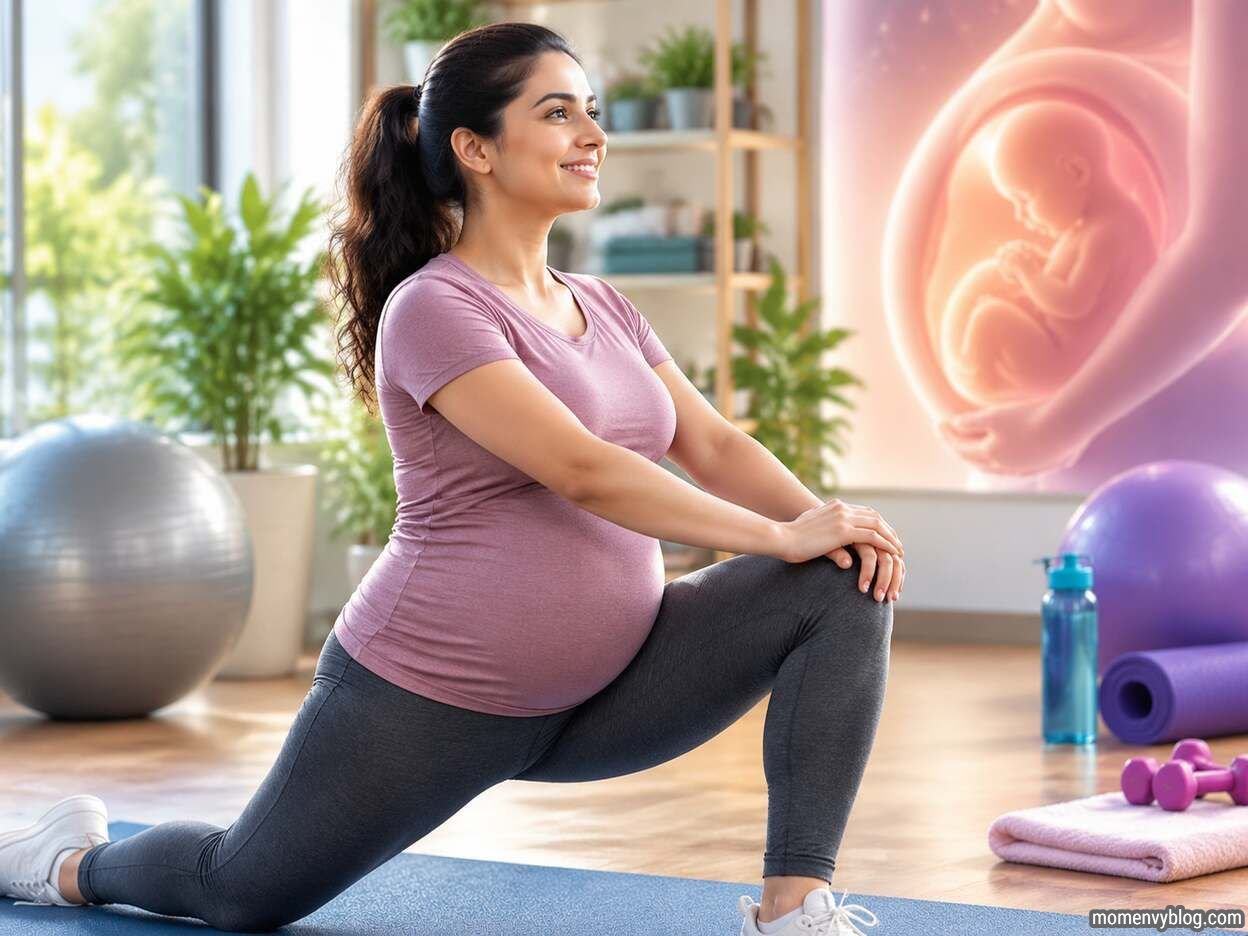
Exercise may help prepare your body for labor, but it cannot guarantee a vaginal delivery.
Your delivery method may be affected by many factors, including:
- Your baby’s position
- Placenta location
- The size and health of your baby
- How labor progresses
- Previous uterine surgery
- Multiple pregnancy
- Pregnancy complications
- The health of you and your baby during labor
Regular physical activity can improve cardiovascular fitness, muscular strength, flexibility, balance, and general well-being. These benefits may make pregnancy and labor easier to cope with, even though they do not determine how your baby will be born.
The American College of Obstetricians and Gynecologists, or ACOG, says physical activity is safe and beneficial for most women with uncomplicated pregnancies.
A vaginal birth is not a measure of how healthy, strong, or prepared a mother is. A cesarean birth may be the safest option in some situations, and it is not a failure.
Before you start exercising or make any major lifestyle changes, take a few minutes to read our 1 Week Pregnant Guide on MomEnvyBlog. It will help you understand what to expect during the earliest stage of your pregnancy.
How Much Exercise Is Recommended During Pregnancy?
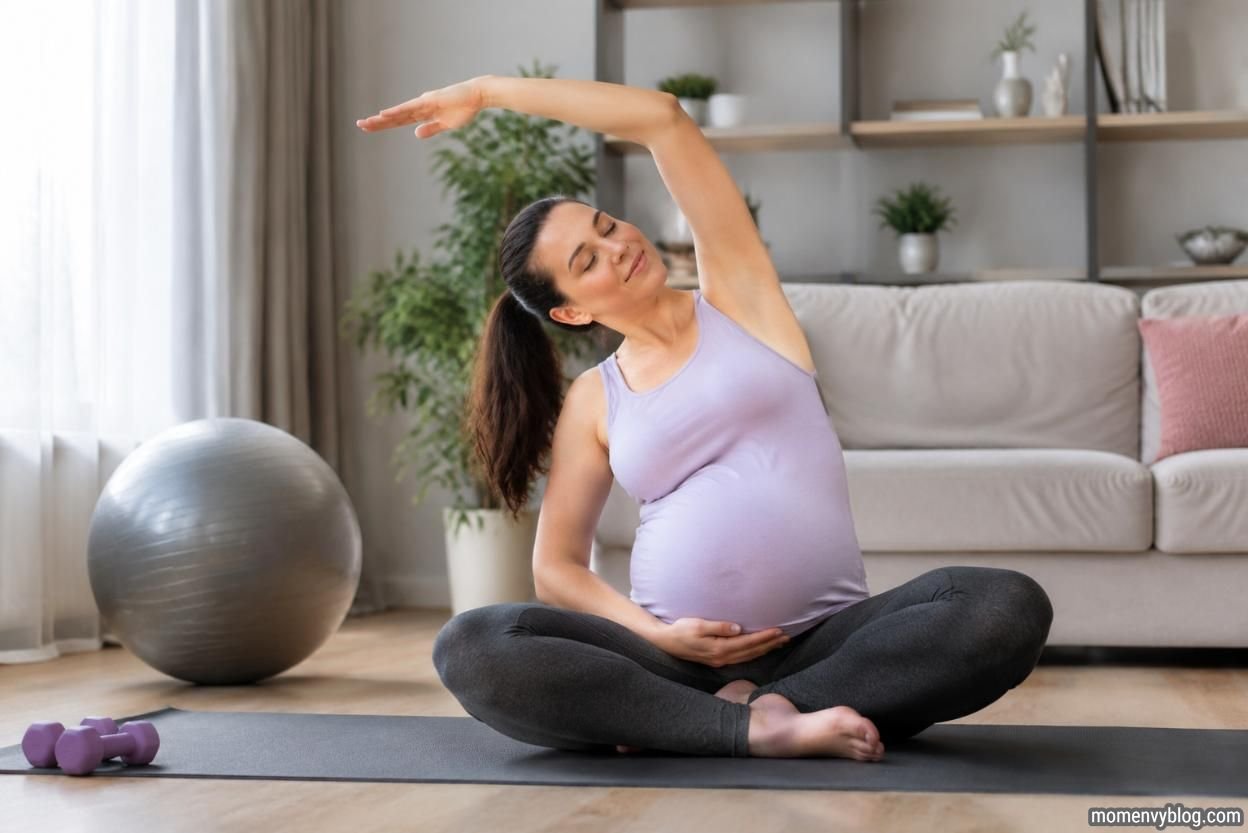
Pregnant women without medical contraindications should generally aim for at least 150 minutes of moderate-intensity aerobic activity each week.
This can be divided into manageable sessions, such as:
- 30 minutes on five days each week
- 20 to 25 minutes on most days
- Three 10-minute walks during the day
The World Health Organization recommends regular activity throughout pregnancy, including a mixture of aerobic and muscle-strengthening exercises. Gentle stretching may also be helpful.
You do not have to complete the full amount immediately. A few minutes of comfortable movement is a sensible starting point if you were inactive before pregnancy.
Use the talk test
Moderate exercise should make you breathe a little faster, but you should still be able to speak in full sentences.
Slow down if you are:
- Gasping for breath
- Unable to hold a conversation
- Feeling unsteady
- Becoming unusually tired
- Experiencing pain
Pregnancy is not the time to push through pain or compete with your pre-pregnancy fitness level.
10 Exercises That May Help Prepare Your Body for Vaginal Birth
These exercises are suitable for many uncomplicated pregnancies. Your maternity care provider may recommend different movements based on your health, pregnancy stage, and current fitness level.
1. Walking
Walking is one of the easiest pregnancy exercises to begin. It requires no special equipment other than supportive shoes and a safe place to walk.
Walking may help maintain:
- Cardiovascular fitness
- Leg strength
- Hip mobility
- Stamina
- Healthy daily movement
The NHS recommends walking as an accessible exercise during pregnancy, especially for women who were not active before becoming pregnant.
How to do it safely
Begin with 10 to 15 minutes at a comfortable pace. Gradually increase your time as long as you feel well.
Choose:
- Flat, even paths
- Well-fitting shoes
- Well-lit areas
- A route with access to water or restrooms
- Indoor walking during extreme heat
Avoid uneven trails if your balance has changed or you have pelvic pain.
Practical mom tip
Long walks may become uncomfortable in the third trimester. Two or three shorter walks can be easier than one long session.
2. Swimming or Water Exercise
Swimming allows you to move while the water supports some of your body weight. Many pregnant women find it more comfortable than land-based exercise as their pregnancy progresses.
Swimming and water exercise may help with:
- General fitness
- Muscle endurance
- Mobility
- Feelings of heaviness
- Joint comfort
ACOG includes swimming and water workouts among activities that are generally safe during an uncomplicated pregnancy.
Safety tips
- Enter and leave the pool carefully.
- Use steps and handrails.
- Avoid slippery poolside surfaces.
- Do not swim alone in an unsafe or unsupervised area.
- Stop if you feel dizzy, overheated, short of breath, or unwell.
- Avoid scuba diving during pregnancy.
Choose gentle swimming or a prenatal water class rather than trying a demanding new workout.
3. Prenatal Yoga
Prenatal yoga combines movement, stretching, posture work, breathing, and relaxation.
It may help you:
- Maintain flexibility
- Improve body awareness
- Practice steady breathing
- Reduce muscle tension
- Find comfortable labor positions
- Feel calmer and more focused
Choose a class specifically designed for pregnancy and tell the instructor how far along you are.
Movements to modify or avoid
Avoid:
- Hot yoga
- Deep twists that compress the abdomen
- Positions that cause pain
- Movements that challenge your balance
- Prolonged flat-on-your-back positions later in pregnancy
- Forceful stretching
Pregnancy hormones can make joints and ligaments more flexible, so deeper is not always better.
The NHS lists prenatal yoga as an exercise option during pregnancy while advising women to adapt activity to their comfort and pregnancy stage.
4. Low-Impact Aerobics
Low-impact aerobics can help maintain cardiovascular fitness without repeated jumping or high-impact movements.
Suitable options may include:
- Prenatal dance classes
- Low-impact step routines
- Stationary cycling
- Gentle follow-along pregnancy workouts
Keep at least one foot on the floor during aerobic movements. Avoid sudden turns, fast direction changes, and routines that make you feel unstable.
A prenatal class is usually safer than a general fitness class because the instructor can provide pregnancy modifications.
5. Supported Squats
Squats strengthen the legs, hips, and buttock muscles. They also encourage you to practice lowering and rising in a controlled way.
Squats do not “open the pelvis” permanently or guarantee that a baby will move down. However, supported squatting can build strength and help you become comfortable in an upright position that may be useful during labor.
How to perform a supported squat
- Stand facing the back of a sturdy chair or a kitchen counter.
- Place your feet slightly wider than hip-width apart.
- Hold the support with both hands.
- Keep your chest lifted.
- Bend your knees and move your hips back as though sitting in a chair.
- Lower only as far as feels comfortable.
- Press through your feet to stand.
- Repeat 5 to 10 times.
Stop or modify if you have:
- Pelvic girdle pain
- Knee pain
- Pubic bone pain
- Pressure or heaviness in the vagina
- Trouble maintaining balance
Do not hold a deep squat for a long time unless your maternity care provider or pelvic-health physiotherapist has recommended it.
6. Pelvic Tilts
Pelvic tilts create gentle movement through the pelvis and lower back. Some women find them useful for stiffness or back discomfort.
Standing pelvic tilt
- Stand with your back against a wall.
- Keep your knees soft rather than locked.
- Breathe in normally.
- As you breathe out, gently tighten your lower abdominal muscles.
- Tilt your pelvis so your lower back moves slightly toward the wall.
- Hold for two or three seconds without holding your breath.
- Release.
- Repeat 8 to 10 times.
You can also perform small pelvic tilts while sitting upright on a firm chair or correctly sized birth ball. An NHS physiotherapy resource describes seated tilts as gently rocking the pelvis forward and backward while maintaining a supported sitting position.
Keep the movement small and comfortable. Pelvic tilts should not cause abdominal, pelvic, or back pain.
7. Pelvic-Floor Exercises
The pelvic floor is a group of muscles that supports the bladder, uterus, and bowel. These muscles experience extra pressure during pregnancy and childbirth.
Pelvic-floor exercises may help reduce urine leakage and support postpartum recovery. The NHS recommends practicing them during pregnancy.
How to identify the pelvic-floor muscles
Imagine that you are trying to:
- Stop yourself from passing gas
- Gently close the vaginal opening
- Lift the muscles upward inside your pelvis
You should feel a squeeze and lift, not a hard tightening of your buttocks, thighs, or abdomen.
How to practice
- Sit or lie in a comfortable position.
- Breathe normally.
- Gently squeeze and lift the pelvic-floor muscles.
- Hold for a few seconds if comfortable.
- Fully release and relax.
- Repeat with both slow holds and short squeezes.
Do not repeatedly stop your urine flow to exercise these muscles. That may interfere with normal bladder emptying.
Strength is not the only goal
The pelvic floor also needs to relax and lengthen during birth. Constantly clenching these muscles is not helpful.
After each squeeze, let the muscles completely soften. A pelvic-health physiotherapist can help if you have pelvic pain, pain during sex, difficulty relaxing, urine leakage, or a feeling of pelvic heaviness.
8. Birth-Ball Hip Circles
A birth ball can support comfortable, upright movement during pregnancy and labor.
The NHS says a birth ball may help a woman remain active, get into a more upright position, and cope with contraction pain during labor.
How to use a birth ball safely
- Place the ball on a non-slip surface.
- Keep it near a wall or sturdy piece of furniture.
- Sit with your feet flat and wide enough to feel stable.
- Keep your hips level with or slightly higher than your knees.
- Slowly rock from side to side.
- Make small circles with your hips.
- Change direction.
Begin with one or two minutes.
Use a correctly sized, anti-burst exercise ball. Have someone nearby the first few times you use it if you feel uncertain.
Do not use a birth ball if you feel unstable, dizzy, or unable to get on and off safely.
9. Side-Lying Leg Lifts
Side-lying leg lifts can strengthen muscles around the hips and buttocks without requiring you to balance while standing.
How to do them
- Lie on your side with a pillow under your head.
- Bend your lower leg slightly for support.
- Keep your upper leg straight or softly bent.
- Lift the upper leg a short distance.
- Keep your hips stacked rather than rolling backward.
- Slowly lower the leg.
- Repeat 8 to 12 times.
- Change sides.
The movement should feel controlled. Stop if it causes pain in your pelvis, pubic bone, hips, or lower back.
A pillow between your knees may make the position more comfortable.
10. Diaphragmatic Breathing and Relaxation
Breathing exercises do not determine how you will give birth, but they can help you practice releasing tension and staying focused.
Simple breathing practice
- Sit in a supported position.
- Relax your jaw and shoulders.
- Place one hand on your ribs.
- Breathe in slowly through your nose.
- Allow your ribs and abdomen to expand naturally.
- Breathe out slowly without forcing the air.
- Let your pelvic floor soften as you exhale.
- Continue for two to five minutes.
Try not to pull your stomach in tightly with each breath.
Many women unknowingly tense their jaw, shoulders, hands, and pelvic floor when they feel discomfort. Practicing relaxation before labor can make it easier to notice and release that tension.
A Simple Weekly Pregnancy Exercise Plan
This sample schedule is for women with uncomplicated pregnancies who have received clearance to exercise.
| Day | Suggested activity |
| Monday | 20-minute walk and pelvic-floor exercises |
| Tuesday | 20 minutes of prenatal yoga |
| Wednesday | Rest or a gentle 10-minute walk |
| Thursday | 20 to 30 minutes of swimming or water exercise |
| Friday | Supported squats, pelvic tilts, and side-lying leg lifts |
| Saturday | 20 to 30-minute comfortable walk |
| Sunday | Gentle stretching, breathing, or rest |
You can divide longer sessions into shorter periods.
For example:
- 10-minute walk in the morning
- 10-minute walk after lunch
- 10 minutes of strength and mobility exercises later in the day
Rest days are part of a healthy routine. You do not need to exercise every day to benefit.
How Should Beginners Start Exercising During Pregnancy?
You may still be able to begin gentle exercise even if you were not active before pregnancy. Get medical clearance first and start slowly.
A simple beginner plan might be:
Week 1
- Walk for 10 minutes on three days.
- Practice gentle breathing for two minutes.
- Perform five supported squats if comfortable.
Week 2
- Walk for 12 to 15 minutes on three or four days.
- Add pelvic tilts.
- Begin gentle pelvic-floor exercises.
Week 3 and beyond
Gradually add a few minutes to your walks or include swimming, prenatal yoga, or light strength work.
Do not begin an intense new training program during pregnancy without professional guidance.
Third-Trimester Exercise Modifications
Your center of gravity changes as your belly grows. Movements that felt easy earlier in pregnancy may become tiring or uncomfortable.
During the third trimester:
- Use a chair or wall for balance.
- Widen your stance when needed.
- Shorten your walking route.
- Exercise near home.
- Avoid overheating.
- Carry water.
- Take more rest breaks.
- Reduce the depth of squats.
- Choose seated or side-lying movements when standing feels tiring.
- Stop any exercise that causes pelvic pressure, pain, or contractions.
After about 16 weeks, the NHS advises avoiding exercise that involves lying flat on your back for extended periods.
Briefly rolling onto your back is not usually a reason to panic. Simply change positions if you feel lightheaded, nauseated, breathless, or uncomfortable.
Exercises and Activities to Avoid During Pregnancy
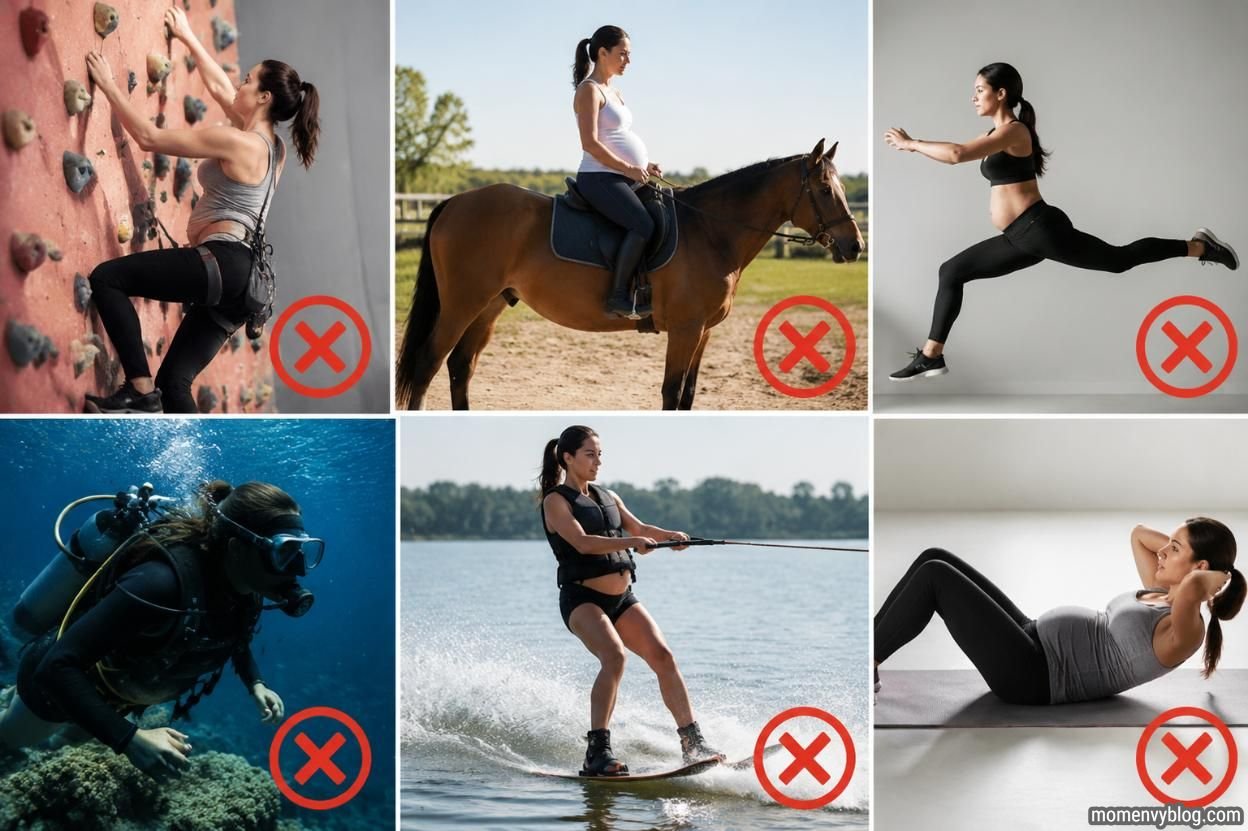
Recommendations may vary based on your pregnancy and previous experience. In general, avoid activities with a high risk of falling, abdominal injury, overheating, or unsafe pressure changes.
Examples include:
- Contact sports
- Scuba diving
- Activities with a high fall risk
- Exercising at an intensity that makes speaking difficult
- Hot yoga or hot Pilates
- Workouts performed in extreme heat
- Unfamiliar high-impact routines
- Heavy lifting that causes straining or breath-holding
- Movements that cause pain, dizziness, or loss of balance
Women who were already experienced in running, strength training, or another sport may be able to continue with modifications. This should be discussed with a maternity care provider.
Who Should Speak to a Doctor Before Exercising?

Every pregnant woman can mention exercise during a prenatal appointment. Medical guidance is especially important if you have:
- Vaginal bleeding
- Placenta problems
- Cervical problems
- A history or risk of premature labor
- Ruptured membranes or leaking fluid
- Significant anemia
- Heart or lung disease
- High blood pressure or preeclampsia
- Poorly controlled diabetes
- Severe pelvic or back pain
- A multiple pregnancy with complications
- Fetal growth concerns
- Any instruction to restrict physical activity
This is not a complete list. Your doctor or midwife can advise you based on your personal medical history.
Warning Signs to Stop Exercising
Stop exercising and contact your doctor, midwife, maternity unit, or emergency service as appropriate if you experience:
- Vaginal bleeding
- Fluid leaking or gushing from the vagina
- Regular, painful contractions
- Chest pain
- Dizziness or fainting
- Headache
- Shortness of breath before exercise
- Muscle weakness that affects balance
- Calf pain or swelling
- Significant abdominal pain
These warning signs are included in ACOG’s pregnancy exercise guidance.
Also seek medical advice for reduced fetal movement once you have reached the stage when you normally feel regular movement. Do not continue exercising while waiting for symptoms to improve.
Can Exercise Induce Labor Naturally?
There is no exercise that can safely guarantee labor will begin.
Walking, squatting, climbing stairs, or bouncing on a birth ball are often suggested online as ways to induce labor. These activities may help you stay mobile or comfortable, but they should not be treated as reliable induction methods.
Do not attempt to induce labor with intense exercise. This may leave you exhausted or increase discomfort without starting labor.
Speak to your maternity care provider before trying any method intended to bring on labor, especially if:
- You are not yet full term
- You have pregnancy complications
- Your water may have broken
- Your baby is not in a head-down position
- You have had a previous cesarean birth
- You have been advised to limit activity
Tips for Exercising Safely During Pregnancy
Stay hydrated
Drink water before, during, and after activity. You may need more fluids in warm weather.
Avoid overheating
Choose a cool room, exercise during a cooler part of the day, and wear breathable clothing.
Eat regularly
Do not begin a long workout when you feel hungry, shaky, or weak.
Wear supportive shoes
Pregnancy can affect balance and foot comfort. Replace worn-out exercise shoes.
Pay attention to pain
Muscle effort is different from sharp, pulling, or worsening pain. Stop if something does not feel right.
Do not hold your breath
Breathe steadily during strength exercises. Avoid bearing down or straining.
Adjust your expectations
Some days you may walk comfortably for 30 minutes. On other days, 10 gentle minutes may be enough.
That flexibility matters. Pregnancy exercise should support your body, not punish it.
FAQ’s
Which exercise is best for a normal delivery?
There is no single best exercise and no movement can guarantee a vaginal birth. Walking, swimming, prenatal yoga, supported squats, pelvic tilts, and pelvic-floor exercises can help maintain fitness, mobility, and strength during an uncomplicated pregnancy.
When should I start exercising for a normal delivery?
You can usually remain active throughout pregnancy if your doctor or midwife says it is safe. Women who are new to exercise should begin with short, gentle sessions and gradually increase activity.
Are squats safe during pregnancy?
Supported squats are safe for many pregnant women when performed with good balance and without pain. They may not be suitable if you have pelvic girdle pain, pubic bone pain, cervical concerns, or medical instructions to limit activity.
How many squats should a pregnant woman do?
There is no required number. Beginners might start with five controlled supported squats and gradually work toward 8 to 12 repetitions. Stop if you feel pain, pressure, dizziness, or instability.
Is walking good during the ninth month of pregnancy?
Walking can be a suitable activity late in pregnancy if you feel comfortable and your maternity care provider has not restricted exercise. Choose short, safe routes and stop for contractions, bleeding, leaking fluid, dizziness, pain, or reduced fetal movement.
Can pelvic-floor exercises make delivery easier?
Pelvic-floor exercises improve awareness and strength, but they do not guarantee an easier delivery. The ability to relax the pelvic floor is also important. A pelvic-health physiotherapist can teach both strengthening and relaxation.
Is a birth ball safe during pregnancy?
A correctly sized birth ball can be safe when used on a non-slip surface near stable support. Your feet should remain flat on the floor. Do not use one if you feel dizzy, unstable, or unable to get on and off safely.
Can I start prenatal yoga in the third trimester?
You may be able to start a gentle prenatal yoga class with medical clearance. Tell the instructor that you are a beginner and how many weeks pregnant you are. Avoid hot yoga, deep twists, difficult balance poses, and any position that causes discomfort.
Does exercise reduce the chance of a cesarean delivery?
Exercise supports general pregnancy health, but it cannot control every factor that leads to a cesarean delivery. Your baby’s position, labor progress, placenta, medical history, and the health of you and your baby may all affect the safest delivery method.
Should I exercise every day during pregnancy?
Daily movement can be helpful, but structured exercise every day is not necessary. Include rest days and adjust your routine according to your energy, symptoms, and medical advice.
The Bottom Line
Safe exercise during pregnancy can help you maintain stamina, strength, mobility, and confidence as you prepare for labor.
Walking, swimming, prenatal yoga, supported squats, pelvic tilts, pelvic-floor work, birth-ball movements, and breathing exercises are practical options for many women.
However, exercise cannot promise a “normal delivery” or prevent every medical intervention. The safest birth is the one that protects both mother and baby, whether that is a vaginal birth, assisted birth, or cesarean birth.
Start gently, listen to your body, and speak to your maternity care provider before beginning or changing your exercise routine.
Medical note: This article provides general educational information and is not a substitute for individual medical care. Pregnancy recommendations may differ based on your health, medical history, and pregnancy complications.

